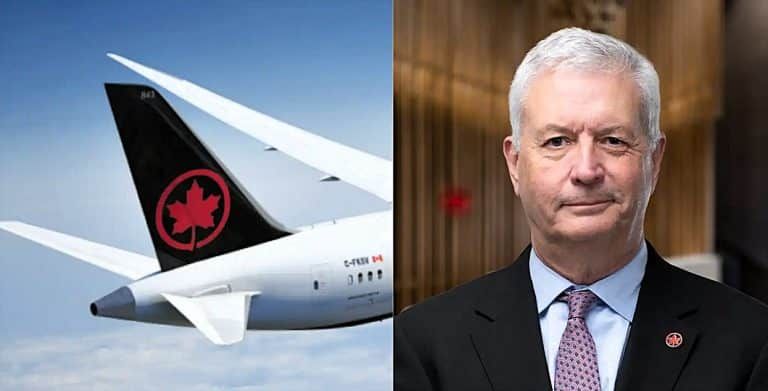
Rousseau acknowledged its incapacity to speak French. In an official statement published on March 26, he declared : “As President and Chief Executive Officer of Air Canada, it is my duty to support those affected by this tragedy. I am deeply saddened that my inability to speak French has diverted attention from the profound grief of the families and the great resilience of Air Canada’s employees, who have demonstrated outstanding professionalism despite the events of the past few days.
Despite many lessons over several years, unfortunately, I am still unable to express myself adequately in French. I sincerely apologize for this, but I am continuing my efforts to improve.”
It was obviously not enough.
In Quebec, where Air Canada is headquartered, the reaction was swift and unforgiving. Politicians across the spectrum demanded his resignation, stressing that leadership at a company subject to the Official Languages Act must reflect the country’s bilingual identity. Prime Minister Mark Carney underscored that bilingualism is not optional but a core leadership requirement, particularly in moments of crisis.
The controversy also revived longstanding tensions between English- and French-speaking Canada. Language is not merely a communication tool—it is deeply tied to cultural identity, especially in Quebec. Rousseau had already faced criticism in previous years for limited French proficiency, despite pledges to improve.
For the travel industry, the implications go beyond Air Canada. Airlines, hospitality groups, and tourism boards operating in Canada must navigate a sensitive linguistic landscape – which is also present in Belgium. Customer experience, brand perception, and even regulatory compliance are directly influenced by language choices.
In Canada, particularly, executive credibility is increasingly tied to cultural fluency as much as financial or operational expertise. Air Canada has already indicated that French proficiency will be a key criterion in selecting its next CEO, signaling a shift toward leadership that better reflects the country’s dual identity.