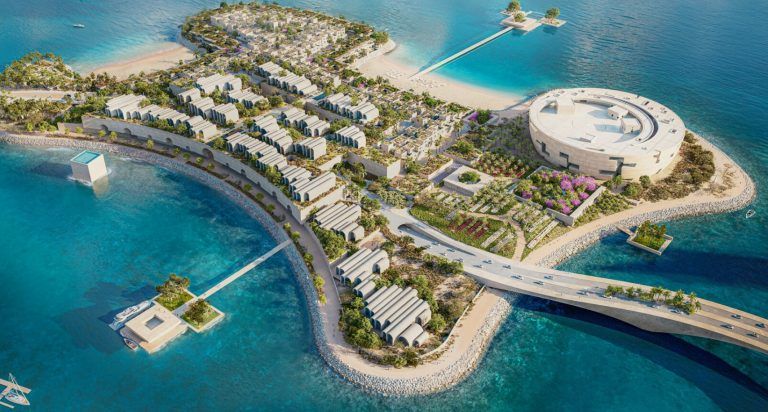
Qatar recently provided a detailed plan for an ambitious new cultural and lifestyle destination that will transform Al Maha Island into a world-class hub for art, luxury living and tourism.
The 230,000-square-meter man-made island in Lusail will feature a striking mix of museums, waterfront residences, boutique hospitality, gardens, dining and public spaces, creating a destination designed to attract both international visitors and local communities.
The masterplan is designed by renowned Swiss architects Herzog & de Meuron. It was unveiled during Art Basel 2026 in Basel by architect Jacques Herzog, Qatar Museums Chairperson Sheikha Al-Mayassa bint Hamad bin Khalifa Al Thani, and Art Basel CEO Noah Horowitz.
At the heart of the project is the new Lusail Museum, which will become the island’s cultural centerpiece and the permanent home of future Art Basel Qatar editions. The museum will showcase Qatar Museums’ internationally significant Orientalist art collection while also serving as a center for research, education and cultural dialogue through the Lusail Institute.
An iconic space for Lusail Museum
Inside the Lusail Museum, visitors will find gallery spaces unlike traditional “white cube” museums. Full-scale abstract recreations of historic Islamic domes will create dramatic exhibition environments while preserving the proportions of significant architectural landmarks without replicating their decoration.
Sheikha Al-Mayassa said the country’s successful museum developments have demonstrated how cultural institutions can enhance quality of life while attracting creative talent from around the world.
Originally announced in 2024 for another location, the museum was relocated to Al Maha Island to become the focal point of the entire development.
Alongside the museum, the island will include a contemporary souk, boutique hotel, restaurants, landscaped gardens and more than 150 luxury residences, including waterfront villas, hilltop homes, townhouses and apartments. Foreign buyers will also have the opportunity to purchase property on the island. Construction is expected to begin in 2028.
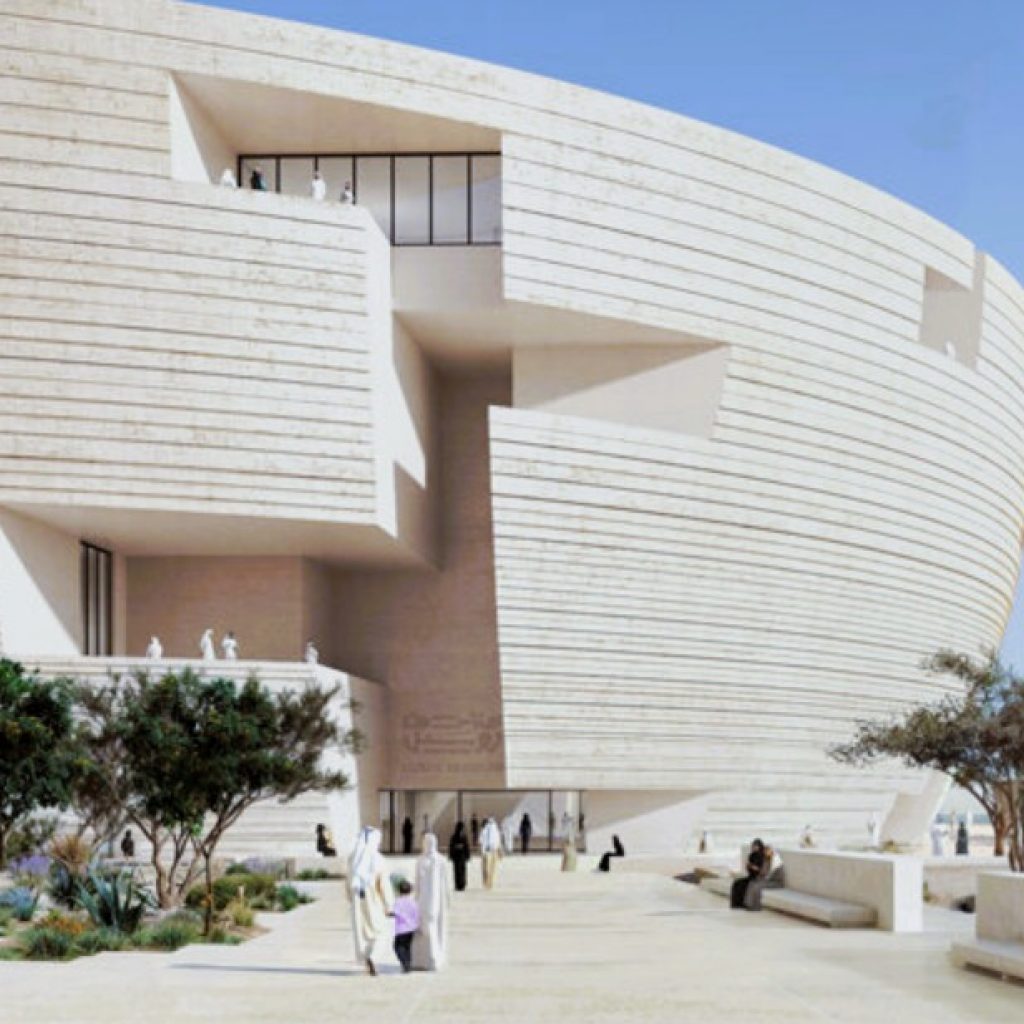 Lusail Museum South entrance (Rendering: Herzog & de Meuron)
Designed around culture, sustainability and community
Rather than creating a conventional luxury resort, Herzog & de Meuron has designed the island to reflect Qatar’s architectural traditions and natural environment.
The development draws inspiration from historic Qatari settlements, with shaded pedestrian streets, courtyard homes and walled gardens replacing large-scale commercial development. Buildings will be constructed using locally sourced materials, including sand and stone, helping blend the architecture into the surrounding landscape while reducing dependence on imported materials.
Nature also plays a major role in the masterplan. Carefully designed “gem gardens” featuring native vegetation will provide tranquil public spaces throughout the island, while conservation efforts will showcase indigenous species, including the Arabian oryx, one of Qatar’s national symbols.
The island has also been designed with sustainability in mind. Roads and infrastructure will be placed underground, allowing visitors to move through largely traffic-free public spaces while preserving uninterrupted waterfront views.
Visitors will reach the island via bridges, pedestrian routes and water transport linking Al Maha Island with Lusail and Doha.
One of the project’s most distinctive features will be its flexible approach to hosting Art Basel Qatar. Instead of limiting the annual event to a single exhibition hall, organizers envision the entire island becoming part of the experience, with galleries, restaurants and public spaces all participating in the fair.
Outside the annual event, exhibition spaces will remain active year-round, accommodating conferences, community events, film screenings, weddings and other cultural activities.
Beyond its architectural ambition, the project reflects Qatar‘s long-term investment in culture as a driver of tourism, education and economic diversification. It will also support artisans from across the Middle East and South Asia, incorporating traditional craftsmanship into interiors and public spaces.
When completed, Al Maha Island is expected to become one of Qatar’s flagship cultural destinations, combining contemporary architecture, luxury hospitality, public art and waterfront living in a single integrated community that strengthens Lusail’s position as one of the Gulf’s fastest-growing tourism and cultural hubs.