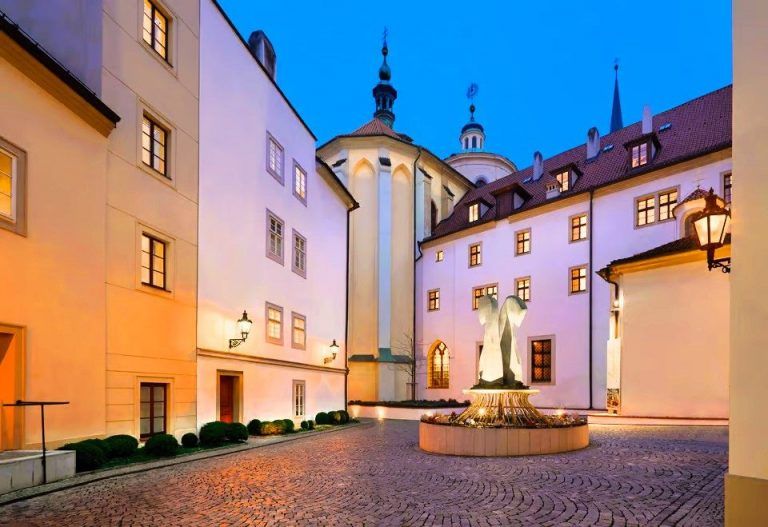
Kempinski Hotels has recently announced the acquisition of Augustine Hotel Prague, marking the luxury hospitality group’s first hotel acquisition in more than five decades.
The deal represents a major milestone in the company’s strategic move toward a more asset-heavy business model under CEO Barbara Muckermann. It is Kempinski’s first acquisition since its investment in Hotel Vier Jahreszeiten Kempinski Munich in 1970.
Located in Prague’s historic Malá Strana district beneath Prague Castle, Augustine Hotel occupies part of the centuries-old Augustinian Monastery of St. Thomas, a religious site with more than 800 years of history that remains home to an active community of Augustinian monks.
The 101-room luxury hotel includes 20 suites, many featuring original vaulted ceilings and exposed wooden beams from the monastery’s former living quarters. Amenities include specialty dining venues, two bars, a spa and fitness center, more than 4,300 square feet of meeting space, and expansive gardens and terraces.
Among the property’s signature spaces is The Refectory Bar, once the monastery’s dining hall, and The Monastic Library, which houses a collection of historic theological and scientific works.
Augustine Hotel Prague reflects Kempinski approach to heritage and culture
Muckermann said the acquisition aligns with Kempinski’s vision of investing directly in landmark hotels that reflect the culture and character of their destinations.
“Opportunities to acquire hotels like Augustine Hotel Prague are exceptionally rare,” she said. “This investment allows us to secure a heritage asset in one of Europe’s leading luxury destinations while creating a showcase for the future of Kempinski as an ultra-luxury brand.”
Kempinski said the acquisition supports its long-term strategy of focusing on highly individual properties with strong architectural and cultural significance rather than standardized luxury offerings.
Chief Product & Experience Officer, Kempinski Group Rasha Lababidi said the Prague property will play a central role in shaping the company’s next-generation luxury hospitality concept across design, wellness, food and beverage, and immersive local experiences.
Prague continues to see strong demand for luxury hospitality and remains one of Europe’s most visited capital cities, attracting travelers with its well-preserved Gothic, Renaissance, and Baroque architecture.
The hotel will operate as an independent luxury property through late 2026 while Kempinski undertakes a major renovation program focused on upgrading guest rooms and public spaces while preserving the building’s historic character.
The property is expected to officially rebrand as a Kempinski hotel in late 2026.