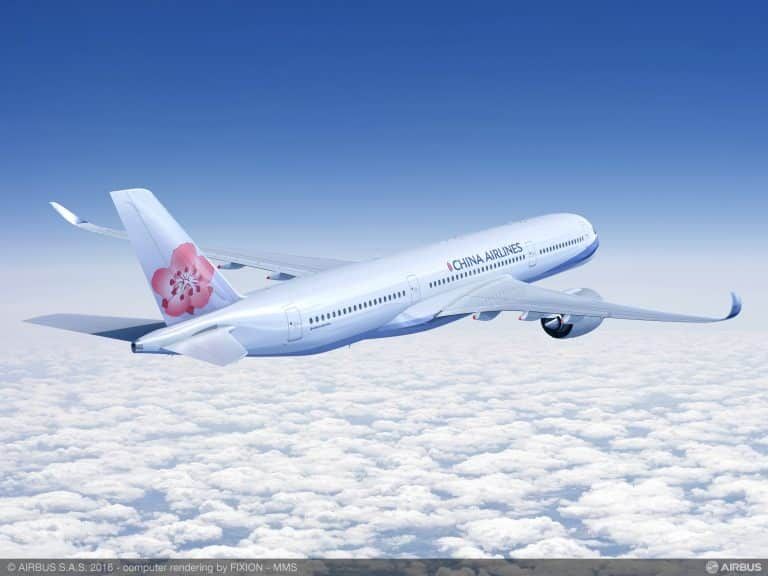
Taiwan based China Airlines participated for the fourth time in the SkyTeam “The Aviation Challenge” operating flights between Taipei Taoyuan and Bangkok.
It flew next-generation, fuel-efficient A350-900 aircraft and reached a new milestone by fueling the outbound flight with 40% SAF—the highest ratio for its TAC demonstration flights yet.
Partnering with CPC Corporation, Taiwan, China Airlines also introduced low-carbon vegetarian meals and air-to-ground decarbonisation measures.
China Airlines is a long-time promoter of SAF use.
This year, flight CI831 from Taoyuan to Bangkok was fueled with 40% SAF, a new record for TAC demonstration flights.
CPC fully supported the 7.7 metric tons of SAF uplifted for the flight, marking a significant milestone in Taiwan’s SAF development.
For the return flight CI832 Bangkok–Taipei, CI832 Bangkok–Taipei, China Airlines sourced SAF from Thailand’s PTTOR, showcasing international supply chain cooperation.
According to the International Air Transport Association (IATA), SAF can reduce carbon emissions by about 80% compared to conventional jet fuel.
China Airlines says it will continue to normalise SAF use and boost the impact of collaborations across industry, government, and academia.
To align with the flight’s low-carbon philosophy, China Airlines partnered with Michelin Green-Star restaurant “Little Tree Food” to serve plant-based cuisine made from local Taiwanese ingredients on the outbound Taoyuan-Bangkok flight.
This TAC flight also highlighted sustainability through cabin and catering products.
Initiatives included e-Menu across all classes, stainless steel cutlery in Economy Class, and the use of rPET materials for tray lids, cups, pillow covers, headrest covers, and lavatory containers.
Beyond the cabin, China Airlines continues to embed carbon reduction measures into daily operations.
For ground operations, electric tractors and an electronic cargo-handling system were deployed to reduce carbon emissions and paper consumption.
Since 2022, SkyTeam has organized “The Aviation Challenge” as a friendly competition encouraging member airlines to adopt sustainable practices.
This year, 23 airlines participated.