EventsAir, an event management technology provider, has launched Air Intelligence, a major innovation introducing a new generation of AI-powered assistants designed to transform the way events are planned, managed, and experienced.
Air Intelligence enables event planners to move beyond navigating complex systems and instead interact directly with event data in real time.
Rather than building reports, searching across multiple platforms, or handling repetitive attendee inquiries, planners can simply ask questions, receive instant answers, and take action as events unfold. At the same time, attendees benefit from immediate, personalized support, including help finding relevant sessions and receiving real-time, context-aware updates without relying on event staff.
“Air Intelligence represents a fundamental shift for the events industry and how planners engage with their technology,” said Paul Trappett, CEO of EventsAir.
“We’re building Air Intelligence at a moment when the role of software is changing. For too long, event professionals have had to work around systems rather than with them. With Air Intelligence, we’re introducing intelligent assistants that are evolving toward agent-like capabilities, working alongside planners to interpret data, surface insights, and take appropriate actions in real time, powered by more than 35 years of event delivery expertise and deeply connected event data.”
At the heart of Air Intelligence is a network of interconnected event data spanning both live and historical events. Built on EventsAir’s unified platform architecture, which covers the entire event lifecycle, the system is designed to support smarter decisions, faster execution, and more personalized experiences at scale.
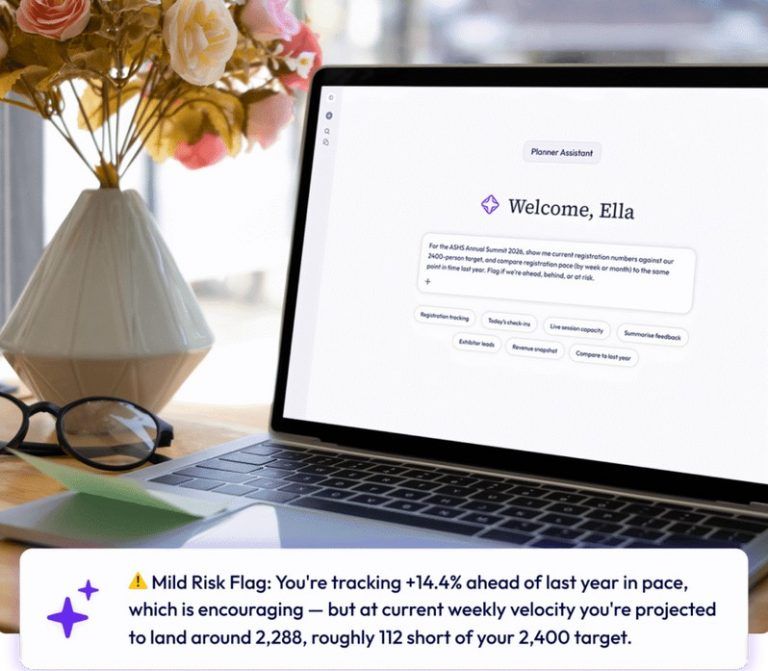
For example, planners can ask questions such as, “Which sessions are underperforming?” or “How are registrations tracking compared to last year?” and receive immediate, data-driven insights, allowing them to make adjustments while an event is still taking place.
A new benchmark for event intelligence
Air Intelligence supports both event professionals and attendees throughout every stage of the event lifecycle, from planning and promotion to live event delivery and post-event analysis.
The platform includes a suite of AI-powered assistants, including Attendee Assistant, available now for real-time event guidance; Planner Assistant, coming soon to provide insights and support real-time decision-making; and Content Assistant, already available to help create consistent event communications.
Its strength lies in its ability to connect event data in real time. Attendee behavior, session engagement, operational updates, and performance metrics are brought together into a continuously evolving view of each event.
Built for practical results
This allows planners to respond to developments as they happen rather than reviewing results after the event has ended. Insights are surfaced when needed, helping organizers make faster, more informed decisions and deliver more relevant experiences.
The result is a more agile approach to event management, enabling planners to identify issues early, make adjustments in real time, and remain aligned with on-the-ground event activity.
Air Intelligence has been developed with a human-centered approach, drawing on more than 35 years of EventsAir’s experience supporting event professionals.
The company says the focus is on empowering people behind the events and helping them achieve better outcomes through smarter use of data. Each assistant has been designed to address real-world challenges faced by event organizers and deliver immediate operational value.
“From the beginning, our focus has been on building AI that supports event professionals, not replaces them,” said Mehdi Khalili, CTO of EventsAir.
“Events are complex, fast-moving environments, and planners need tools that can keep up, adapt, and respond alongside them. Air Intelligence is designed to extend what planners are capable of, giving them more time to focus on the strategic and creative elements that make events truly impactful.”
The launch marks a significant shift in how event technology supports planners. Instead of navigating systems, compiling reports, and manually piecing together insights, organizers can interact with their events in real time and taking action when it matters most.