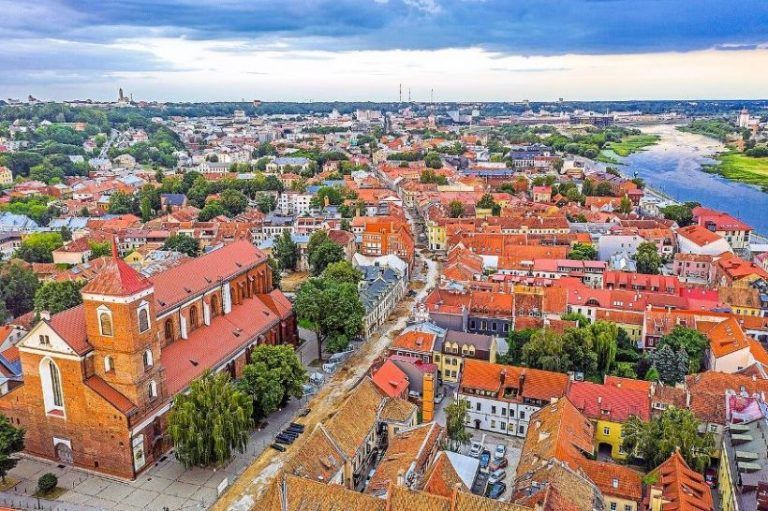
If Riga, in nearby Latvia, is home to Art Nouveau, Kaunas, Lithuania’s second-largest city, offers some of Europe’s most striking examples of Art Deco architecture.
Kaunas is indeed a fascinating destination for lovers of architecture and cultural heritage. Often overshadowed by Vilnius, the Lithuanian current capital, Kaunas plunges visitors into an extraordinary discovery into the interwar period, when the city transformed itself into a showcase of modernism and Art Deco design.
That legacy has earned international recognition. In 2022, Kaunas was one of the three European Capitals of Culture. Under the slogan “from Temporary to Contemporary Capital”, the city that was Lithuania’s capital during the interwar period showcased its modernist architecture and showed to the world its sense of innovative and cultural vibrancy.
In 2023, the city’s exceptional modernist urban landscape was designated a UNESCO World Heritage Site. Kaunas boasts some 12,000 buildings dating from the interwar years, when it served as Lithuania’s temporary capital between 1919 and 1939.
Architecture shapes Kaunas’ appeal
Why is architecture so important to Kaunas identity? The interwar was a short period of time with Lithuania being for the first time a full-fledged independent nation, after being part of Poland and before being annexed by force by the Soviet Union.
Enthusiasm was strong in the population despite the difficulties of creating as quick as possible a new State in the shadow of threatening Soviet Union and Germany. The period witnessed an extraordinary burst of creativity that blended Bauhaus influences, functionalism and Art Deco details into a uniquely Lithuanian architectural style. Kaunas transformed itself into Europe’s most avant-garde city, thanks to its so-called “architecture of optimism”.
Following independence in March 1990, Kaunas, like many post-industrial Eastern European cities, faced economic hardship with high unemployment. It is however all past. The city is today a prominent Baltic tech and educational hub, drawing in young professionals, families, and international students. It has one of the lowest crime rates in Europe and is a vibrant cultural destination, turning increasingly also into a gastronomic destination.
Kaunas appears then as a perfect city break. Visitors are able to discover many of these modernist treasures through various circuits across the city center and the district of Žaliakalnis. Tourism company “Kaunas-IN” unveiled on June 2 its “Kaunas is Kaunas” Route which invites tourists to experience the town with the eyes of locals.
Kaunas architecture walks are also a good opportunity to discover the city cultural assets while experiencing also a reinvented gastronomy. The latest Michelin guide points to seven restaurants offering an exceptional experience. Beside the Michelin BiB restaurants Nüman and Pievos, DIA is well-known for its superb meat dishes while SIJA, managed by two young chefs, Rokas and Greta, is proud to serve dishes exclusively made from Lithuanian products.
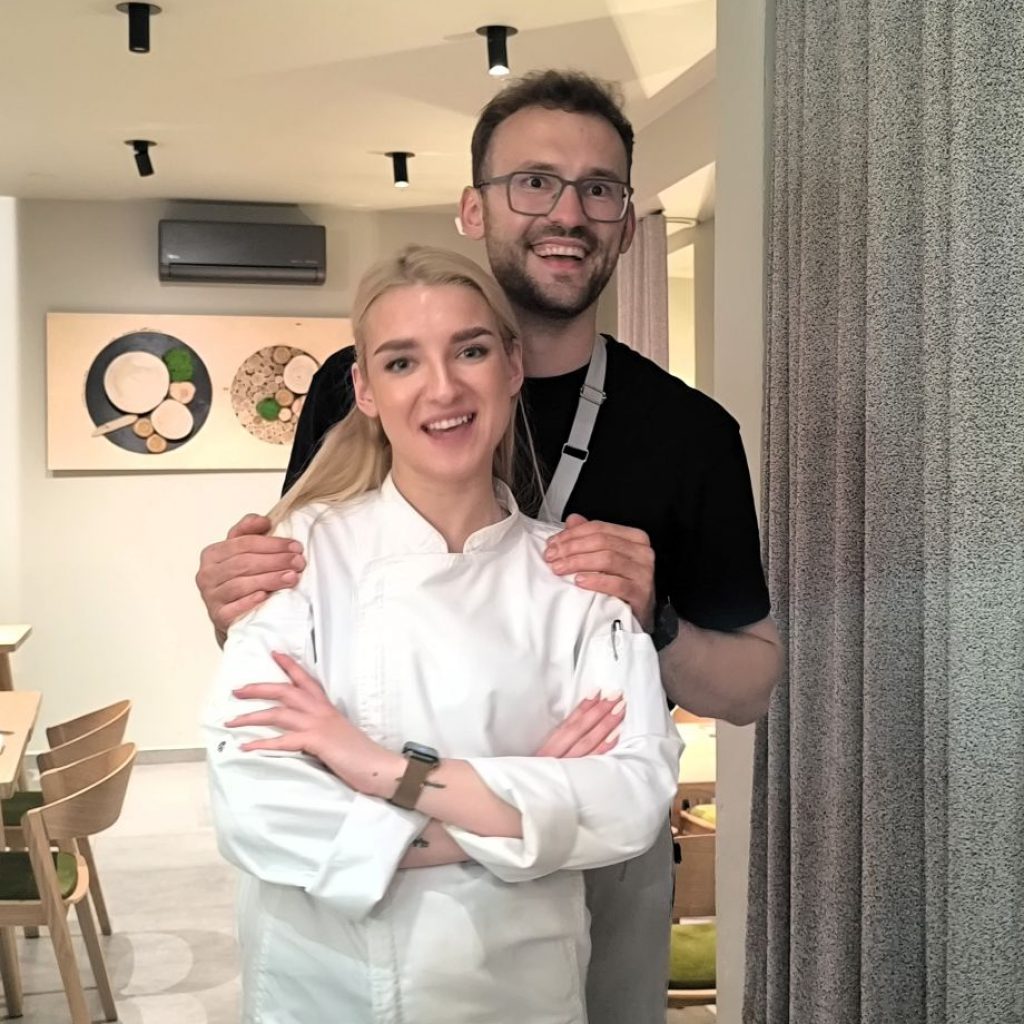
Greta and Rokas, Chefs and founders of SIJA restaurant (Photo:LC/Cleverdis)
Laisvės Alėja Boulevard, the heart of modern Kaunas
The ideal introduction to Kaunas begins along Laisvės Alėja. The leafy pedestrian boulevard is lined with many elegant interwar buildings, cafés and boutiques occupying former residences and commercial premises dating back to the 1920s and 1930s. Geometric facades, rounded balconies and streamlined details reveal the influence of Art Deco and modernist architecture.
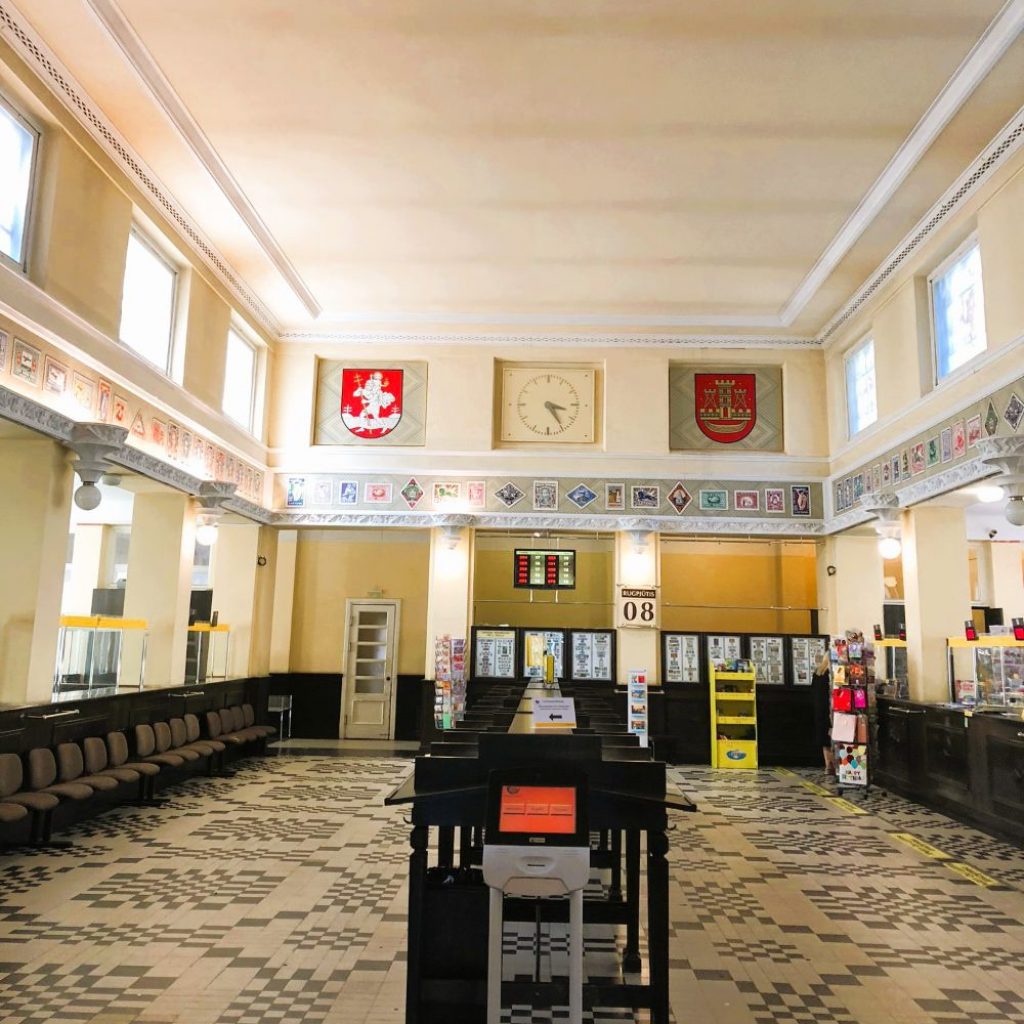
(Photo: Central Post Office, By Pofka – Own work, CC BY-SA 4.0, https://commons.wikimedia.org/w/index.php?curid=71581589)
Just off the avenue stands one of the city’s finest masterpieces, the Kaunas Central Post Office. Completed in 1932, the building combines monumental modernism with decorative Lithuanian motifs. Its distinctive exterior and elegant interiors symbolize the confidence of the young republic. Other remarkable buildings include the imposing Kaunas Officers’ Club. Built as a gathering place for military officers, the structure reflects the ambition and prosperity of the interwar years. The Bank of Lithuania with its massive silhouette mixes classical and art deco style while the nearby Kaunas State Philharmonic used to be the Parliament and the Palace of Justice.
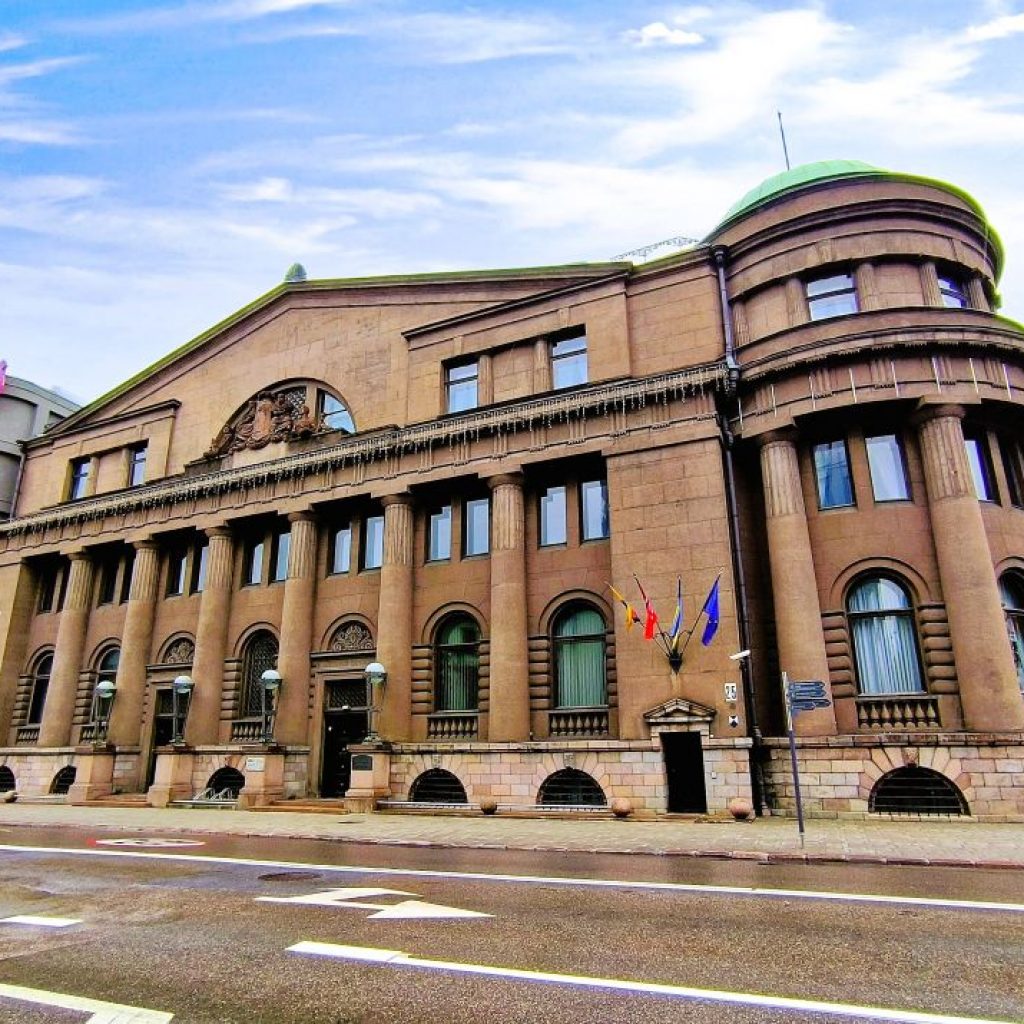
The Bank of Lithuania (Photo: LC/Cleverdis)
Cultural landmarks
One of the most impressive areas in the center is the Unity Square which concentrates two spectacular museums. The Great War Museum and its nearby Freedom Bell tower, both opened in 1936 impresses visitors by its size. The museum has a collection of historical artefacts describing both Lithuania and Kaunas from prehistoric times to the present day, including a large collection of historical weapons.
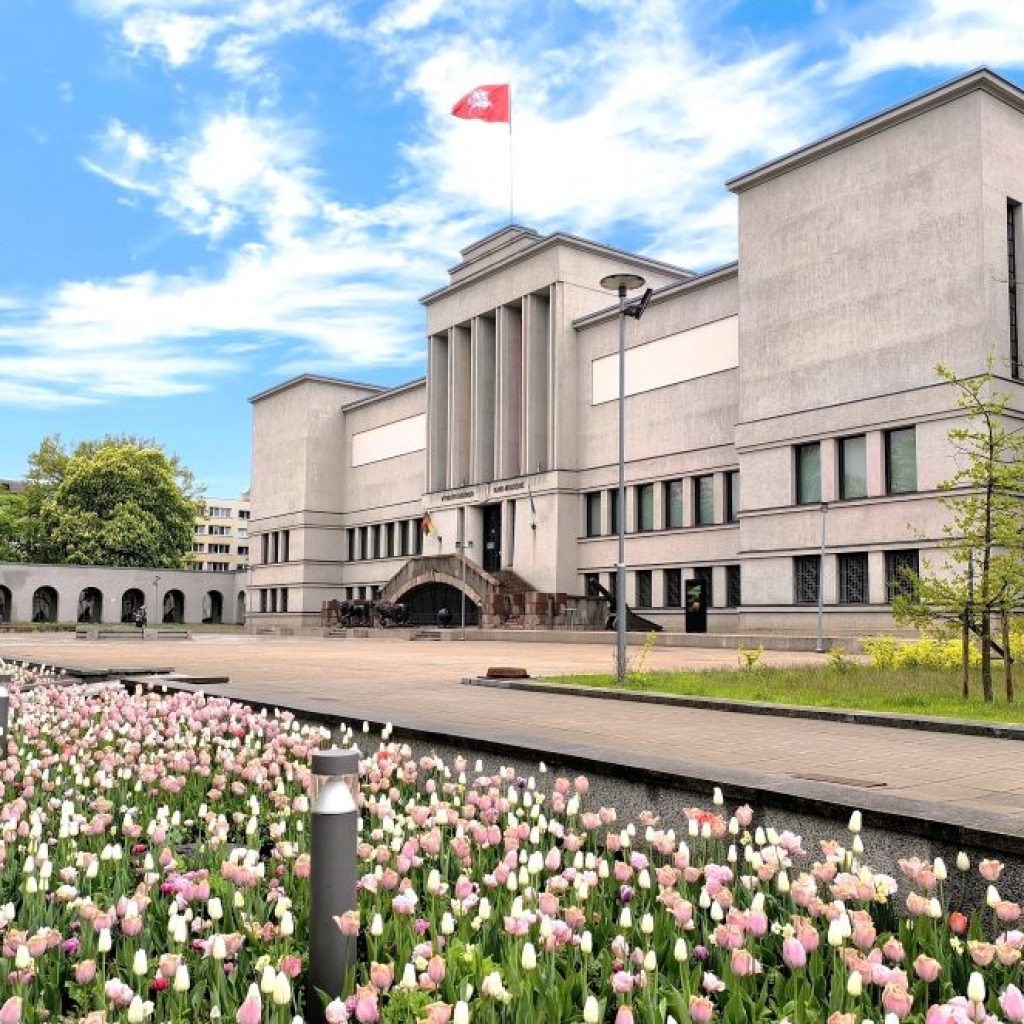
The Great War Museum opened in 1936 (Photo: LC/Cleverdis)
The same modernist monumental structure is also home to one of the most fascinating art collections in Lithuania. No exploration of the city’s cultural heritage would be complete without visiting the M.K. Čiurlionis National Museum of Art.
The institution was named after Lithuania’s most celebrated painter and composer, Mikalojus Konstantinas Čiurlionis. The museum houses the largest collection of his mystical and symbolic works through hundreds of drawings and paintings. The man was a complete artist. During his short life, he composed about 400 pieces of music and created about 300 paintings, to be admired at the museum. Within the museum, visitors have access to a special Virtual Experience, the “Creation of the Worlds” which plunge spectators inside Čiurlionis paintings.
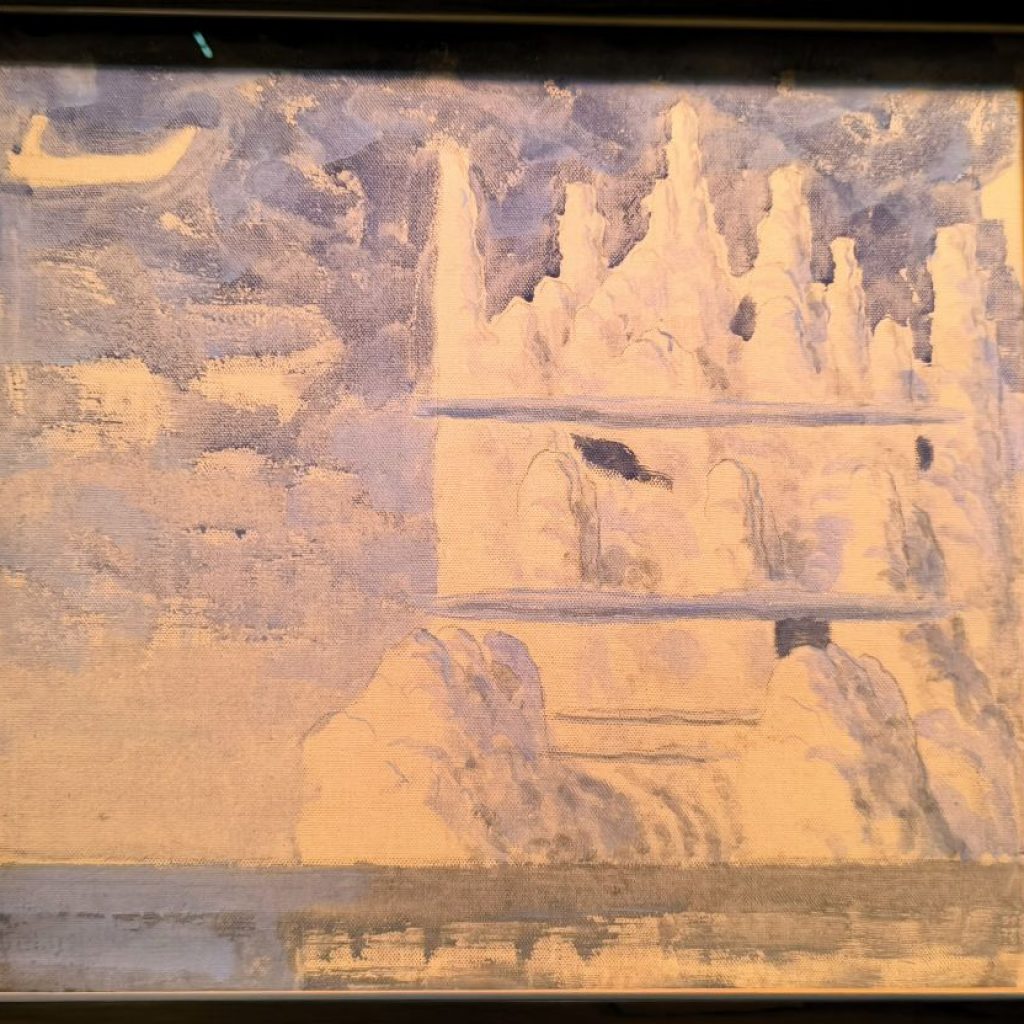
M. K. Čiurlionis painting (Photo: LC/Cleverdis)
The museum complex is dominated by the Žaliakalnis Hill crowned by the monumental Art Deco Church of Christ’s Resurrection. Best is to access the district by taking the historic Žaliakalnis Funicular, which has been operating since 1931. Beside the Church, Žaliakalnis represents one of the most ambitious urban planning projects undertaken during the interwar period. Wide streets, green spaces and elegant villas created a residential district. Walking around is to plunge into an open-air living architectural museum! With sweeping views over the city center.
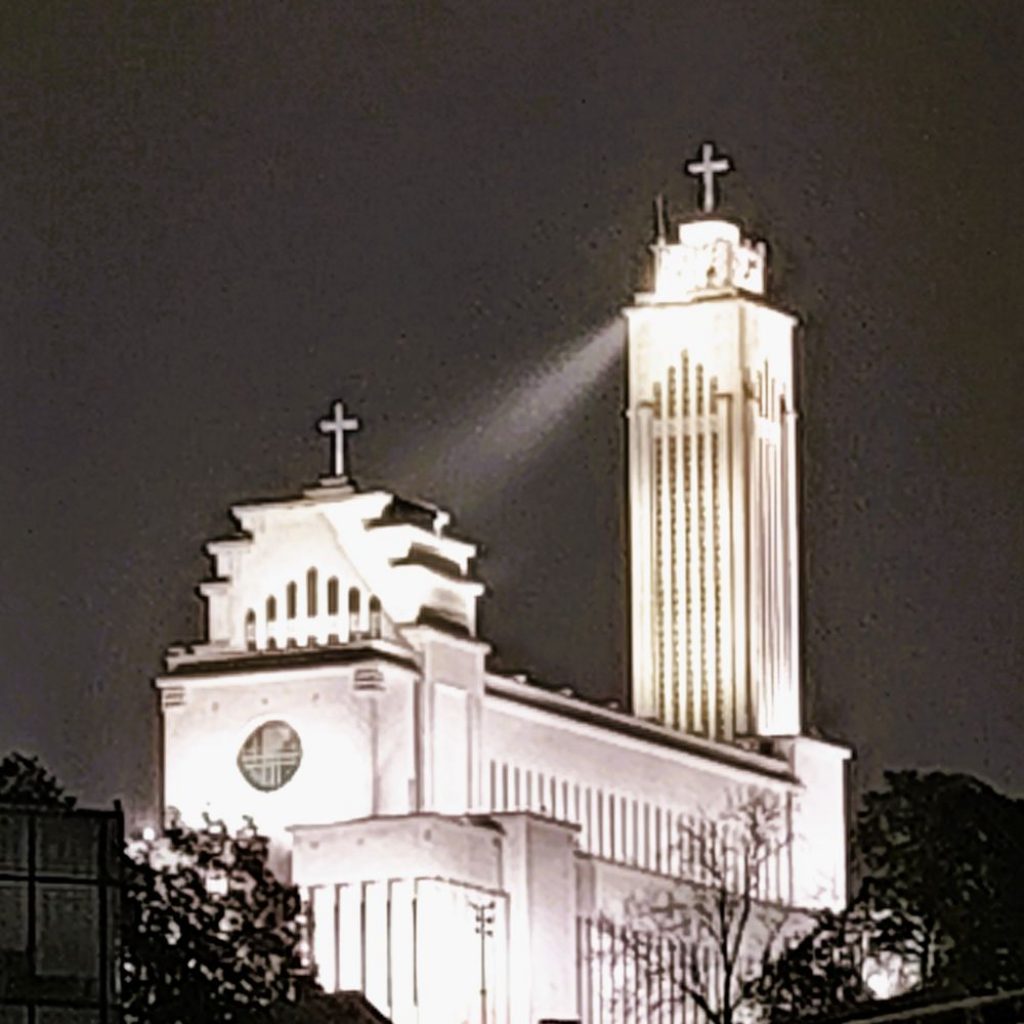
The Church of Christ’s Resurrection (Photo: LC/Cleverdis)
Sugihara House, a story of humanity
Another essential stop lies slightly east of the center at Sugihara House, the former residence of Japanese diplomat Chiune Sugihara.
Serving as Japan’s vice-consul in Lithuania in 1940, Sugihara defied orders and issued thousands of transit visas that helped Jewish refugees escape Nazi persecution. Today, the house functions as a museum dedicated to his humanitarian legacy and the lives he saved.
Though modest in appearance, the residence occupies an important place in both Lithuanian and world history, attracting visitors from Japan, Israel and beyond.
Nearly a century after its golden age, Kaunas remains a hidden gem for a city break. The temporary capital of Lithuania is a everlasting immersive journey in European memories.
GUIDE
Access
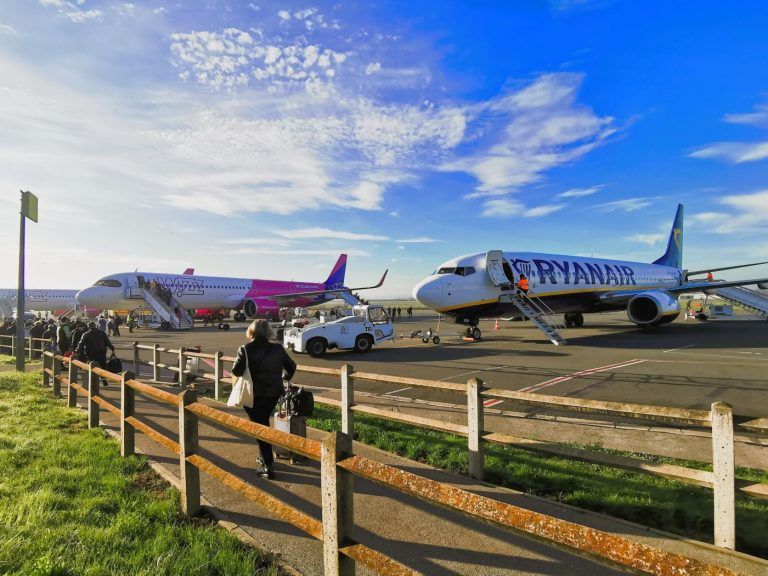
Kaunas has its own airport served mostly by Ryanair which has a market share of 90% of all available seats. The airport is linked to 27 destinations, including large hubs such as Copenhagen, Madrid or Stockholm-Arlanda. Meanwhile, Vilnius airport is just 100 km away with trains linking Kaunas to Vilnius.
Accommodation
5 international hotel chains are present in town, including the four-star Radisson and Best Western Santakos, the three-star Ibis Style, Ibis and Moxy properties.
Information
https://kaunasin.lt/en/for-professionals/
https://lithuania.travel/en/trade/about-lithuania-travel/who-we-are/contacts-structure
.