Laos has taken a major step toward reshaping its transport network after the National Assembly approved, in principle, the first phase of a 562-kilometer standard-gauge railway linking Vientiane with Central Vietnam’s Vung Ang deep-water port.
The project, seen as transformative for the landlocked Southeast Asian nation, aims to strengthen regional trade links and provide an access to the South China Sea. It forms a central pillar of Laos’ 2026–2030 National Socio-Economic Development Plan, which prioritizes infrastructure, logistics, and cross-border connectivity.
The railway will be delivered in three phases. Phase 1A, the most advanced, will cover 147 kilometers starting in Thakhaek, a Laotian city strategically located on the Mekong River near the Thai border in Mukdahan. Eastward the rail link would go to Mu Gia on the Laos–Vietnam frontier.
Planning studies are ongoing for Phase 1B, which would extend the line from the border to Vung Ang Port, and Phase 2, which would run north from Thakhaek before turning west along the Mekong to reach Vientiane.
Construction is expected to begin in 2026, initially on the Laos section, although a firm groundbreaking date has not yet been confirmed. Work on the Vietnam section is likely to follow in 2027, with the full line targeted for completion around 2030.
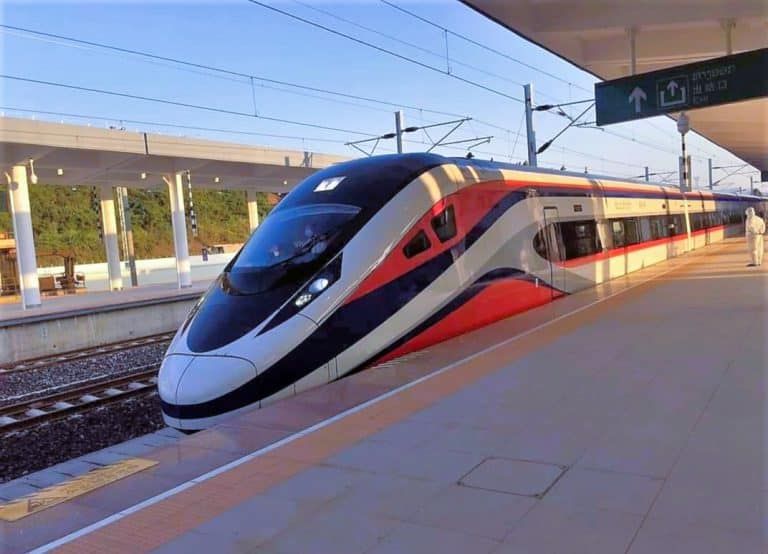
A 150 km/h riding train
Once completed, the route will connect directly with the existing Lao -China railway, creating a continuous corridor from southern China through Laos to the Vietnamese coast. This would significantly cut transit times for cargo and open new opportunities for passenger travel across the region while boosting tourism. Passenger trains are expected to operate at speeds of up to 150 km/h, supporting people’s movements.
The Laos section of the project will be developed by Petroleum Trading Lao Public Company under a build-operate-transfer (BOT) model, with a 50-year concession. Phase 1A alone carries an estimated investment of $1.3 billion.
According to feasibility studies, the railway is projected to deliver an internal rate of return of 7.1%, with costs expected to be recovered within 14 years. Officials say the broader vision is to position Laos as a key logistics hub in mainland Southeast Asia, complementing existing rail links with China and planned connections to Thailand and Cambodia.
Looking ahead, the government is also exploring transit-oriented developments around key stations and special economic zones along the corridor. These initiatives are expected to attract foreign investment, boost tourism, and support long-term economic diversification as Laos seeks to transition from a landlocked to a “land-linked” economy. And help to combine mountainous experiences in Laos with seaside holiday in Vietnam.