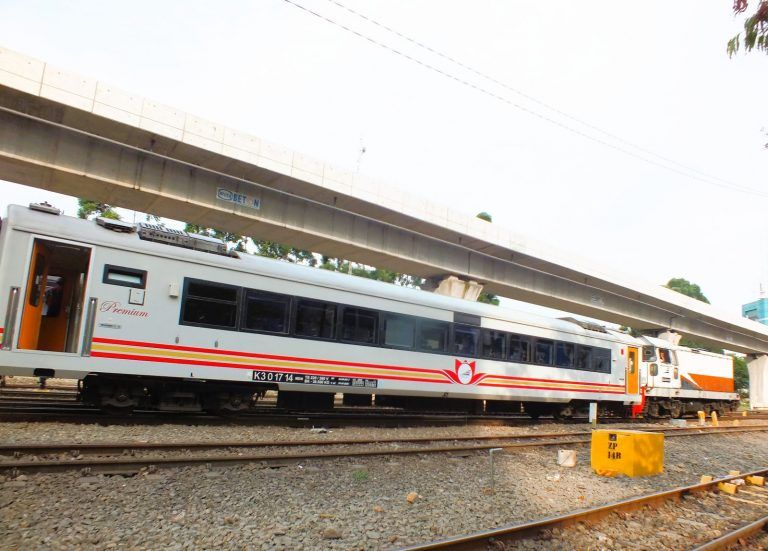
Rail exist in Indonesia since Dutch colonial times. However, most of the rail development concerns only Java Island, the rest of the archipelago remaining neglected -beside a small rail portion in North Sumatra and South Sulawesi.
So far most recent investment has been for the only high-speed train line linking Jakarta to Bandung.
But this is due to change. Indonesia is now planning a major expansion of its railway network outside Java, with ambitions to develop 14,000 kilometers of new rail lines across Sumatra, Kalimantan and Sulawesi by 2045. The decision is also sustained by the current oil crisis, which pushes the government to accelerate its exit of fossil energy sources.
The long-term infrastructure project is expected to require investment of around Rp 1,200 trillion (US$69.4 billion), according to Coordinating Minister for Infrastructure and Regional Development Agus Harimurti Yudhoyono.
He described the initiative as a strategic investment in the country’s future and said funding would not rely solely on the state budget, with private sector participation expected to play a major role.
Spread over the 20-year development period, annual funding requirements are estimated at around Rp 65 trillion (US$3.77 billion)
The government says rail infrastructure needs remain significant across Indonesia’s three major islands outside Java.
In Sumatra, the current rail network covers around 1,871 kilometers, but an additional 7,837 kilometers is needed to meet rising demand and improve regional connectivity.
Kalimantan currently has no operational railway network at all, with minimum development needs estimated at 2,772 kilometers.
Meanwhile, Sulawesi has only around 109 kilometers of rail infrastructure in service, leaving a further 3,284 kilometers required to strengthen interprovincial transport links.
Agus said Indonesia’s rail network remains limited compared to many other countries, but stressed this should serve as motivation to accelerate development rather than discourage investment.
Rail transport currently accounts for just 4% of Indonesia’s passenger mobility and only 1% of national freight logistics, underlining the country’s heavy dependence on road transport.
He also pointed to a major imbalance in infrastructure spending. In 2023, road development received around US$5.04 billion in budget allocations, while rail infrastructure was allocated only US$377 million.
Agus said road development remains essential, but added that the significant investment gap in rail must now be addressed to support long-term economic growth and improve national connectivity.