
Sterling holds its value, but Brits are more concerned about resort costs
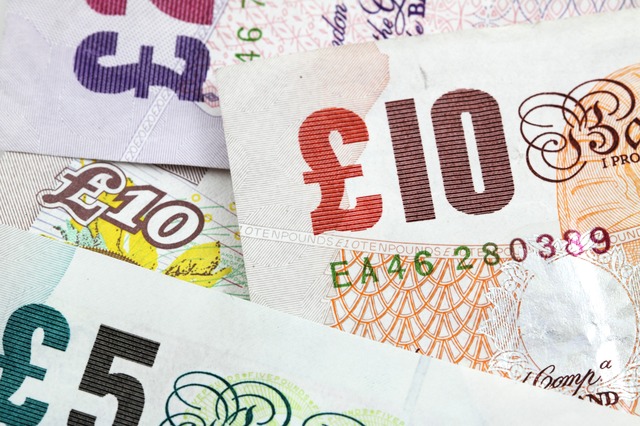
Sterling has held its value in recent months amid continuing economic uncertainty, but Brits are more concerned about local prices in their holiday destination, according to the latest Holiday Money Index by Post Office Travel Money.
The research reveals rising consumer demand for destinations where local prices are low, with less concern about exchange rates.
In the past six months the pound has risen in value against three quarters of the Post Office’s 40 bestselling currencies, including the euro (+3.3% compared with October) and US dollar (+1.3%), and is stronger than a year ago against 20 bestsellers.
Sterling’s biggest year-on-year gain of 34.3% has been against the Turkish lira, giving holidaymakers £128 extra on a £500 currency purchase.
The pound is also stronger than a year ago against every European currency except the Swiss franc, where it is down 3%.
Gains of 3.1% against the Czech koruna and over 5% for the Hungarian forint will make city breaks to Prague and Budapest cheaper. Visitors to Iceland will get 13.3% more Icelandic krona, while sterling also remains stronger against the euro, up 2.2% year-on-year.
Two-thirds (65%) of people are planning to holiday abroad in 2019 and Post Office Travel Money says statistics for 2019 up to the Easter Bank Holiday show some of the biggest sales increases have been to long-haul destinations where sterling is significantly weaker than a year ago.
The explanation for this is provided by the consumer research, which found that UK holidaymakers are now less concerned about exchange rates than they are about the costs they face once they reach their destination.
Over three-quarters (77%) of the 2,087 people surveyed said resort costs for meals, drinks and other tourist items were a more important factor in destination choice, compared with only 55% who felt that sterling’s strength or weakness was the deciding factor.
Post Office head of Travel Money Nick Boden said: "The evidence suggests that consumers are switching on the fact that prices meals, drinks and other staples in resorts and cities can add significantly to their holiday cost, so these are becoming an increasingly important consideration.
"Picking a destination where prices on the ground are low can outweigh the impact of a weak exchange rate but a destination where prices are cheap and sterling is strong is the best bet."


Lisa
Lisa joined Travel Weekly nearly 25 years ago as technology reporter and then sailed around the world for a couple of years as cruise correspondent, before becoming deputy editor. Now freelance, Lisa writes for various print and web publications, edits Corporate Traveller’s client magazine, Gateway, and works on the acclaimed Remembering Wildlife series of photography books, which raise awareness of nature’s most at-risk species and helps to fund their protection.





















Vegas’s Billion-Dollar Secrets – What They Don’t Want Tourists to Know

Visit Florida’s New CEO Bryan Griffin Shares His Vision for State Tourism with Graham

Chicago’s Tourism Renaissance: Graham Interviews Kristin Reynolds of Choose Chicago

Graham Talks with Cassandra McCauley of MMGY NextFactor About the Latest Industry Research

Destination International’s Andreas Weissenborn: Research, Advocacy, and Destination Impact

Graham and Don Welsh Discuss the Success of Destinations International’s Annual Conference

Graham and CEO Andre Kiwitz on Ventura Travel’s UK Move and Recruitment for the Role

Brett Laiken and Graham Discuss Florida’s Tourism Momentum and Global Appeal

Graham and Elliot Ferguson on Positioning DC as a Cultural and Inclusive Global Destination

Graham Talks to Fraser Last About His England-to-Ireland Trek for Mental Health Awareness

Kathy Nelson Tells Graham About the Honour of Hosting the World Cup and Kansas City’s Future

Graham McKenzie on Sir Richie Richardson’s Dual Passion for Golf and His Homeland, Antigua







 ADS PRO
Higher departure tax and visa cost, e-arrival card: Japan unleashes the fiscal weapon against tourists
Singapore to forbid entry to undesirable travelers with new no-boarding directive
Euromonitor International unveils world’s top 100 city destinations for 2025
U.S.A. and Israel attacks on Iran impact air movements in the Gulf (Update 1.00pm CET)
Global tourism exceeds 1.5 billion travelers announces UN-Tourism