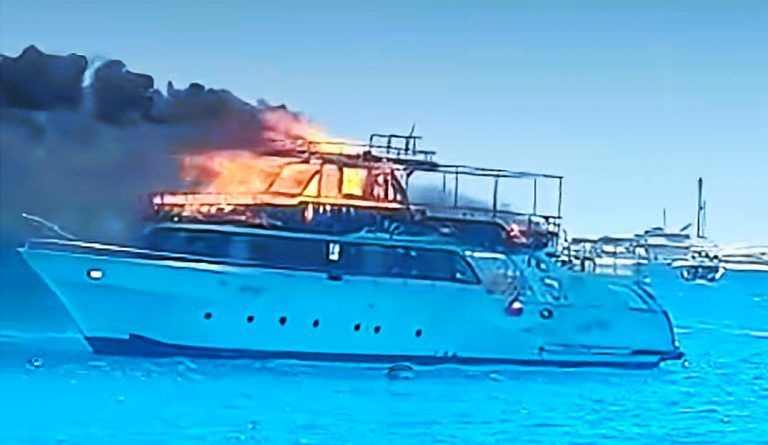
A tourist excursion boat catching fire off the Egyptian resort of Hurghada is the latest in a growing series of maritime incidents that are raising concerns about safety standards on the Red Sea, one of the country’s most important tourism destinations.
The Red Sea is one of Egypt’s biggest tourism assets, attracting millions of international visitors each year for diving, snorkeling and island excursions. Resorts including Hurghada, El Gouna, Safaga and Marsa Alam support thousands of jobs and generate a significant share of the country’s tourism revenue.
Boat excursions are a cornerstone of the visitor experience, with hundreds of vessels departing daily for coral reefs, dive sites and offshore islands. The sector has expanded very rapidly to cope with the increase in arrivals, increasing pressure on operators to maintain high safety and maintenance standards.
The vessel caught fire during a day cruise off Hurghada, prompting an emergency evacuation. All passengers and crew were rescued by nearby boats and the Egyptian Coast Guard, with no fatalities reported. Authorities have in the meantime launched an investigation into the cause of the blaze, which preliminary reports suggest may have started in the engine room.
Incidents multiplied since 2023
This incident comes however after several high-profile accidents involving tourist boats in Egypt’s Red Sea waters. The latest actually occurred during the same week when a liveaboard dive vessel sank in the Red Sea, resulting in the death of one Egyptian crew member.
In November 2024, the liveaboard dive boat Sea Story capsized during rough weather near Marsa Alam, killing and leaving missing several foreign tourists and Egyptian crew members. Investigators later examined whether weather forecasts, operational decisions and safety procedures had been adequately followed.
In March 2025, a tourist submarine carrying visitors sank shortly after departing Hurghada. Six Russian tourists died and dozens of passengers were rescued.
A dozen accidents between 2023 and 2026 highlight the risks facing Egypt’s booming marine tourism sector. Fires aboard dive boats while moored in ports, collisions with reefs, mechanical failures and vessels taking on water have all been reported in recent years. Although most incidents have ended without loss of life, they have prompted calls for stricter inspections and enforcement of safety regulations.
Following the Sea Story disaster, the UK’s Marine Accident Investigation Branch (MAIB) warned of “serious concern” over safety standards on Red Sea dive boats. A 2024 survey by Maritime Survey International also found that many inspected vessels lacked formal maintenance systems, safety management procedures and stability documentation
Egyptian authorities have already introduced tighter inspections of tourist vessels, reviewed emergency response procedures and strengthened weather monitoring for marine operators. Industry stakeholders have also called for improved crew training, more frequent technical inspections and stricter compliance with passenger safety requirements.
So far, the latest accidents are unlikely to dent demand for Red Sea vacations in the short term, but it serves as another reminder that maintaining confidence in Egypt’s marine tourism industry is essential. As the country continues to position the Red Sea as a world-class diving and beach destination, preventing further maritime accidents should be the top priority for both regulators and tour operators.