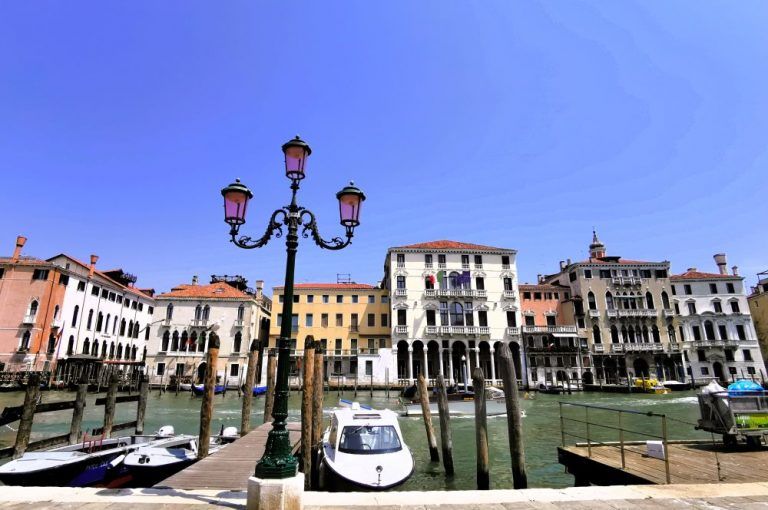
Venice is weighing a sharp escalation of its day-tripper entry fee, with proposals to raise the levy to as much as €50 on peak days in an effort to curb overtourism and better manage visitor flows.
The measure, first introduced in 2024 as a pilot scheme, currently requires same-day visitors to pay €5 if they book in advance, or €10 for last-minute entry. However, Venice officials say the price difference has had little impact on travel behavior, prompting renewed calls for a stronger deterrent.
Venice’s new mayor, Simone Venturini, who previously served as Councilor for Social Cohesion, Tourism, Economic Development, Labor, and Housing Policy, has put forward a proposal to significantly increase the fee on select high-traffic days. He has confirmed he will seek approval from the Italian government to implement the higher €50 charge during periods of extreme congestion.
The discussion comes as data from this year’s trial indicates limited price sensitivity among visitors. Of the 514,710 payments recorded across the first 42 days of implementation, 245,503 visitors paid the discounted €5 rate, while 268,207 paid €10, according to Italian newspaper Il Gazzettino.
“The problem is the numbers,” said Venice budget Councilor Michele Zuin. “There’s not much difference between €5 and €10. If it were more significant, the effect would be different.”
The proposal has received backing from parts of the hospitality sector. Daniele Minotto, director of the Venice Association of Hoteliers (AVA), said the concept of a variable pricing model could help manage peak demand more effectively.
“Venturini’s proposal is welcome. This could lead to a way to apply the fee as an incentive/disincentive for the most problematic days,” Minotto said. “With a sliding rate and a much higher cap, applied every day, we could impact traffic.”
He added that a €50 charge would not be unusual when compared with admission prices for major global cultural or archaeological sites.
Officials also argue that increased revenue could directly benefit residents. Zuin noted that funds collected through the scheme are intended to offset the costs local communities and businesses bear from mass tourism.
“If this money increases, we will invest it to offset the costs that citizens and businesses incur for tourism,” he said.
The current system is in its third and final year of testing. Authorities are expected to review the results after the summer, including whether to extend the fee beyond peak season or apply it year-round. It could for example potentially cover high-demand periods such as the Venice Carnival.
At present, the charge applies on 60 selected days between April and July, during peak hours from 8:30 a.m. to 4:00 p.m. Exemptions remain in place for residents, workers, students, and guests with confirmed accommodation bookings. Visitors must register in advance via an official platform and display a QR code at control points such as Santa Lucia railway station. Failure to comply can result in fines ranging from €50 to €300.