
Boracay rehabilitation should serve as model
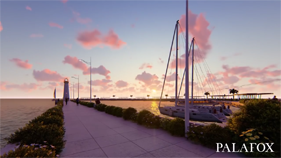
See video of proposed masterplan HERE
See CNN city designer Palafox interview HERE
The re-opening of Boracay Island on October 26 is probably the most awaited development in Philippines tourism sector and a lot of plans are being laid….
Rehabilitation works are still ongoing in the famous island destination and if regulations and environmental laws are strictly enforced, Boracay should have no problem in shedding the cesspool tag given by President Rodrigo Duterte before he ordered its closure.
Department of Environment and Natural Resources Secretary Roy Cimatu, who is also the chairperson of the Boracay Task Force, is the most upbeat about Boracay’s re-opening. He says visitors can expect a "new and improved" Boracay Island, adding the island’s white beach is already "very clean" and safe for swimming.
"Categorically, I am telling you that Boracay is no longer a cesspool," said Cimatu. President Duterte earlier warned that he would permanently shut down the island, a popular tourist attraction, if it did not clean up in six months.
Boracay’s clean-up, however, will not be complete if the DENR and the government do not penalize all the establishments that violated the environmental laws in the island. Several stakeholders and concerned parties are also wondering if the erring establishments will continue to operate once the island opens. Are they now compliant with environmental laws?
If they are not, all of the rehabilitation works done during Boracay’s closure would have been for naught. Concerned government agencies, perhaps, should place these erring establishments under a sort of probation over the next six months, or until they are able to prove their compliance to environmental laws of the island.
In the meantime, say locals, the government should open the development of Boracay to new players with a good track record in the hotel and entertainment industry. The government, the DENR and the Department of Tourism should carefully identify and welcome companies with a track record of building quality and environmentally sustainable facilities in developing projects in Boracay.
Boracay should focus more on attracting higher spending, quality tourists, and not simply go for quantity. The slew of hotels and restaurants that degraded Boracay should serve as lessons in the master-planning of Boracay.
During Boracay’s closure the following rules are being followed:
1. No going beyond Jetty Port. Identified tourists will not be allowed into the island and will be stopped at the Jetty Port in Malay, Aklan.
2. No ID, no entry. Residents/workers/resort owners will be allowed entry into the island subject to the presentation of identification cards specifying a residence in Boracay. All government-issued IDs will be recognized. Non-government IDs are acceptable as long as they are accompanied by a barangay certification of residency.
3. Swimming for locals only. Generally, swimming shall not be allowed anywhere on the island. However, residents may be allowed to swim only at Angol Beach in station 3 from 6 am to 5 pm.
4. One condition for entry. No visitors of Boracay residents shall be allowed entry, except under emergency situations, and with the clearance of the security committee composed of DILG representative, police, and local government officials.
5. Journalists need permission to cover. Media will be allowed entry subject to prior approval from the Department of Tourism, with a definite duration and limited movement.
6. No floating structures. No floating structures shall be allowed up to 15 kilometers from the shoreline.
7. Foreign residents to be checked. The Bureau of Immigration will revalidate the papers of foreigners who have found a home in Boracay.
8. One entry, one exit point. There will only be one transportation point to Boracay Island. Authorities have yet to decide where.
Valere Tjolle
Valere is publisher and editor of Sustainable Tourism 0.2 to be published in September


Valere



















Vegas’s Billion-Dollar Secrets – What They Don’t Want Tourists to Know

Visit Florida’s New CEO Bryan Griffin Shares His Vision for State Tourism with Graham

Chicago’s Tourism Renaissance: Graham Interviews Kristin Reynolds of Choose Chicago

Graham Talks with Cassandra McCauley of MMGY NextFactor About the Latest Industry Research

Destination International’s Andreas Weissenborn: Research, Advocacy, and Destination Impact

Graham and Don Welsh Discuss the Success of Destinations International’s Annual Conference

Graham and CEO Andre Kiwitz on Ventura Travel’s UK Move and Recruitment for the Role

Brett Laiken and Graham Discuss Florida’s Tourism Momentum and Global Appeal

Graham and Elliot Ferguson on Positioning DC as a Cultural and Inclusive Global Destination

Graham Talks to Fraser Last About His England-to-Ireland Trek for Mental Health Awareness

Kathy Nelson Tells Graham About the Honour of Hosting the World Cup and Kansas City’s Future

Graham McKenzie on Sir Richie Richardson’s Dual Passion for Golf and His Homeland, Antigua







 ADS PRO
Global tourism exceeds 1.5 billion travelers announces UN-Tourism
Qatar Airways offers reduced timetable to over 60 destinations
WTTC global tourism reached record economic impact of 11 trillion in 2025
Hands In, UATP join forces for airline multi-card payments
Suspension of all regional trains in Catalonia following two new rail accidents in Spain