
(Re)discovering Britain through the series Peaky Blinders
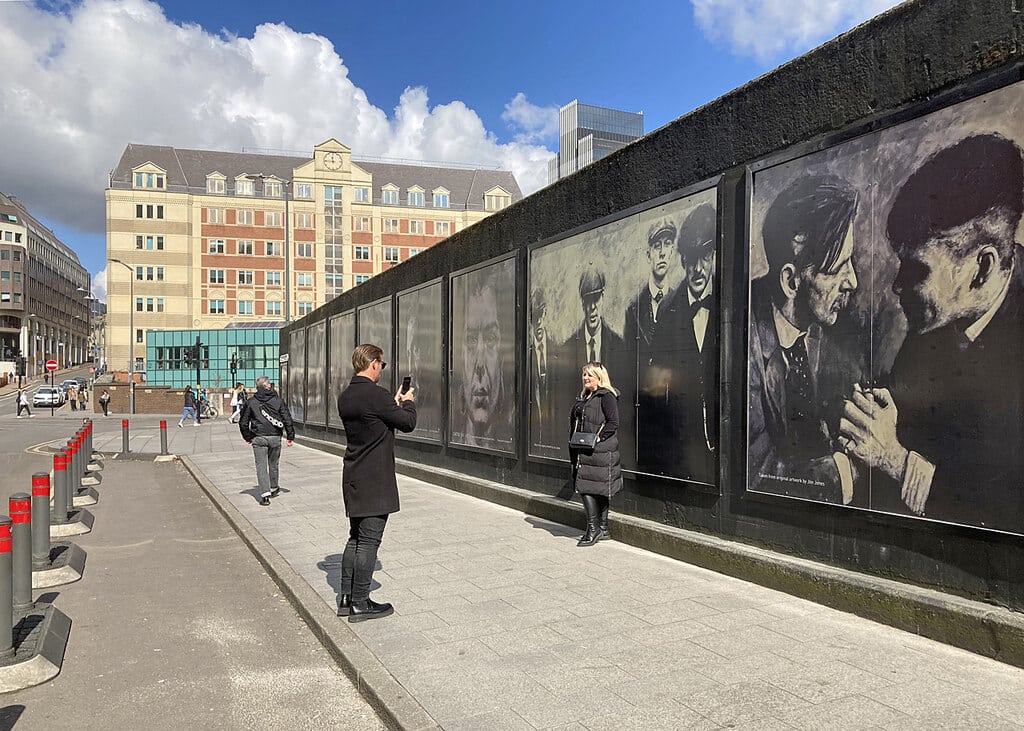
To mark the release on Netflix of Peaky Blinders: The Immortal, Great Britain reaffirms its status as a must-visit destination for fans of screen tourism. For more than a decade, the cult series created by Steven Knight has captivated audiences with its striking visual style, layered storytelling, and deep roots in British social history.
It also offers a wonderful opportunity for travelers to delve into industry-related historical sites across Britain and Wales.
From Birmingham to Liverpool, via Yorkshire, Derbyshire, and Wales, filming locations—sometimes little-known—have become real playgrounds for travelers. From Birmingham’s industrial streets to Liverpool’s monumental facades, from model villages in northern England to Welsh aqueducts and aristocratic estates, each stop reveals a unique facet of the UK, immersing visitors in the dark, compelling world of the Shelby family.
Screen tourism—also known as set-jetting—is now a major trend: 91% of international visitors surveyed by VisitBritain say they are interested in visiting film or TV locations in the UK.
With Peaky Blinders, Britain is fully capitalizing on this enthusiasm, developing a structured and diverse tourism offering, including themed guided tours, tailor-made itineraries, immersive experiences, temporary exhibitions, and special events. These initiatives showcase industrial and cultural heritage from a fresh perspective, meeting growing demand for experiential travel where storytelling and emotion take center stage, blending fiction and reality into unforgettable journeys.
Birmingham and the West Midlands: Into Industrial England
Birmingham embodies the DNA of Peaky Blinders. Although the city has evolved significantly since the 1920s, some neighborhoods still retain the raw, industrial atmosphere that inspired the series. Walking through Birmingham means moving between past and present, where industrial remnants meet contemporary creativity.
The Digbeth district, Birmingham’s creative hub, hosted much of the filming. Its repurposed warehouses, street art murals, and galleries reflect a city that has transformed its heritage into artistic expression. The Digbeth Loc Studios—also known as the “Peaky Blinders Studios” and home to BBC production facilities—highlight this blend of industrial past and innovation.
Nearby, the city center offers more iconic backdrops. Gas Street Basin, with its historic canals, was used for several high-tension transport scenes. Walking or boat tours reveal old warehouses, iron bridges, and red-brick facades, creating a vivid dialogue between past and present. Positively Birmingham Walking Tours offers themed Peaky Blinders tours, where expert guides share behind-the-scenes stories and historical insights, delivering a fully immersive experience.
Black Country Living Museum and Dudley
The Black Country Living Museum in Dudley, just north of Birmingham, has become a flagship site for Peaky Blinders tourism. This open-air museum faithfully recreates a 1920s industrial town, complete with cobbled streets, workers’ houses, shops, chapels, historic pubs, and forges.
Visitors can meet costumed characters, watch traditional craft demonstrations, or even descend into a reconstructed mine, offering a tangible glimpse into working-class life of the era. A detailed map highlights exact filming locations on-site.
Nearby canals and natural areas, including Bumble Hole Nature Reserve, also served as filming locations. Visitors can extend the experience with a guided boat tour along Dudley Canal, learning about the harsh realities of industrial labor while appreciating the canals’ vital role in transporting goods and energy.
Liverpool and the Northwest: Monumental Architecture
Further north, Liverpool provides a grand industrial backdrop that perfectly matches the Peaky Blinders aesthetic. Known for its impressive architecture and maritime heritage, the city is a regular filming hub.
St George’s Hall was used for political and institutional scenes, while William Brown Street and the St George’s Quarter were transformed with smoke and explosions for filming. Other landmarks—including Liverpool Cathedral, the Walker Art Gallery, World Museum, and Central Library—offer ideal Victorian settings.
The historic docks are equally central to the experience. Stanley Dock and the vast Tobacco Warehouse—one of the largest brick warehouses in the world—feature prominently. Nearby, the Titanic Hotel Liverpool, housed in a former warehouse, allows visitors to stay within this industrial heritage setting.
Close by, the former Pilkington glassworks in St Helens provided authentic industrial scenery, while Port Sunlight, a 19th-century model village built for workers, offers a contrasting, refined setting with its orderly streets and red-brick homes.
Leeds and Yorkshire: Iconic Industrial Backdrops
In Bradford, the Little Germany district—home to 55 listed buildings—was used for the Shelby warehouse scenes. Its cobbled streets and Victorian architecture create a moody, atmospheric setting.
Near Leeds, the former Montague Burton factory stood in for a bombed Birmingham factory. Though closed and under redevelopment, it remains a powerful symbol of Britain’s industrial heritage.
Estates and Landscapes: The Aristocratic Side
Calke Abbey in Derbyshire, managed by the National Trust, was transformed into Tommy Shelby’s post-war residence. Visitors can explore its rooms, courtyard, and nursery, all staged to reflect the film’s atmosphere.
The estate’s gardens, grand salons, and library—recreated as Tommy’s study—offer a glimpse into the elegance and authority of the Shelby family, blending historical authenticity with cinematic storytelling.
Wales: Pontcysyllte Aqueduct
The Pontcysyllte Aqueduct, a UNESCO World Heritage Site in Wales, is the series’ only Welsh filming location. Towering 126 feet high, it carries a canal across the Dee Valley.
Visitors can walk or take a boat across the aqueduct, enjoying breathtaking views. Built in the early 19th century, it is a masterpiece of industrial engineering and offers a dramatic setting that perfectly matches the series’ tone.
Hidden Locations: Ruins and Railways
Among lesser-known sites, Calder Abbey in Cumbria stands out for its haunting atmosphere. This historic ruin served as a refuge for Tommy Shelby, combining gothic elements with a sense of isolation.
Transport scenes were filmed at Didcot Railway Centre in Oxfordshire, a living railway museum with restored locomotives and period platforms. Meanwhile, Kelmarsh Tunnel, a disused railway tunnel in Northamptonshire, provided a controlled, dramatic setting for key scenes.
Related News Stories: US airlines suspend Dubai, Doha flights - TravelMole Embassies in Indonesia warn travelers of spreading violence Anguilla hails record tourist arrivals - TravelMole Foreign Office issues Middle East region-wide travel advisory Germany loses a range of British Airways flights in summer 2026 BA restarting Melbourne flights after two decades - TravelMole Pure One travel expands Spain trip portfolio - TravelMole UK visitation to Nashville up 11% - TravelMole PIA offers air-rail ticketing for UK, Canada - TravelMole Spain looks at its own air terminal in Gibraltar following EU/UK ...


newadmin





















Vegas’s Billion-Dollar Secrets – What They Don’t Want Tourists to Know

Visit Florida’s New CEO Bryan Griffin Shares His Vision for State Tourism with Graham

Chicago’s Tourism Renaissance: Graham Interviews Kristin Reynolds of Choose Chicago

Graham Talks with Cassandra McCauley of MMGY NextFactor About the Latest Industry Research

Destination International’s Andreas Weissenborn: Research, Advocacy, and Destination Impact

Graham and Don Welsh Discuss the Success of Destinations International’s Annual Conference

Graham and CEO Andre Kiwitz on Ventura Travel’s UK Move and Recruitment for the Role

Brett Laiken and Graham Discuss Florida’s Tourism Momentum and Global Appeal

Graham and Elliot Ferguson on Positioning DC as a Cultural and Inclusive Global Destination

Graham Talks to Fraser Last About His England-to-Ireland Trek for Mental Health Awareness

Kathy Nelson Tells Graham About the Honour of Hosting the World Cup and Kansas City’s Future

Graham McKenzie on Sir Richie Richardson’s Dual Passion for Golf and His Homeland, Antigua







 ADS PRO
Higher departure tax and visa cost, e-arrival card: Japan unleashes the fiscal weapon against tourists
Euromonitor International unveils world’s top 100 city destinations for 2025
U.S.A. and Israel attacks on Iran impact air movements in the Gulf (Update 1.00pm CET)
Global tourism exceeds 1.5 billion travelers announces UN-Tourism
WTTC global tourism reached record economic impact of 11 trillion in 2025