
Focus on the VESTAS number 7: Iceland Blue Flag
Iceland Blue Flag is one of the first European certification agencies to join with the VESTAS and nominate its chosen members for a 2011 VESTA award
In this sixth focus on the VESTAS: Vision European Sustainable Tourism Awards Blue Flag introduces itself and its aims
The first VESTA winners will be announced at ITB Berlin in 2011 at the Responsible Tourism Networking event on Friday 11 March.
With some days to go 21 of the approximately 30 eligible certification agencies have now partnered with the VESTA awards.
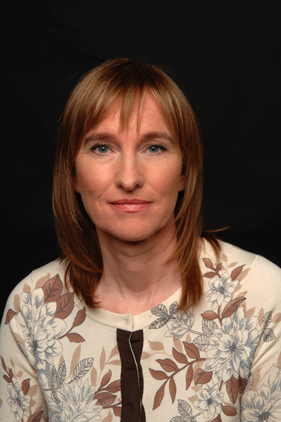
Sigrun Palsdottir of Blue Flag talks to Valere Tjolle of Vision on Sustainable Tourism:
Valere Tjolle: Could you give me the full name of your certification and its history (when did it start? Who are the guiding team and what do they do?)
Sigrun Palsdottir: The name of our eco-label programme is the Blue Flag run by the independent non-profit organisation Foundation for Environmental Education (FEE). In Iceland Landvernd – The Icelandic Environment Association is it’s guiding team.
The Blue Flag was born in France in 1985. The programme was developed on European level from 1987 and since 2001 it is run on global bases. The Blue Flag is now represented in over 40 countries worldwide and 3450 beaches and marinas were awarded the Blue Flag last year. The Blue Flag was first awarded in Iceland in 2003.
VT: What organisations are certified? Where are they? and what are they
certified for?
SP: The Blue Flag works towards sustainable development at beaches/marinas through strict criteria dealing with water quality, environmental education and information, environmental management, and safety and other services. The Blue Flag Programme includes environmental education and information for the public, decision makers and tourism operators. All Blue Flag sites must apply every year a new.
VT: In your view, what has your and other certification programmes achieved
so far and what have they failed to achieve?
SP: The main task of the Blue Flag programme is environmental education and management. The programme has done very well in raising awareness in the communities in which the Blue Flag is run and also in improving environmental management. In regard to environmental education it has also done well. It’s weakness is probably in the field of creating environmental activities. The reason for this is that the staff at the sites is not educated in creating such events, which means that the national guiding teams must be active in supporting the sites.
VT: Which best practices have you nominated for the VESTAS and why?
SP: I have nominated the Blue Flag beach the Blue Lagoon in Grindavik and the Hafnarholmi marina in Borgarfjordur Eystri.
The Blue Lagoon for its sustainable and multiple utilisation of geothermal resources, it’s environmentally friendly architecture and information about the environment. The Blue Lagoon is known for its very fascinating lava landscape and the healing effect of the geothermal hotspring-seawater in the lagoon.
Hafnarholmi is a beautiful marina, which is renowned for its remarkable birdlife, in particular seabirds. Also for its hiking routes along colourful, mountainous rhyolite landscape. The marina/municipality is doing very well in regard to environmental education. They offer a lot of information on the web and have prepared facilities for bird watching, constructed hiking routs etc.
VT: If you had one wish – what should happen in 2011 to support your certification programme in making tourism more sustainable?
SP: That the icelandic government and municipalities would offer more funds for programmes striving towards a sustainable future.
Further information on the VESTAS: destinet.eu/tools/voluntary_instruments/fol703514/fol588962/travelmoledestinet-sustainable-tourism-awards/
Valere Tjolle is editor of the Sustainable Tourism Report Suite – latest special offers:
Sustainable Tourism Ministers Briefing Special Offer: www.travelmole.com/stories/1146076.php
Sustainable Tourism double masterclass: www.travelmole.com/stories/1146006.php


Valere












Vegas’s Billion-Dollar Secrets – What They Don’t Want Tourists to Know

Visit Florida’s New CEO Bryan Griffin Shares His Vision for State Tourism with Graham

Chicago’s Tourism Renaissance: Graham Interviews Kristin Reynolds of Choose Chicago

Graham Talks with Cassandra McCauley of MMGY NextFactor About the Latest Industry Research

Destination International’s Andreas Weissenborn: Research, Advocacy, and Destination Impact

Graham and Don Welsh Discuss the Success of Destinations International’s Annual Conference

Graham and CEO Andre Kiwitz on Ventura Travel’s UK Move and Recruitment for the Role

Brett Laiken and Graham Discuss Florida’s Tourism Momentum and Global Appeal

Graham and Elliot Ferguson on Positioning DC as a Cultural and Inclusive Global Destination

Graham Talks to Fraser Last About His England-to-Ireland Trek for Mental Health Awareness

Kathy Nelson Tells Graham About the Honour of Hosting the World Cup and Kansas City’s Future

Graham McKenzie on Sir Richie Richardson’s Dual Passion for Golf and His Homeland, Antigua







 ADS PRO
Global tourism exceeds 1.5 billion travelers announces UN-Tourism
Qatar Airways offers reduced timetable to over 60 destinations
WTTC global tourism reached record economic impact of 11 trillion in 2025
Hands In, UATP join forces for airline multi-card payments
Overseas travelers to the United States declined by 2.5% in 2025