
Hurtigruten to use dead fish to power cruise ships
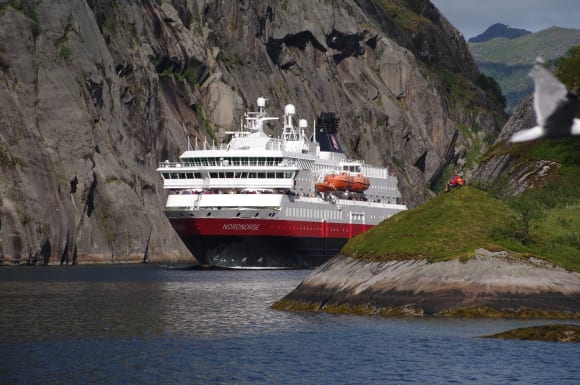
Unwanted cutaways from fisheries and other organic waste will soon be used to power Hurtigruten’s fleet of green cruise ships.
In the next step in its quest to become the most environmentally friendly line, the world’s largest expedition cruise operator has announced it will power its ships with liquified biogas (LBG), a fossil-free, renewable fuel produced from organic waste including dead fish.
CEO Daniel Skjeldam said: "What others see as a problem, we see as a resource and a solution.
"By introducing biogas as fuel for cruise ships, Hurtigruten will be the first cruise company to power ships with fossil-free fuel.
"Renewable biogas is a clean source of energy, considered the most eco-friendly fuel currently available.
"Biogas is already used as fuel in small parts of the transport sector, especially in buses.
"Northern Europe and Norway, which has large fishery and forestry sectors that produces a steady volume of organic waste, has a unique opportunity to become world leader in biogas production.
By 2021, Hurtigruten plans to operate at least six of its ships on a combination of biogas, LNG and large battery packs.
"While competitors are running on cheap, polluting heavy fuel oil, our ships will literally be powered by nature, Skjeldam added.
"Biogas is the greenest fuel in shipping, and will be a huge advantage for the environment. We would love other cruise companies to follow."
Hurtigruten has already banned single-use plastic and, next year, will introduce the world’s first battery-hybrid powered cruise ship, MS Roald Amundsen, custom built for sustainable operations in some of the world’s most pristine waters such as Antarctica.
Next year will also see the start of a large-scale green upgrade project, replacing traditional diesel propulsion with battery packs and gas engines on several Hurtigruten ships.
In addition to liquified natural gas (LNG), these ships will also be the first cruise ships in the world to run on liquified biogas (LBG).
Two more hybrid-powered expedition ships Fridtjof Nansen and the as-yet-unnamed sister ship, will be delivered in 2020 and 2021.
The cruise line expects to invest $850 million in building the world’s greenest cruise line.


Lisa
Lisa joined Travel Weekly nearly 25 years ago as technology reporter and then sailed around the world for a couple of years as cruise correspondent, before becoming deputy editor. Now freelance, Lisa writes for various print and web publications, edits Corporate Traveller’s client magazine, Gateway, and works on the acclaimed Remembering Wildlife series of photography books, which raise awareness of nature’s most at-risk species and helps to fund their protection.




















Vegas’s Billion-Dollar Secrets – What They Don’t Want Tourists to Know

Visit Florida’s New CEO Bryan Griffin Shares His Vision for State Tourism with Graham

Chicago’s Tourism Renaissance: Graham Interviews Kristin Reynolds of Choose Chicago

Graham Talks with Cassandra McCauley of MMGY NextFactor About the Latest Industry Research

Destination International’s Andreas Weissenborn: Research, Advocacy, and Destination Impact

Graham and Don Welsh Discuss the Success of Destinations International’s Annual Conference

Graham and CEO Andre Kiwitz on Ventura Travel’s UK Move and Recruitment for the Role

Brett Laiken and Graham Discuss Florida’s Tourism Momentum and Global Appeal

Graham and Elliot Ferguson on Positioning DC as a Cultural and Inclusive Global Destination

Graham Talks to Fraser Last About His England-to-Ireland Trek for Mental Health Awareness

Kathy Nelson Tells Graham About the Honour of Hosting the World Cup and Kansas City’s Future

Graham McKenzie on Sir Richie Richardson’s Dual Passion for Golf and His Homeland, Antigua







 ADS PRO
Higher departure tax and visa cost, e-arrival card: Japan unleashes the fiscal weapon against tourists
U.S.A. and Israel attacks on Iran impact air movements in the Gulf (Update 1.00pm CET)
Global tourism exceeds 1.5 billion travelers announces UN-Tourism
WTTC global tourism reached record economic impact of 11 trillion in 2025
Marginal increase for New York City tourism in 2025