
Melia vaunts green credentials
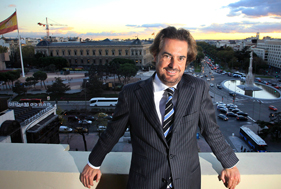
Richard Greenwood interviews Sebastian Escarrer, Vice Chairman, Sol Melia Hotel Group
Richard Greenwood: What is your current sustainable tourism policy as a result of your increasing growth within the tourism industry?
Sebastian Escarrer: Tourism has several strengths that make our industry likely to be a sustainability leading sector. It has a potential to generate a high added value. The Carbon footprint of our activity is relatively small. Our business is a naturally friendly one. Besides, Tourism industry is inevitably linked to sustainability, as no other industry in the world has a bigger inter-dependence with the sustainable development in the social, cultural and environmental dimensions of sustainability than tourism. We have been working for many years in areas and/or countries in development, with a very rich environment, and with undeveloped social structures, and we have learnt a lot from those countries and from those people, you cannot run a successful hotel in an area in which people are starving, in which tourists are not safe, or where the natural resources are being savaged and the climate change spoils the beaches and the seasons’ planning.
The successful approach is to enhance the development, to foster local culture, their art, their craftsmanship and of course, to preserve their environment and the natural beauty and harmony that makes tourists travel there.
Sol Melia is a leading company, we are Spain’s absolute leader, and one of the most important hotel companies in Latam-Caribbean, as well as the sixteenth hotel company in the world, leadership makes us even more responsible and more concerned about all these matters, because we have a referent for others who follow us.
Our vision is to contribute to the sustainability of the communities in which we operate, and their people’s development too. That’s how, as we like to say, “we built our legacy” to future generations, this a very important standpoint for Sol Melia, because we are a family company in which the sustainability and responsibility values have ever been present, but now they get a new impulse and priority given the current world challenges.
To explain our sustainability policy, I’d like to explain why we have been certified as the first ever Biosphere Hotel Company by the Responsible Tourism Institute, associated to UNESCO, because the certification summarizes what is our policy, how we understand the Responsible tourism, and how we face the future of our sector.
The award of the Biosphere Hotel Company nomination which we received in November 2009, is given to companies which encourage social, cultural and environmental development in the location in which they operate. To be a Biosphere Hotel Company implies that the whole company and not only individual hotels as the ones in our company that are certified as Biosphere hotels, meets the commitments and the standards set by the Certification. These standards affect the social behaviour of the company, its environmental behaviour, and its cultural commitment too.
Therefore, we have to go through a comprehensive audit process both in the corporate processes, policies and systems, and in the operational side our business units mainly hotels and Vacation Club units.
In the operational side, we had to demonstrate that a certain number of hotels were individually certified, we now have Biosphere hotels, the last one the ME Barcelona Hotel, a landmark which is placed in a skyscraper designed by Dominique Perrault and go through an audit process on a sample of hotels seleccionados aleatoriamente to check if they are meeting the standards, and their degree of improvement. The standards belong to the following areas, Supply chain of business units, responsible production, sustainability in materials, non child work, local suppliers when possible.
Customers, accessibility and sensibilization, basically. Contribution to social environment, through social action plans and community involvement. Natural and cultural heritage, preservation, campaigns to involve customers and local communities in bio-diversity protection, respect to the environment. Environment, campaigns, systems and processes to reduce the carbon footprint, our “SAVE” project for the reduction of emissions through efficient lightening systems, energy saving processes and devices, geo-thermal energy use, recycling, re-using and waste management. When it comes to corporate standards, they are related also with clients responsible marketing, ethic behaviour, sustainable planification, management tools, Human
Resources policies involving local workers’ recruitment, human development and social action amongst staff, and to foster the managerial and staff commitment, in this sense, Sol Melia has recently in 2010 implemented a system to introduce and rate sustainable criteria and objectives to the estimation of the managing teams’ annual bonus. It reaches all of the managers worldwide, and it has been the first “transversal” policy to actually involve managerial teams within the sustainability of the company.
I have to express my confidence that we will soon renew our Certification, because these days we are under the yearly Biosphere audit, where the Institute extensively checks whether or not we maintain our commitments, and to which extent we meet the social, cultural, and environmental standards. This process, repeated every year, helps us constantly to identify opportunities for improvement in our procedures.
Besides this important Biosphere Certification, Sol Melia has three other key commitments with sustainability. Firstly, we have signed up to the principles of the Global Compact, which has the advantages of being universal, setting common standards for all the world, and it is based on universal values. Secondly, we are the only travel company in the FTSE4Good Ibex, the only Spanish sustainable stock market index, that provides us with market reliability and external recognition, together with a permanent attention to maintain our membership to FTSE. Thirdly, we have improved and standardized our annual sustainability report much more, that has to be a perfect management tool for improvement, apart from a reporting tool towards the markets.
RG: As you have opened 20 new flagship hotels in Europe, the Americas, Asia and the Middle East recently, have your sustainable tourism policies been put in place in these locations to ensure that the existing local cultures are not affected by visiting tourists at the present time and for the future.
SE: Absolutely, as I have explained, cultural sustainability is one of the pillars of our sustainability policy, and we firmly believe that if local culture is not preserved and enhanced, it will finally disappear and that apart from being unfair, it would be a tragedy for the business itself because one of the main attractions of a destination is its culture as well as its heritage, its language and its art. I could mention to you the local craftsmanship and local artists’ expositions we host in some hotels in the Caribbean and Asia. Our support and membership of the Talian Association for the preservation of the art and cultural heritage, the Tri Hita Karana awards that our Hotel Melia Bali has deserved because of its contribution to the harmony that is so important in a place like Bali, our agreement with the Spanish Museums’ Friends Association, to spread and foster the culture amongst the visitors of our urban hotels, and I’d especially like to tell you how. When we were building our first international hotel, the Melia Bali,we studied the situation, the local spirituality, and we decided to place temples for eight different religions in order to respect everyone in a place where diversity is the rule.
RG: One of your new hotels to be opened in 2012 is the ME London. How excited are you about this development and will it be open for business in time for the start of the 2012 Olympic Games in London.
SE: Well, I think it is the perfect timing for Sol Melia to open a new hotel in London, not only because of the Olympic Games, that always helps for the launching for sure, but especially because we are already mature in London as we have been in the Melia White House Hotel operating with great success for more than ten years now. We can say we have the know how and the basis to grow in this ever promising town. London is one of the few towns where tourism has not suffered, hotels have kept occupancies and rates, and that is a good symptom of the town’s touristic future, with the impulse of the Olympic Games in addition. Besides these statements, I must tell you that the future Sol Melia Hotel in London will belong to our “ME by Melia” brand, to be named “ME London Hotel”. It will not be just another hotel in the town, it is a very unique building, designed by Norman Foster’s architectural firm, and located near Covent Garden and Trafalgar Square, in the confluence of the streets of the Strand and Aldwych. In addition to that, ME by Melia is a very successful and unique hotel brand which is currently only in Madrid, Barcelona, Cancun and Los Cabos, and will soon be opening in Vienna and main cities of the United States. It is a high personality based brand, lifestyle orientated, created to that segment of people that are at the time experienced and demanding travellers. It is also a brand that aims to attract the town’s life, after work and the most trendy social events. ME London will open as a “Biosphere Hotel”, we will make sure it fulfills all the sustainability requirements to be a new referent in London life, both for visitors whether it be business throughout the week or leisure during the weekends and for London citizens.
RG: Are you planning to open more hotels in the future in view of the current climate within the global tourism industry.
SE: During the last crisis, Sol Melia has been reinforcing its hotel portfolio, our strategic plan for the three years from 2008 to 2010 expected to include up to 77 new hotels, and we now have finally signed 69 new hotels so far within the period, and with a higher number of rooms than it was planned. Our secret has been to maintain our strategy even though we had to adapt it to the economic environment, and implement a contingency plan on top of the strategic plan and focus on our Brand Equity, our customer’s management, our asset management, our talent and of course the sustainability. Jointly, we have clearly focussed on geographical, product, brand and segment diversification in an increasingly global world. Leading hotel companies cannot be out of the new development poles, as long as the capital flows, and also the human flows are so rapidly changing.
We have been in Asia for 25 years now, and we have just reinforced our corporate presence in that continent because Asia and not only China will be a necessary place to be for a so-called global company. Only within China, there are more than 2,000 million travellers a year, and they are increasing their travels abroad as long as many million people arrive every year to the medium social class, when they get more than 25,000 dollars earnings a year, and they start to travel. We have also just opened our first hotel in the United States, a big Melia in Atlanta, the “capital of the south” and a new Tryp hotel in New York will be opening in the first quarter of 2011.
The crisis environment has helped our policy to focus on low capital investment formulas for our development, such as management contracts, renting or franchises, because that allows us to do what we do best, managing hotels without capital leverage that could affect our balance. That is only possible because we have developed strong and differentiated brands the markets can trust, and because of our reputation as a responsible and solvent company. The conclusion for us is that, when you have strong brands, management strength, the best management teams, a good strategy and the flexibility to adapt it, and you protect your finances and your reputation, crisis can become an opportunity to grow. Sol Melia has been able to keep reducing its net debt, to increase its liquidity levels, to cut costs down by more than 80 million euros and increase revenues by focussing on the added value of our sales, the strategic partnerships with tour operators, travel agents and airlines, and on top of this, we have been able to maintain and improve our corporate reputation and our stakeholders’ confidence. The sustainability policy, and the strong orientation we are demonstrating towards all our stakeholders, we have created an Institutional Office to deal with corporate diplomacy and to take care of the company’s external poisoning, which I am personally leading as the Vice Chairman of the company, has also been of help, and it is one of the basic pillars of Sol Melia’s future sustainable growth. So yes, we are opening hotels in 2010, and have now 27 hotels in the pipeline to be opened or taken over during the coming months.
By Richard Greenwood
Sustainable Tourism Report Suite 2011 latest special offer at: www.travelmole.com/stories/1146228.php


Valere
















Vegas’s Billion-Dollar Secrets – What They Don’t Want Tourists to Know

Visit Florida’s New CEO Bryan Griffin Shares His Vision for State Tourism with Graham

Chicago’s Tourism Renaissance: Graham Interviews Kristin Reynolds of Choose Chicago

Graham Talks with Cassandra McCauley of MMGY NextFactor About the Latest Industry Research

Destination International’s Andreas Weissenborn: Research, Advocacy, and Destination Impact

Graham and Don Welsh Discuss the Success of Destinations International’s Annual Conference

Graham and CEO Andre Kiwitz on Ventura Travel’s UK Move and Recruitment for the Role

Brett Laiken and Graham Discuss Florida’s Tourism Momentum and Global Appeal

Graham and Elliot Ferguson on Positioning DC as a Cultural and Inclusive Global Destination

Graham Talks to Fraser Last About His England-to-Ireland Trek for Mental Health Awareness

Kathy Nelson Tells Graham About the Honour of Hosting the World Cup and Kansas City’s Future

Graham McKenzie on Sir Richie Richardson’s Dual Passion for Golf and His Homeland, Antigua







 ADS PRO
Global tourism exceeds 1.5 billion travelers announces UN-Tourism
Qatar Airways offers reduced timetable to over 60 destinations
WTTC global tourism reached record economic impact of 11 trillion in 2025
Hands In, UATP join forces for airline multi-card payments
Overseas travelers to the United States declined by 2.5% in 2025