
A slow prudent return of Qatar Airways with repatriation flights from March 7, 2026
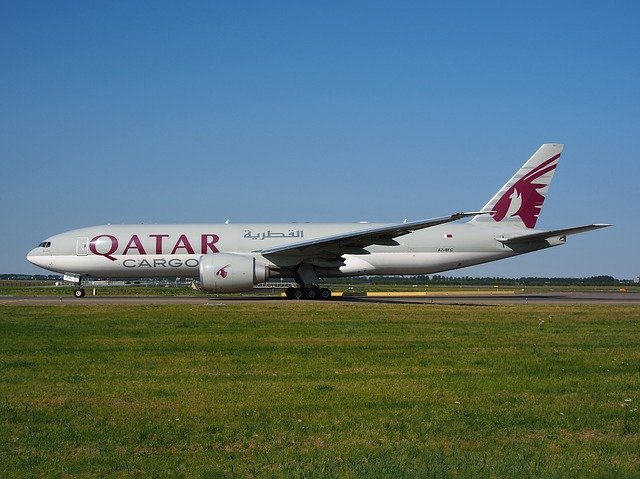
Qatar has begun partially reopening its airspace after days of disruption caused by Iranian missile and drone strikes linked to the ongoing United States–Israeli military campaign against Iran, according to reports by Al Jazeera.
The move comes after authorities grounded flights across the country late last month amid escalating regional tensions that forced several Gulf states to close their skies and disrupted global aviation networks.
The Qatar Civil Aviation Authority confirmed that limited air traffic resumed on Friday evening through specially designated contingency routes. However, the reopening remains highly restricted and is being coordinated with the country’s armed forces to ensure operational safety.
According to the authority, flights are operating through “designated navigational contingency routes with limited operational capacity,” allowing only a narrow range of services to resume. These currently include evacuation flights for stranded passengers and essential cargo operations.
Despite the partial reopening, scheduled commercial services to and from Doha remain suspended until further notice. Authorities say the limited operations are intended as a cautious first step toward restoring connectivity at one of the Middle East’s most important aviation hubs.
Passengers holding confirmed bookings have been advised to monitor updates from their airlines before traveling to the airport.
Meanwhile, Qatar Airways said it plans to operate a number of repatriation flights on March 7 from Hamad International Airport. The airline intends to serve several major European destinations including London Heathrow, Paris Charles de Gaulle, Madrid, Rome and Frankfurt.
The carrier said priority will be given to vulnerable travelers, including stranded families, elderly passengers and those with urgent medical or humanitarian travel needs.
Qatar initially closed its airspace on February 28 as a precaution following missile and drone attacks across the Gulf linked to the escalating conflict involving Iran, the United States and Israel.
The crisis has led to widespread airspace closures across the Middle East, forcing airlines to suspend flights, reroute services and leaving thousands of travelers stranded worldwide.


newadmin





















Vegas’s Billion-Dollar Secrets – What They Don’t Want Tourists to Know

Visit Florida’s New CEO Bryan Griffin Shares His Vision for State Tourism with Graham

Chicago’s Tourism Renaissance: Graham Interviews Kristin Reynolds of Choose Chicago

Graham Talks with Cassandra McCauley of MMGY NextFactor About the Latest Industry Research

Destination International’s Andreas Weissenborn: Research, Advocacy, and Destination Impact

Graham and Don Welsh Discuss the Success of Destinations International’s Annual Conference

Graham and CEO Andre Kiwitz on Ventura Travel’s UK Move and Recruitment for the Role

Brett Laiken and Graham Discuss Florida’s Tourism Momentum and Global Appeal

Graham and Elliot Ferguson on Positioning DC as a Cultural and Inclusive Global Destination

Graham Talks to Fraser Last About His England-to-Ireland Trek for Mental Health Awareness

Kathy Nelson Tells Graham About the Honour of Hosting the World Cup and Kansas City’s Future

Graham McKenzie on Sir Richie Richardson’s Dual Passion for Golf and His Homeland, Antigua







 ADS PRO
Global tourism exceeds 1.5 billion travelers announces UN-Tourism
Qatar Airways offers reduced timetable to over 60 destinations
WTTC global tourism reached record economic impact of 11 trillion in 2025
Marginal increase for New York City tourism in 2025
Hands In, UATP join forces for airline multi-card payments