
Rainbow waters and volcanic cooking pots
Vicky Powers continues her tour of the islands of the Azores…
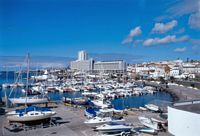
"We spent the bulk of our week on Sao Miguel, the biggest island whose bustling main town of Ponta Delgada had a harbour full of cruise ships and was much busier than anywhere else we’d been.
Booking into the Hotel Camoes, we wandered its black-and-white cobbled streets and down to the harbourside. It feels prosperous and friendly and unhurried – drivers even stop for pedestrians to cross the street. Its little alleyways have inviting outdoor cafes and art shops and boutiques.
We got another rental car and headed inland to see its famous crater lakes. At Lake Furnas we joined the other tourists on the lakeside as local chefs pulled cooking pots out of volcanic fumaroles, which are used by picnickers as well to slow-cook food.
We rented bikes and rode around the slate-grey lake, through the rainforest and into Furnas village, building up an appetite for the lunch we later enjoyed at Tony’s Restaurant – we ate the tasty meat-and-veg stew called cozido that had been cooked in the fumarole.
After lunch in Furnas we visited the Terra Nostra Park, a lush formal garden whose piece de resistance was an enormous thermal pool fed by a hot spring. Its waters were a murky amber colour, but we gamely changed into our swimming costumes and got in with the local bathers. It was like taking a glorious warm bath outdoors.
Another highlight was a two-hour hike to Fire Lake tucked away in a wilderness roughly in the middle of the island.
We walked up through forest, along an aquaduct, and through a rocky landscape to reach a point where we could look down on this remote crater lake: absolutely stunning. Equally beautiful was the Lake of the Seven Cities, it’s actually two lakes, one blue and one green, said to have been formed by the tears of thwarted lovers, who cried tears matching their eye colour.
We ate well in the Azores, because the locals take advantage of the Atlantic on their doorstep. One of our best meals was at Alabote in the historical seaside town of Ribeira Grande. The garlicky prawns and plain fried fish were heaven, and our friends raved about the Cherne Lorraine, a dish of wreckfish (a cousin of sea bass) in pastry.
We packed loads of activities into the week, including canoeing, a visit to a cave and to a pineapple plantation. I’d love to go back to the Azores, to take in more of its exotic sights and enjoy its slower pace of life, and perhaps to tackle the challenge of climbing the 2,300 metres up the side of Mount Pico.


Bev
Editor in chief Bev Fearis has been a travel journalist for 25 years. She started her career at Travel Weekly, where she became deputy news editor, before joining Business Traveller as deputy editor and launching the magazine’s website. She has also written travel features, news and expert comment for the Guardian, Observer, Times, Telegraph, Boundless and other consumer titles and was named one of the top 50 UK travel journalists by the Press Gazette.





















Vegas’s Billion-Dollar Secrets – What They Don’t Want Tourists to Know

Visit Florida’s New CEO Bryan Griffin Shares His Vision for State Tourism with Graham

Chicago’s Tourism Renaissance: Graham Interviews Kristin Reynolds of Choose Chicago

Graham Talks with Cassandra McCauley of MMGY NextFactor About the Latest Industry Research

Destination International’s Andreas Weissenborn: Research, Advocacy, and Destination Impact

Graham and Don Welsh Discuss the Success of Destinations International’s Annual Conference

Graham and CEO Andre Kiwitz on Ventura Travel’s UK Move and Recruitment for the Role

Brett Laiken and Graham Discuss Florida’s Tourism Momentum and Global Appeal

Graham and Elliot Ferguson on Positioning DC as a Cultural and Inclusive Global Destination

Graham Talks to Fraser Last About His England-to-Ireland Trek for Mental Health Awareness

Kathy Nelson Tells Graham About the Honour of Hosting the World Cup and Kansas City’s Future

Graham McKenzie on Sir Richie Richardson’s Dual Passion for Golf and His Homeland, Antigua







 ADS PRO
Higher departure tax and visa cost, e-arrival card: Japan unleashes the fiscal weapon against tourists
U.S.A. and Israel attacks on Iran impact air movements in the Gulf (Update 1.00pm CET)
Global tourism exceeds 1.5 billion travelers announces UN-Tourism
WTTC global tourism reached record economic impact of 11 trillion in 2025
Marginal increase for New York City tourism in 2025