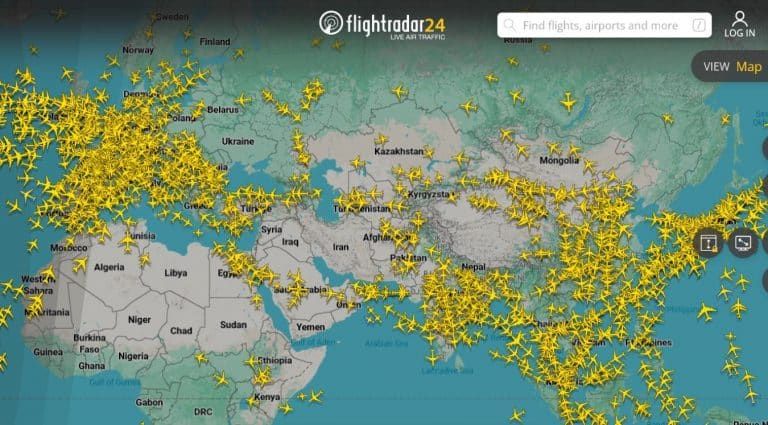
Thai Airways International, Singapore Airlines, and Vietnam Airlines say their flights between Europe and Asia remain unaffected by the ongoing Middle East turmoil. However, the sudden disappearance of dozens of Gulf carrier services is driving fares sharply higher between the two continents, threatening the tail end of Southeast Asia’s peak travel season.
Thai Airways International operates an extensive European network serving around a dozen countries and confirmed it is maintaining its full schedule. Flights are being rerouted to avoid affected airspace, resulting in slightly longer journey times on some routes.
Singapore Airlines also continues to operate its normal European schedule, with minor timing adjustments.
Vietnam Airlines stated that its services to Europe are not impacted by Middle East airspace closures.
Most European carriers are still flying between Europe and Asia but are operating longer routings. They face additional constraints compared to some Asian competitors because they are barred from Russian airspace. This leaves limited southern corridors, often routing flights below Saudi Arabia toward the Indian subcontinent before continuing to Southeast Asia.
While schedules remain largely intact, fares are surging. For example, the cheapest one-way fare from Singapore to London on Singapore Airlines (Skyscanner) for departure March 11 is currently quoted at around USD 2,000. On the same date, flights from Bangkok to Frankfurt operated by Thai Airways and Lufthansa are sold out. The lowest available alternative listed by Skyscanner shows a fare of USD 1,026 via Beijing with Air China—compared with approximately USD 400 for similar itineraries just a month ago.
Airfares could continue to rise in the short term as oil prices climb following Iran’s closure of the Strait of Hormuz, a critical maritime chokepoint for global oil trade. Higher fuel costs, combined with reduced capacity from Gulf carriers, are tightening supply and adding further upward pressure on ticket prices.