
Sustainable pilgrimages
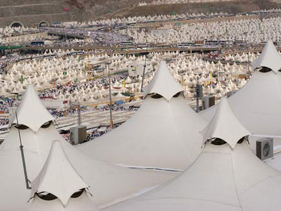
Green guide to Hajj tourism
Wrote Akeela Battay in the UK Independent: Plastic water bottles and cups, Styrofoam take-out containers with half-eaten food, plastic carrier bags; a trail of waste mingling with carbon dioxide fumes erupts from miles of cranky buses, carrying tired yet exultant pilgrims alongside dusty desert roads. These are the environmental remnants of the world’s largest annual pilgrimage. It’s a sorrowful sight – the antithesis to the once-in-a-lifetime spiritual experience that is Hajj.
Going green may seem the obvious choice as we continue to learn more about the effects of climate change, but for Muslims, the protection and maintenance of nature isn’t just a social responsibility – it’s also a religious one. According to the Qur’an, every human being is a steward of the earth, responsible for the care and wellbeing of nature in all its forms, due to, in the words of environmentalist Othman Llewellyn, "humanity’s enormous ability to do both good and evil; with ability comes responsibility."
So, when approximately three million pilgrims descend upon Mecca and Medina – Islam’s most holy places – during the Hajj pilgrimage, the environmental impact is cause for concern.
But there is a green guide to Hajj tourism.

Six years ago, Dr Husna Ahmad OBE, CEO of the UK-based international development NGO Global One, created the world’s first "Green Guide to Hajj" in collaboration with ARC. She reflects that perhaps Muslims in 2017 are more aware of their responsibility to the environment and more active in contributing to positive change.
"I set out with a very ambitious plan for the guide but unfortunately I think six years ago when it was produced the Muslim world was not ready to really take action," she says. "I am still very hopeful that others will continue this work and really push pilgrims to walk lightly on this earth, and use their consumer power to demand that travel agents think about climate change."
The first guide to an environmentally sustainable Hajj was launched at ARC’s Assisi event in November 2011 to encourage Muslim pilgrims to reduce their impact on the Earth. It was part of the Green Pilgrimage Network initiative and the first English version was soon followed in 2012 by Arabic and Bahasa Indonesian editions, with a further Hausa version under development. In 2013 a Green Hajj Facebook page was launched from Indonesia to further spread the influence of the book.
As well as practical tips for pilgrims, the Guide invites Muslims to use their Hajj experience as an opportunity to reflect on their own lives and move away from material culture and the waste it leaves behind.
Valere Tjolle
@ValereTjolle


Valere
















Vegas’s Billion-Dollar Secrets – What They Don’t Want Tourists to Know

Visit Florida’s New CEO Bryan Griffin Shares His Vision for State Tourism with Graham

Chicago’s Tourism Renaissance: Graham Interviews Kristin Reynolds of Choose Chicago

Graham Talks with Cassandra McCauley of MMGY NextFactor About the Latest Industry Research

Destination International’s Andreas Weissenborn: Research, Advocacy, and Destination Impact

Graham and Don Welsh Discuss the Success of Destinations International’s Annual Conference

Graham and CEO Andre Kiwitz on Ventura Travel’s UK Move and Recruitment for the Role

Brett Laiken and Graham Discuss Florida’s Tourism Momentum and Global Appeal

Graham and Elliot Ferguson on Positioning DC as a Cultural and Inclusive Global Destination

Graham Talks to Fraser Last About His England-to-Ireland Trek for Mental Health Awareness

Kathy Nelson Tells Graham About the Honour of Hosting the World Cup and Kansas City’s Future

Graham McKenzie on Sir Richie Richardson’s Dual Passion for Golf and His Homeland, Antigua







 ADS PRO
Global tourism exceeds 1.5 billion travelers announces UN-Tourism
Qatar Airways offers reduced timetable to over 60 destinations
WTTC global tourism reached record economic impact of 11 trillion in 2025
Hands In, UATP join forces for airline multi-card payments
Overseas travelers to the United States declined by 2.5% in 2025