
Switzerland elaborates winter tourism scenarios integrating climate change issues
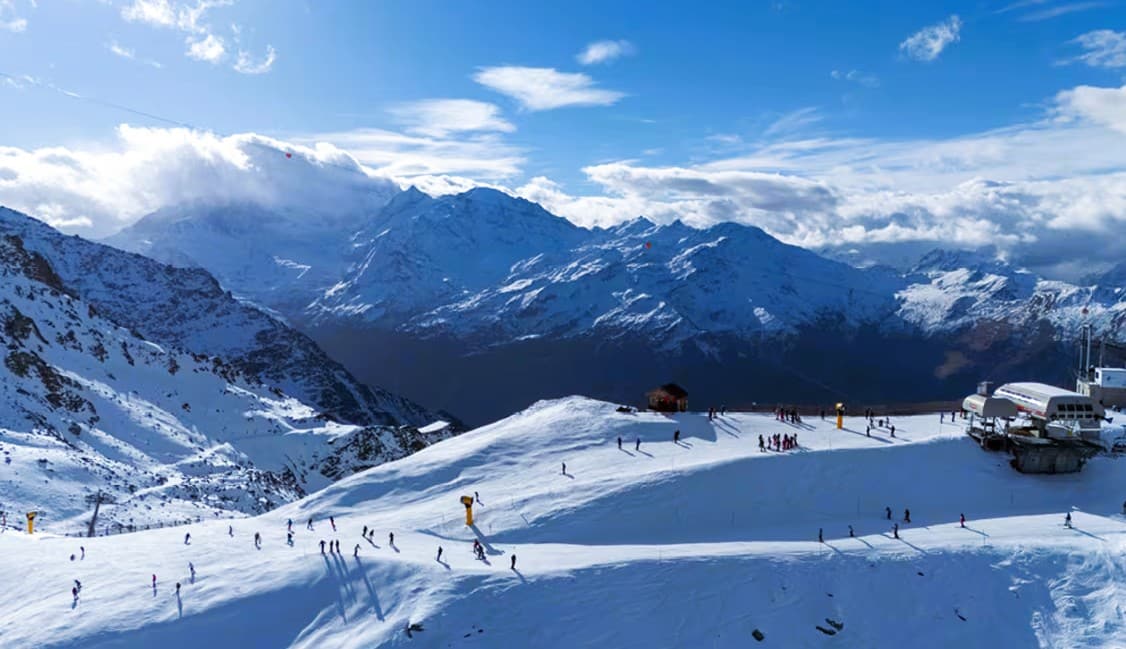
As climate change reshapes the Alps, Switzerland’s winter tourism sector is adapting as demand for snowy getaways shows no sign of waning.
Enter the “Boussole neige” (Snow Compass), a strategic tool developed by Switzerland Tourism in collaboration with Swiss Cableways, MeteoSwiss, and the RTA. It is designed to help destinations plan for a changing winter landscape. Backed by scientific data, it allows stakeholders to assess climate impacts and implement targeted adaptation strategies.
The Snow Compass combines natural and artificial snow scenarios across 280 measurement stations and evaluates each destination’s dependence on snow. The tool offers actionable strategies, already scientifically validated and in use in several Swiss regions.
Clear Challenges, Concrete Solutions
Winter sports vacations are not disappearing—they are evolving. Switzerland still boasts natural advantages, but destinations must navigate uncertainty and shorter snow seasons at lower altitudes. Adaptation requires foresight: reorganizing offerings, making strategic investments, and differentiating positions in the market.
The Snow Compass identifies three broad strategies, all observable in practice today:
Strategy A – Double Down on Winter Sports
Destinations at higher altitudes are reinforcing their winter offerings with innovative infrastructure and technology, rather than just maintaining the status quo:
-
Optimized piste preparation (e.g., Davos, Pizol).
-
Expanded artificial snow systems, with advanced technology and sustainable water management.
-
Alternative terrain use: prioritizing north-facing slopes and clustering the most snow-reliable areas (Flumserberg, SG; Sörenberg, LU).
-
Interregional partnerships: AlpsPass, Magic Pass, Arosa-Lenzerheide (GR).
-
High-altitude accommodations:
-
Whitepods (Monthey, VS) offers eco-luxury lodges at 1,400 m, blending sustainability with soft-snow experiences like dog sledding and hiking.
-
Frutt Mountain Resort (Melchsee-Frutt, OW), situated above 1,900 m, transformed a day-trip site into a full-fledged winter resort, appealing to families and high-end visitors alike.
-
These examples show that accessibility, infrastructure quality, and clear positioning are key to long-term success in winter sports tourism.
Strategy B – Adapt to Uncertain Snow Conditions
Other regions are reinventing winter tourism beyond skiing, offering activities and experiences that attract visitors even in low-snow years:
-
Fatbiking, snowtubing, panoramic sledding (Villars, Leysin, Atzmännig).
-
Wellness and thermal experiences (Bains de la Gruyère, Leukerbad).
-
Cultural events and festivals (Arosa Humorfestival, Caprices in Crans-Montana).
-
Targeting international markets seeking a “touch of snow” (e.g., Brazil, which saw a 25% increase in mountain-region overnight stays in winter 2024/25).
-
Leveraging sunshine and scenic high-altitude landscapes above fog (Rigi, Säntis, Stockhorn).
Such strategies also help fill hotels outside peak winter periods, boosting overall occupancy.
Strategy C – Focus on Other Seasons
Some resorts diversify to offset potential winter declines:
-
Charmey (FR) repositioned as a four-season destination, opening a 2.5 km slide park that draws visitors year-round.
-
Sattel-Hochstuckli (SZ) shifted from unreliable low-altitude ski operations to family-focused summer and autumn offerings, now generating more revenue in summer than winter.
-
Moléson (FR) invests in health, nature, and biking trails to attract visitors across all seasons.
This approach highlights that the future of mountain tourism in Switzerland relies not only on snow but on innovation, differentiation, and long-term vision.
Related News Stories: Switzerland elaborates winter tourism scenarios which integrate ... Rue's Living Water Boat Cruises: Exploring Winter Haven's Chain of ... News - TravelMole Agent Archives - Page 2168 of 2618 - TravelMole Destination Archives - Page 2044 of 2490 - TravelMole Christoper Sheldon Pacific Asia Travel Association (PATA) - TravelMole Activity Editorial Team Azamara reveals winter 2027/28 programme EasyJet adds 22 new winter routes


newadmin




















Vegas’s Billion-Dollar Secrets – What They Don’t Want Tourists to Know

Visit Florida’s New CEO Bryan Griffin Shares His Vision for State Tourism with Graham

Chicago’s Tourism Renaissance: Graham Interviews Kristin Reynolds of Choose Chicago

Graham Talks with Cassandra McCauley of MMGY NextFactor About the Latest Industry Research

Destination International’s Andreas Weissenborn: Research, Advocacy, and Destination Impact

Graham and Don Welsh Discuss the Success of Destinations International’s Annual Conference

Graham and CEO Andre Kiwitz on Ventura Travel’s UK Move and Recruitment for the Role

Brett Laiken and Graham Discuss Florida’s Tourism Momentum and Global Appeal

Graham and Elliot Ferguson on Positioning DC as a Cultural and Inclusive Global Destination

Graham Talks to Fraser Last About His England-to-Ireland Trek for Mental Health Awareness

Kathy Nelson Tells Graham About the Honour of Hosting the World Cup and Kansas City’s Future

Graham McKenzie on Sir Richie Richardson’s Dual Passion for Golf and His Homeland, Antigua







 ADS PRO
Phocuswright reveals the world's largest travel markets in volume in 2025
Higher departure tax and visa cost, e-arrival card: Japan unleashes the fiscal weapon against tourists
Singapore to forbid entry to undesirable travelers with new no-boarding directive
Euromonitor International unveils world’s top 100 city destinations for 2025
U.S.A. and Israel attacks on Iran impact air movements in the Gulf (Update 1.00pm CET)