Guest Column by Christine Young, Galley Bay Resort, Antigua and Barbuda
If you love bird watching then Galley Bay Resort and Spa is a great place to spot a variety of wetland, land and sea birds within a compact area. Apart from the warmth of the Caribbean sun, the turquoise waters and white sands, Galley Bay Resort and Spa offers the nature lover a rustic paradise along a half hour long jogging trail fringed by four types of mangroves – the red mangrove (Rizophora mangle) the black mangrove (Avicennia germinan) , the white mangrove (Languncularia racemosa) and the Buttonwood mangrove (Conocarpus erectus).
Mangroves provide a variety of ecosystem services such as shoreline stability; shoreline protection from the harsh effects of hurricanes and storm surge; a habitat for marine and aquatic species ;a filtration system to prevent silt from entering the coral reef as well as a harmonious safe haven for many birds, juvenile fish, crustaceans and insects. The resort is a bird lover’s paradise and home to over 45 bird species and several migratory species such as the ruddy turnstone, the roseate tern, the lesser and Greater Yellow Legs among a few. You can experience the biodiversity of three varied ecosystems as you view land, wetland and sea birds.
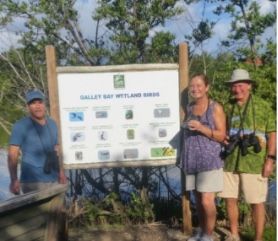
At Galley Bay guests have a choice of either taking the jogging trail on their own or going on a guided bird tour by one of the hotel staff, where they will learn about the importance of the mangroves as well as see several bird species along the way. Some of the most common birds that you will see amidst the lush gardens include the Zeneider dove, the common ground dove, the yellow wharbler, the Carib throated hummingbirds and the "yellow breast" bananaquits. The resort also boasts of being home to the endangered West Indian Whistling duck, which is a resident bird at Galley Bay. You can be assured to see at least a few of these birds on your visit.
West Indian Whistling ducks are categorized as vulnerable by the IUCN. These ducks are the largest and rarest of the 8 species of unique whistling ducks found throughout the worlds tropical regions. The large goose-like ducks have relatively long legs that extend beyond the tail in flight with feathers on the upper part of the duck – mostly brown with pale edging, white throat, with a lower neck that is streaked with black. The chest is reddish and the underbelly is white with dark spots.
Some lucky patrons have spotted the precarious green heron which may be perched in one of the mangrove branches. Green herons sometimes adopt a "freeze" position when you approach them. The Yellow crowned night crown is a large nocturnal bird that can also be seen around the jogging trail near the water’s edge solitary foraging for food – crustaceans and fish. The pirates of the air, the Magnificant Frigate birds are not uncommon to spot in this location and can be seen from a distance scouring the air with the intention of stealing fish from the mouths of other smaller birds, hence their name "pirate birds". Dipping and swooping up unsuspecting fish in the ocean are the Brown Pelicans while the black necked stilts shuffle and sound the alarm to the other birds that there are visitors to the lagoon.
These mangroves are also home to a variety of insects including the boldly colored dragon flies in bright blue and red hues hovering over the pockets of water and mini ponds as well as the brilliantly colored butterflies including the monarch butterfly, the great southern white butterfly and the white peacock butterfly fluttering about the trail. Without a doubt the trail is enough to keep an avid bird watcher and nature lover well entertained.
Guests can rent binoculars at the hotel’s concierge desk and bird charts are available at the Resort Gift Shop. The resort’s management team encourages guests to take as many photos as they like, post them on the Facebook page and tweet about their birding experience. Climate change is a reality that we are all dealing with but the resort is determined to do the best they can to ensure that our resident and visiting birds have safe havens to breed and forage. They will continue to promote the protection of the mangrove ecosystems, ensuring that tourism and environmental responsibility work hand in hand.