
Two-minute guide to Burma
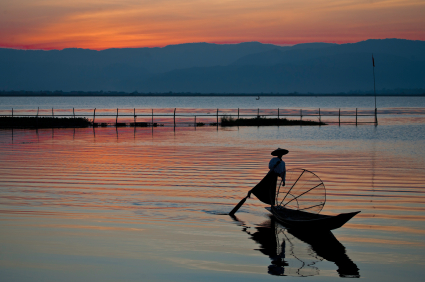
"It’s been three years since Aung San Suu Kyi welcomed responsible tourism into Burma, and a flood of tourism organisations overturned travel boycotts which had been in place for over 10 years. However, the introduction of tourism has not marked the end of Burma’s troubles, and despite the country now being firmly at the top of the adventure travel bucket list, it is far from fixed.
When responsibletravel.com lifted its boycott of Burma in 2011, managing director Justin Francis called on the Burmese Government and the newly formed Burmese Tourist Board to "work with local communities with an interest in tourism, to ensure that responsible tourism sets the agenda in the region".
Since then, Burma holidays have and multiplied, and rocketed in popularity. An adventure tour to the country, taking in Inle Lake, Bagan, Yangon and more remote hill tribe areas was responsibletravel.com’s most booked trip in 2013, indicative of just how evocative this destination is for tourists keen to explore off the beaten track. It is ironic that tourism seems to value most highly those places in which it has had least influence, and the popularity of an untouched, unexplored Burma would certainly attest to that. However tourism must tread carefully in this fragile destination; solutions have not been found to all its problems.
Although huge and positive changes have occurred in the country, it is still run by a non-democratically elected government, and corruption and human rights abuses still continue on a daily basis. And tourists must realise that by visiting the country they will always be, in part, supporting the military regime; even the most locally run guesthouses and restaurants will need to pay taxes to the government. As such it becomes all the more important to ensure that as much money as possible from tourism reaches the local people who need it most. The obvious advice is to avoid government-run hotels, but in addition to that simply go as local as possible; buy directly from the Burmese in local markets, hire local guides and research where to find responsible craft projects and other community-led tourism initiatives.
 Taking the time to research, learn and understand Burma’s history before travelling is vital to ensure a holiday there benefits the right people. For example, watching an ethereal sunrise over Bagan’s pagodas is one of the most awe-inspiring sights in the country, and firmly on the to-do list of any traveller to Burma, however, many tourists are not aware that in developing the site for tourism, residents of Old Bagan were moved off their ancestral land by the Burmese government and into the newly-formed New Bagan. Without compensation, and with few tourists visiting New Bagan, its inhabitants see next to no benefit from tourism, despite having been the guardians of Bagan’s stupas for centuries. However, by employing local guides, by avoiding the 5 star chain hotels, and using locally-run guesthouses or even staying in New Bagan itself, travellers can do their bit to help turn this around. And with tourists usually crowded in one or two spots of this vast site, a local guide who knows Bagan’s hidden corners can open up a whole new perspective on one of the world’s most spectacular archaeological sites.
Burma is a tourism clean slate, a chance to start off on the right foot and avoid the development of culturally and environmentally damaging tourism practises. And for a country so unused to Western tourists, the impact of a poorly timed photo, an accidental insult or refusal of food will be more keenly felt than in Burma’s more tourism-weary neighbours. So it becomes the responsibility of all tourists visiting Burma, and all tourism organisations working there to ensure that they have a positive impact from the outset, and that as requested by Aung San Suu Kyi and the National League for Democracy, responsible tourism underpins all tourism in Burma, before it’s too late."
the For more advice on responsible tourism in Burma read responsibletravel.com’s 2 minute travel guide at http://www.responsibletravel.com/holidays/burma.


Bev
Editor in chief Bev Fearis has been a travel journalist for 25 years. She started her career at Travel Weekly, where she became deputy news editor, before joining Business Traveller as deputy editor and launching the magazine’s website. She has also written travel features, news and expert comment for the Guardian, Observer, Times, Telegraph, Boundless and other consumer titles and was named one of the top 50 UK travel journalists by the Press Gazette.





















Vegas’s Billion-Dollar Secrets – What They Don’t Want Tourists to Know

Visit Florida’s New CEO Bryan Griffin Shares His Vision for State Tourism with Graham

Chicago’s Tourism Renaissance: Graham Interviews Kristin Reynolds of Choose Chicago

Graham Talks with Cassandra McCauley of MMGY NextFactor About the Latest Industry Research

Destination International’s Andreas Weissenborn: Research, Advocacy, and Destination Impact

Graham and Don Welsh Discuss the Success of Destinations International’s Annual Conference

Graham and CEO Andre Kiwitz on Ventura Travel’s UK Move and Recruitment for the Role

Brett Laiken and Graham Discuss Florida’s Tourism Momentum and Global Appeal

Graham and Elliot Ferguson on Positioning DC as a Cultural and Inclusive Global Destination

Graham Talks to Fraser Last About His England-to-Ireland Trek for Mental Health Awareness

Kathy Nelson Tells Graham About the Honour of Hosting the World Cup and Kansas City’s Future

Graham McKenzie on Sir Richie Richardson’s Dual Passion for Golf and His Homeland, Antigua







 ADS PRO
Higher departure tax and visa cost, e-arrival card: Japan unleashes the fiscal weapon against tourists
Singapore to forbid entry to undesirable travelers with new no-boarding directive
Euromonitor International unveils world’s top 100 city destinations for 2025
U.S.A. and Israel attacks on Iran impact air movements in the Gulf (Update 1.00pm CET)
Global tourism exceeds 1.5 billion travelers announces UN-Tourism