

Our holidays are more enjoyable because they do good...When your trip benefits others, you gain too. All our trips support communities and preserve nature - which helps you get closer to both. So when you travel with us, everyone wins. And they should do more than minimize impact...Our holidays work with people and planet, and ensure maximum benefit to both. We manually screen each one, and publish the evidence on every holiday page. That way, you know any trip with us will be a force for good, as well as truly memorable. And, when you travel with us, we’ll fund a day out for a child - so they can experience something new and great too. We call it our trip for a trip. Together, ...Read more
Company Name : Responsible Travel
Follow us on:
-
26 Sep 23
Partner News
Survey: Responsible tourism businesses report strong post-pandemic reboundOver 60% of respondents tell Responsible Travel that business post-pandemic has been good or ...Read more -
08 Jul 23
Expert Hub
Together, we can make tourism betterMAXIMUM EXPERIENCE & MINIMUM IMPACT Responsible travel is a win: win for you, ...Read moreMAXIMUM EXPERIENCE & MINIMUM IMPACT Responsible travel is a win: win for you, local places and communities. When we travel we take our holiday in somebody else’s home. Our holidays can impact their environments, cultures, economies and ways of life. Treating local people and places with respect is the right thing to do, and opens up possibilities for more authentic travel. Travelling responsibly can’t of course fully compensate for the environmental impacts of flying. Read our thoughts on aviation and climate change. But it can benefit local people and give you a far more rewarding and enjoyable holiday. the win : win of responsible tourism REDUCING CO2 EMISSIONS THE 1-2-3 OF REDUCING CO2 EMISSIONS Responsible tourism creates many benefits locally, but we must reduce the CO2 emissions from our holidays. It would be easy to tell you to carry on as normal and that carbon offsets (paying for a project to reduce your emissions) are the answer. But EU research shows 85% of them don’t work; and shifting responsibility elsewhere is not good behaviour. We dropped offsets in 2009 calling them a ‘distraction’. YOUR HOLIDAY’S CO2 RESULTS FROM 1) EMISSIONS IN THE DESTINATION 2) HOW YOU GET THERE AND 3) HOW OFTEN AND FAR YOU TRAVEL. WE MUST FOCUS ON REDUCTION, NOT OFFSETS.- CO2EMISSIONS IN THE DESTINATION
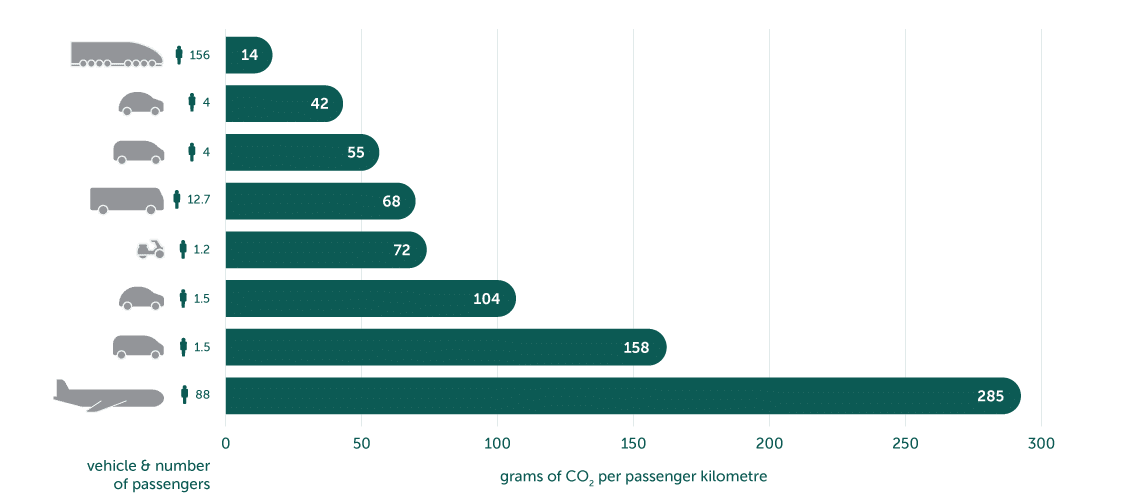
- CO2EMISSIONS GETTING TO THE DESTINATION
 Source: European Environment Agency
 Calculate the emissions of a flight.
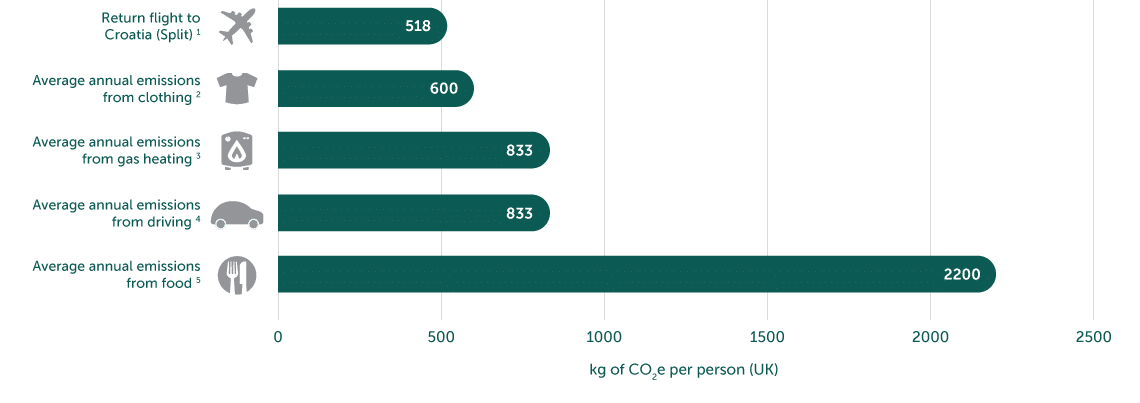
Compare the emissions of flying with other things in your life.
Calculate the emissions of a flight.
Compare the emissions of flying with other things in your life.

- HOW OFTEN YOU TRAVEL
 Our Sources:
1 Return flight to Croatia (Split) - www.flightemissionmap.org
2 Average annual emissions from clothing - WRAP (The Waste and Resources Action Programme)
3 Average annual emissions from gas heating - Committee on climate change
4 Average annual emissions from driving - Committee on climate change
5 Average annual emissions from food - carbonindependent.org
CARBON OFFSETS DO NOT WORK
Carbon offsets sum up all that is wrong with our approach to tourism and the climate crisis. They perpetuate the idea this crisis does not prevent unlimited growth with old and highly polluting technology; shifts the moral responsibility for carbon reduction to someone else (not the type of behaviour we need to encourage); and finally there is the small matter that they don't work. From 2021 the EU will stop allowing offsets to be counted towards emissions reductions targets.
We stopped offering carbon offsets as a company over ten years ago and we no longer promote carbon offset schemes on the product pages of our operators, instead encouraging them to discuss the ways in which they are actively reducing carbon on their trips.
The concept of carbon offsets has existed for many years. They occur in two separate contexts, the compliance market and the voluntary offset market. Airline passengers may well be familiar with these, as airlines frequently offer them to customers as a way to compensate for the CO2 emissions from their flights. By voluntarily paying a little extra, based on how much CO2 their flight will generate, a passenger (or businesses) can support an initiative which ‘cancels out’ this CO2 – such as tree planting, a wind farm or the distribution of fuel efficient stoves in developing countries, for example.
However, there are deep set problems with offsetting schemes. Here are some of the issues with offsetting:
Our Sources:
1 Return flight to Croatia (Split) - www.flightemissionmap.org
2 Average annual emissions from clothing - WRAP (The Waste and Resources Action Programme)
3 Average annual emissions from gas heating - Committee on climate change
4 Average annual emissions from driving - Committee on climate change
5 Average annual emissions from food - carbonindependent.org
CARBON OFFSETS DO NOT WORK
Carbon offsets sum up all that is wrong with our approach to tourism and the climate crisis. They perpetuate the idea this crisis does not prevent unlimited growth with old and highly polluting technology; shifts the moral responsibility for carbon reduction to someone else (not the type of behaviour we need to encourage); and finally there is the small matter that they don't work. From 2021 the EU will stop allowing offsets to be counted towards emissions reductions targets.
We stopped offering carbon offsets as a company over ten years ago and we no longer promote carbon offset schemes on the product pages of our operators, instead encouraging them to discuss the ways in which they are actively reducing carbon on their trips.
The concept of carbon offsets has existed for many years. They occur in two separate contexts, the compliance market and the voluntary offset market. Airline passengers may well be familiar with these, as airlines frequently offer them to customers as a way to compensate for the CO2 emissions from their flights. By voluntarily paying a little extra, based on how much CO2 their flight will generate, a passenger (or businesses) can support an initiative which ‘cancels out’ this CO2 – such as tree planting, a wind farm or the distribution of fuel efficient stoves in developing countries, for example.
However, there are deep set problems with offsetting schemes. Here are some of the issues with offsetting:
- Top schemes have not worked: A 2017 study of offsets, commissioned by the European Commission, found that 85 percent of offset projects under the Kyoto Protocol’s Clean Development Mechanism (CDM) had failed to reduce emissions. This clearly shows that even the very best schemes don’t work. From 2021 the EU will stop allowing offsets to be counted towards emissions reductions targets.
- Offsets cannot act quickly enough; only reductions can: Given the huge growth in aviation in recent years, the continued growth predicted in future, and the limited time period available for reversing the climate crisis, many campaigners and climate scientists believe that the focus should be on reducing the number of flights, not paying for CO2 savings elsewhere which could take years to take effect and have little guarantee of working. In the case of forest planting for example, trees do not reach their average carbon storage capacity until they are between 15 and 35 years old – far too long given the urgency of the climate catastrophe we are faced with. We do not have the luxury of time if we are to keep global heating below 1.5C. Carbon offsets can therefore never radically reduce emissions at the speed required.
- Offsets distract from the real issue of necessary reductions: Offsets can deter consumers from reducing the number of flights they take, as they claim to provide a ‘guilt-free’ way to travel. Friends of the Earth have previously referred to them as a ‘dangerous distraction’. For these reasons Responsible Travel stopped offering offsets to our customers in 2009, as we simply didn’t believe they achieved their aim. "Most people just fly occasionally but there's this small group who are very frequent fliers. And these people cannot be using offsetting to allow them to carry on business as usual," says Professor Kevin Anderson of the Tyndall Centre for Climate Change Research in Manchester, UK.
- Offsets shift our moral responsibility to reduce, to someone else: The concept of paying other people, in another corner of the world, to cut your emissions instead of cutting your own is fundamentally flawed. Environmentalist George Monbiot has said: “Buying and selling carbon offsets is like pushing the food around on your plate to create the impression that you have eaten it.”
- Offset programmes may have happened regardless: In theory, offset schemes must ensure that additional trees are planted, or more stoves are distributed, than would have happened without the scheme. This is known as ‘additionality,’ and it is frustratingly hard to prove. If the wind turbine is going to be built regardless, the offset contributed no extra benefit, and no carbon has been offset.

- Difficulty in measuring offsets’ contributions: In the case of forest carbon offsetting for example, it is very difficult to calculate the amount of CO2 that is stored in a forest (the only truly accurate way involves cutting it down and burning it).
- Carbon storage in trees is temporary: Many carbon calculations assume newly planted trees will be there for a century; this is wildly optimistic. As well as fire, disease, storms and natural decay, there is a huge issue with the number of trees that are harvested illegally. For example Austrian Airlines AG, EasyJet Plc and Virgin Atlantic Airways Ltd have paid to have forests planted only to see that they have later been cut down. Furthermore, it may be the case that by paying to protect a piece of forest from logging for example, you successfully protected that particular area. However, the logging company may have then subsequently bought a similar plot of forest nearby to chop down instead. This is known as ‘carbon leakage’.
- Offsets impact on indigenous communities: Often communities have very little say in the schemes, despite the fact that their livelihoods are often affected as a result. Schemes which prevent logging in tropical forests have been accused of harming the traditional ways of life of indigenous people; forest communities are effectively paying the price for our cheap flights.
- No incentive for reducing emissions or decarbonising air travel: ‘Mitigation deterrence’ – that is the promise of cheap and easy CO2 removal means that offsets are a barrier to the aviation sector acting earnestly to reduce emissions significantly now. They provide a quick fix and delay the need for urgent innovation and investment by allowing the continued use of emissions-intensive fuels. As Professor Kevin Anderson says: “If offsetting is deemed to have equivalence with mitigation, the incentive to move to lower-carbon technologies, behaviours and practices is reduced accordingly.” If companies, governments, shareholders and consumers believe they can merely pay a few dollars to offset their carbon use then it is no wonder there is insufficient investment in railways, aviation demand management or decarbonisation research and development.
- Take up rates: Take up rates among consumers for voluntary offset schemes are historically low, at around 1 percent.
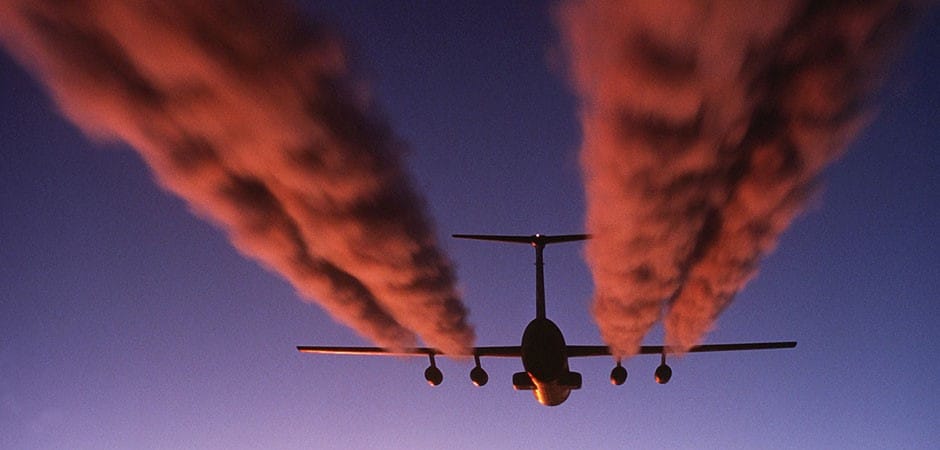
 Aeroplane chemtrail. Photo credit: Gralo
Initiatives such as the Carbon Offsetting and Reduction Scheme for International Aviation (CORSIA) function on a global scale, and – from 2027 – a mandatory one. At the end of each three-year phase of the scheme, airlines will need to buy credits to offset their CO2 emissions for those years.
The big debate concerns which climate initiatives to allow as offsets. Of course, creating a market for offsets incentivises countries to develop their own green initiatives, so that they can sell offsets. However, given that many of these initiatives would have gone ahead anyway, there are concerns about additionality – buying offsets from these schemes creates no additional reduction in emissions. These have been called ‘junk credits’, and many environmental campaign organisations have called for these to be excluded from the Paris Agreement and other climate targets, saying that they threaten our ability to really reduce global carbon emissions.
There are, of course, some excellent emissions reduction projects being set up. But counting these as offsets is not necessarily the best – or most honest – way of going about this. Counting an offset as an offset when it is not actually compensating for carbon emissions is only going to make the climate crisis worse.
Aeroplane chemtrail. Photo credit: Gralo
Initiatives such as the Carbon Offsetting and Reduction Scheme for International Aviation (CORSIA) function on a global scale, and – from 2027 – a mandatory one. At the end of each three-year phase of the scheme, airlines will need to buy credits to offset their CO2 emissions for those years.
The big debate concerns which climate initiatives to allow as offsets. Of course, creating a market for offsets incentivises countries to develop their own green initiatives, so that they can sell offsets. However, given that many of these initiatives would have gone ahead anyway, there are concerns about additionality – buying offsets from these schemes creates no additional reduction in emissions. These have been called ‘junk credits’, and many environmental campaign organisations have called for these to be excluded from the Paris Agreement and other climate targets, saying that they threaten our ability to really reduce global carbon emissions.
There are, of course, some excellent emissions reduction projects being set up. But counting these as offsets is not necessarily the best – or most honest – way of going about this. Counting an offset as an offset when it is not actually compensating for carbon emissions is only going to make the climate crisis worse. -
08 Jul 23
Expert Hub
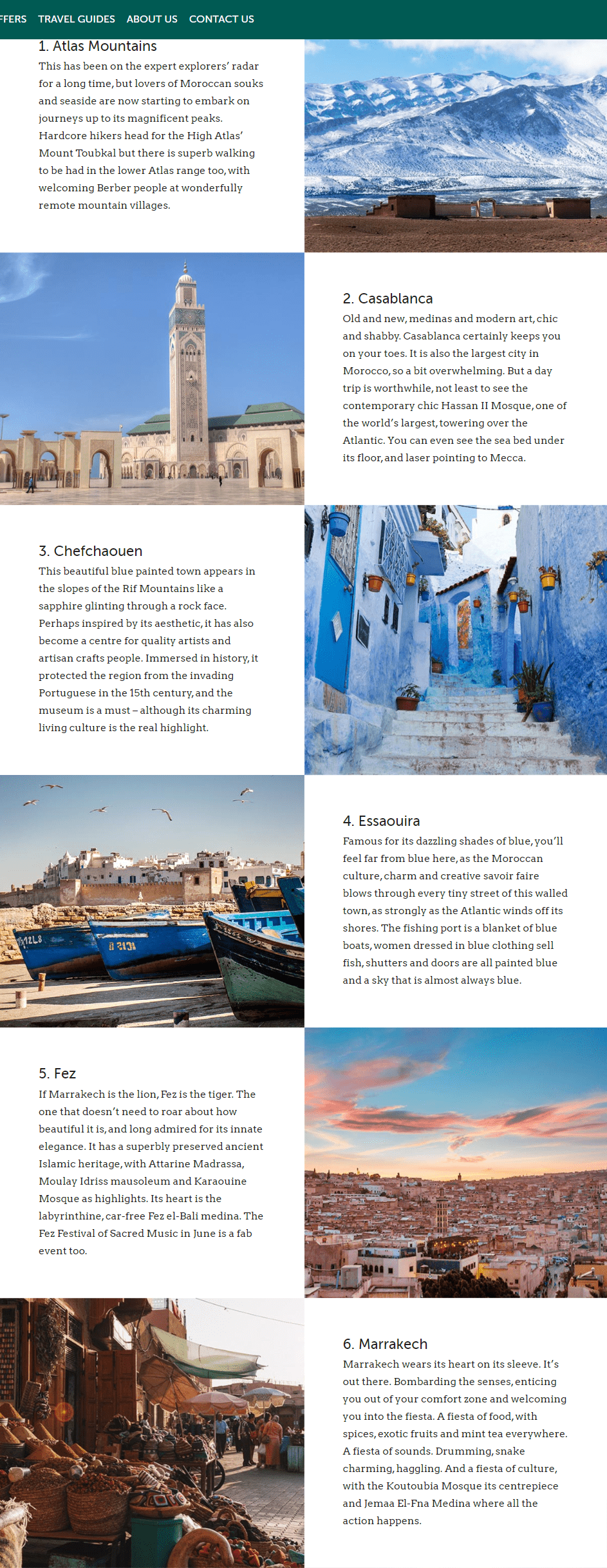
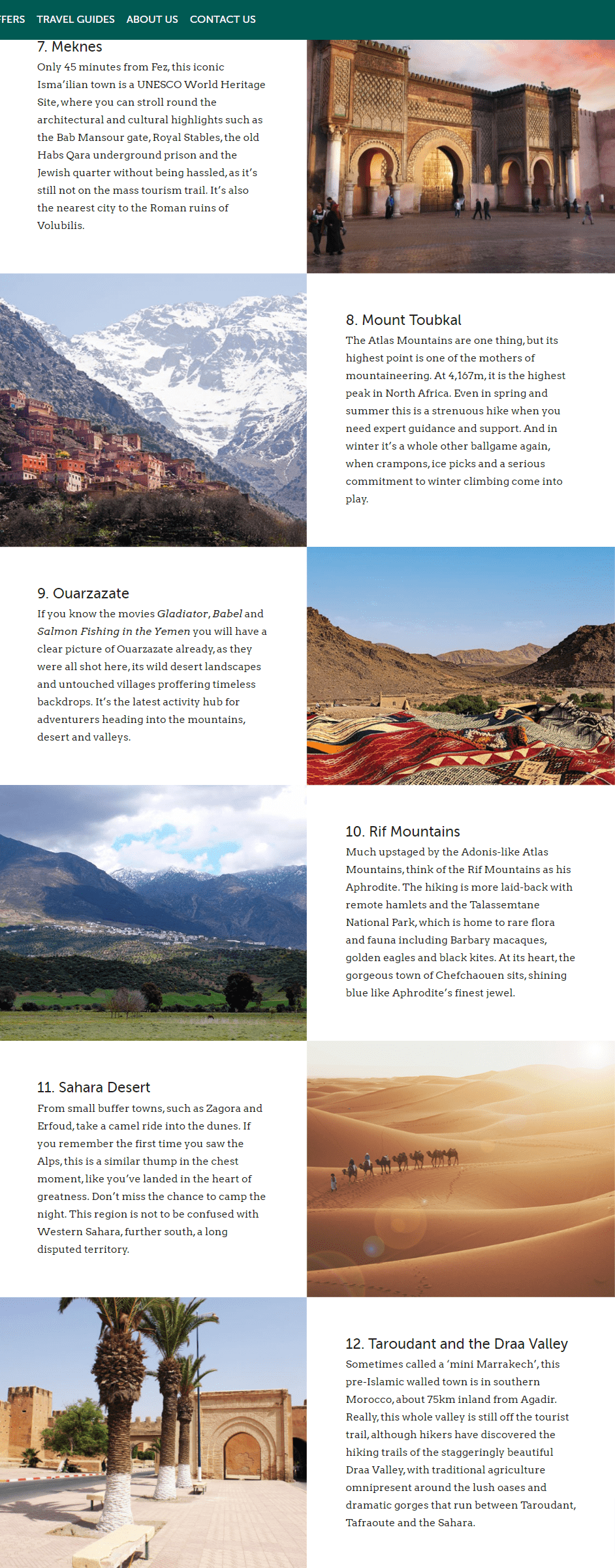
It Felt Like I Had Landed On A Magic Carpet: MoroccoMorocco holidays whisk us into a rainbow of raucous colours and enlightening Islamic culture. ...Read moreMorocco holidays whisk us into a rainbow of raucous colours and enlightening Islamic culture. Marrakech is called the Red or Rose City, with its ancient red and ochre walls contrasting with the dramatic backdrop of the white snowcapped Atlas Mountains. Essaouira, the Blue City, is not only on the sea, but is a sea of blue. “IT'S AFRICA, IT'S ARABIC, IT'S AN AWAKENING TO THE JOYS OF ISLAMIC CULTURE. IT FELT LIKE I HAD LANDED ON A MAGIC CARPET.” Women dressed in blue work alongside blue painted boats and you can watch the world go by through blue shuttered windows. Chefchaouen is painted so many delicate shades of indigo, it glitters like a sapphire peeking through the rocks of the Rif mountains all around. And Casablanca is the white city where, with its Spanish heritage, every ‘casa’ is ‘blanca’. And, of course, every town has a medina or souk where the array of colours, from spices to slippers, cushions to costume jewellery, shakes off any pre-holiday blues... whatever the time of year. Read more in our Morocco travel guide. WHAT WE RATE & WHAT WE DON'T
 Family holidays
It’s hot, there are riads with gorgeous pools, kasbahs that are like something out of a fairy tale, snowmelt rivers to raft down, an ocean to surf in, and dunes to climb and clamber over on camels. Best of all, our specialists know when to swap a long walk for a mule ride or a hotel for a family-run mountain gite.
Atlas Mountains
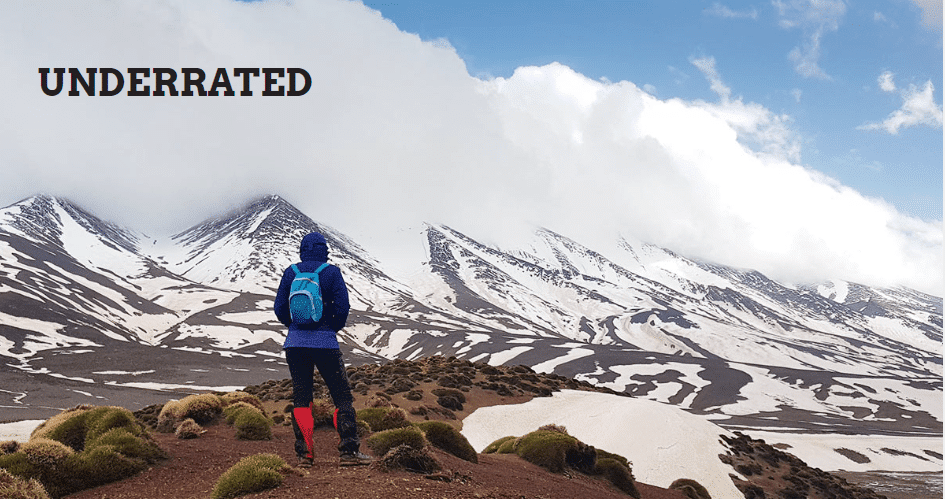
The Atlas Mountains have been on the expert explorers’ radar for a long time, but lovers of Moroccan souks and seaside are now starting to embark on journeys up to these magnificent peaks. Hardcore hikers head for the High Atlas’ Mount Toubkal, but there is superb walking to be had in the lower Atlas range too, with welcoming Berber people at remote mountain villages along the way.
Cycling
With dirt roads, mountains and plenty of heat, Morocco has breath-taking biking. You can go mountain biking from the Atlas Mountains to the desert, with the omnipresent snowcapped mountains an exhilarating backdrop as you take on the ups and downs of Atlas ascents and desert descents. With an ever expanding network of quiet tarmac roads, road cycling is growing in the Morocco too.
Fez
If Marrakech is the lion, Fez is the tiger. The one that doesn’t need to roar about how beautiful it is, and long admired for its innate elegance. It has a superbly preserved ancient Islamic heritage, with Attarine Madrassa, Moulay Idriss mausoleum and Karaouine Mosque as highlights. Its heart is the labyrinthine, car-free Fez el-Bali medina. The Fez Festival of Sacred Music in June is a fab event too.
Family holidays
It’s hot, there are riads with gorgeous pools, kasbahs that are like something out of a fairy tale, snowmelt rivers to raft down, an ocean to surf in, and dunes to climb and clamber over on camels. Best of all, our specialists know when to swap a long walk for a mule ride or a hotel for a family-run mountain gite.
Atlas Mountains
The Atlas Mountains have been on the expert explorers’ radar for a long time, but lovers of Moroccan souks and seaside are now starting to embark on journeys up to these magnificent peaks. Hardcore hikers head for the High Atlas’ Mount Toubkal, but there is superb walking to be had in the lower Atlas range too, with welcoming Berber people at remote mountain villages along the way.
Cycling
With dirt roads, mountains and plenty of heat, Morocco has breath-taking biking. You can go mountain biking from the Atlas Mountains to the desert, with the omnipresent snowcapped mountains an exhilarating backdrop as you take on the ups and downs of Atlas ascents and desert descents. With an ever expanding network of quiet tarmac roads, road cycling is growing in the Morocco too.
Fez
If Marrakech is the lion, Fez is the tiger. The one that doesn’t need to roar about how beautiful it is, and long admired for its innate elegance. It has a superbly preserved ancient Islamic heritage, with Attarine Madrassa, Moulay Idriss mausoleum and Karaouine Mosque as highlights. Its heart is the labyrinthine, car-free Fez el-Bali medina. The Fez Festival of Sacred Music in June is a fab event too.
 Meeting the Berbers
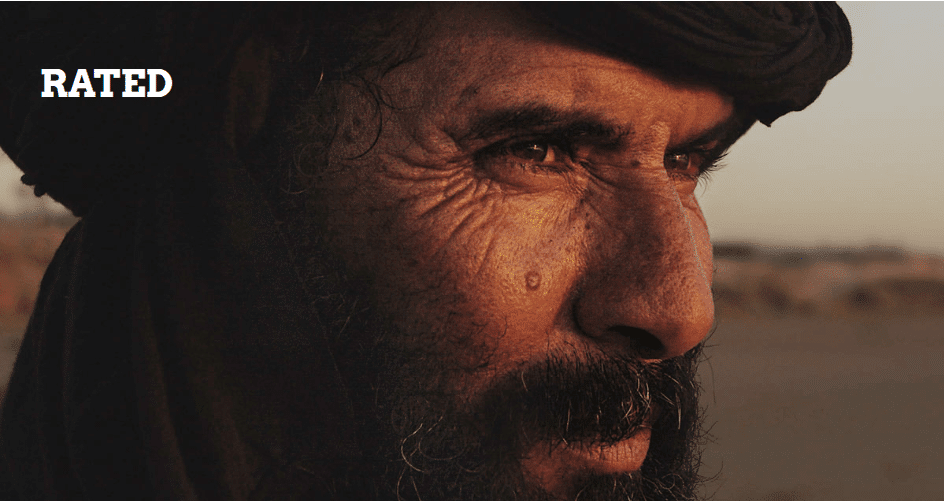
The indigenous people of Morocco, and traditionally nomadic, most Berbers are now in settled communities around the lower and High Atlas Mountains, and Rif Mountains. Stay with a Berber family in the Sahara, trek with them into the High Atlas as they bring their livestock up to summer pastures, or take a traditional guided trek into the mountains with donkeys or camels.
Chefchaouen
This beautiful blue painted town appears in the slopes of the Rif Mountains like a sapphire glinting through a rock face. Perhaps inspired by its aesthetic, it has also become a centre for quality artists and artisan crafts people. And with the mountains and Talassemtane National Park as a backdrop, the artist’s palette is replete.
Using a guide
Not only does it make negotiating your way around the souks, Sahara, mountains or medinas much easier, but it’s also a vital source of income in a country that is very dependent on tourism. Moroccans have a great sense of humour, are beyond welcoming and very proud of their country. Responsible tour operators always engage a local guide to accompany you – meaning your trip will be made all the more memorable and fun.
Mount Toubkal
The highest peak in North Africa at 4,167m, Mount Toubkal is for hikers who have trained for the climb, the challenges increasing with each contour change. Most treks start in the village of Imlil in the heart of Toubkal National Park, where the smell of juniper, cedar and Aleppo pine abound. Then you hit the colder arid steppe, where nature turns a little more hostile to hikers. A serious trek, so only do it with an expert mountain guide. But do it.
Meeting the Berbers
The indigenous people of Morocco, and traditionally nomadic, most Berbers are now in settled communities around the lower and High Atlas Mountains, and Rif Mountains. Stay with a Berber family in the Sahara, trek with them into the High Atlas as they bring their livestock up to summer pastures, or take a traditional guided trek into the mountains with donkeys or camels.
Chefchaouen
This beautiful blue painted town appears in the slopes of the Rif Mountains like a sapphire glinting through a rock face. Perhaps inspired by its aesthetic, it has also become a centre for quality artists and artisan crafts people. And with the mountains and Talassemtane National Park as a backdrop, the artist’s palette is replete.
Using a guide
Not only does it make negotiating your way around the souks, Sahara, mountains or medinas much easier, but it’s also a vital source of income in a country that is very dependent on tourism. Moroccans have a great sense of humour, are beyond welcoming and very proud of their country. Responsible tour operators always engage a local guide to accompany you – meaning your trip will be made all the more memorable and fun.
Mount Toubkal
The highest peak in North Africa at 4,167m, Mount Toubkal is for hikers who have trained for the climb, the challenges increasing with each contour change. Most treks start in the village of Imlil in the heart of Toubkal National Park, where the smell of juniper, cedar and Aleppo pine abound. Then you hit the colder arid steppe, where nature turns a little more hostile to hikers. A serious trek, so only do it with an expert mountain guide. But do it.
 Agadir
In 1960, Agadir was hit by an earthquake which destroyed everything including the ancient Kasbah. And now tourism seems intent on destroying the new city. With all-inclusive resorts, bars and casinos standing alongside mosques, a seedy nightlife scene in some parts, and tacky tourist tat, it is an all-round beacon of irresponsible tourism.
Chez Ali
Coachloads of tourists are shipped out of Marrakech to experience the dinner spectacular at Chez Ali and eat mountainous tajines and couscous at large round tables in a huge Caidal tent. With displays of regional costumes, dance and fantasia horsemanship. Get a good local guide and seek out the real spectacles instead. Morocco is falling down with moussems, or festivals, that honour marabouts, or local saints.
Golf courses
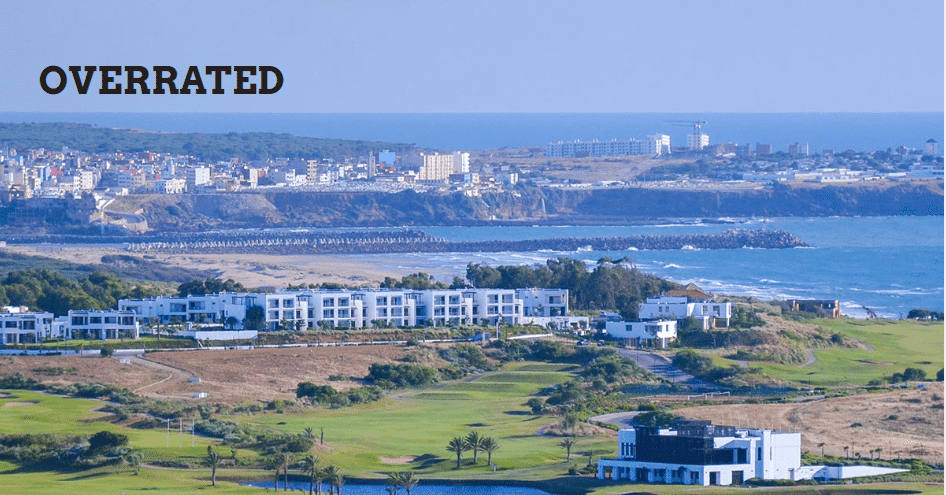
There are over 20 golf courses in Morocco, with development of new ones – along with the accompanying water usage and infrastructure – happening as quickly as you can say, “Fore!” And with only five courses GEO certified, the international standard for eco courses, golf really is becoming the bogeyman of Moroccan tourism.
Develop or die
It has been like the Arab Spring of tourism in Morocco – a revolution of revellers as hordes of holidaymakers are dropped in by budget airlines. With the 5.5 million visitors in 2005 more than doubling to 13 million in 2019, the development of multinational golf, hotel and ski resorts has gone ballistic. Little of the money stays with local people, who have to put up with congestion, water shortages and social unrest.
FOOD, SHOPPING & PEOPLE
Eating & drinking in Morocco
Tagines are traditional Berber fare, with chicken or lamb, couscous and vegetables all slowly cooked together in an earthenware pot.
A pastille is a traditional meat pie, usually made of pigeon, although chicken is also used. For pigeon, you often need to order it in advance. Essaouira is the place for fish and seafood, straight off the blue boats.
There are juice sellers everywhere. The fresh orange juice is delicious.The mint tea is everywhere too, ladled with sugar.
“THE NAME, BERBER, COMES FROM ROMAN TIMES AND THE LATIN FOR BARBARIAN. THE NAME THEY GIVE THEMSELVES, HOWEVER, IS AMAZIGH, MEANING ‘FREE PEOPLE’. UP YOURS, ROME.”
Agadir
In 1960, Agadir was hit by an earthquake which destroyed everything including the ancient Kasbah. And now tourism seems intent on destroying the new city. With all-inclusive resorts, bars and casinos standing alongside mosques, a seedy nightlife scene in some parts, and tacky tourist tat, it is an all-round beacon of irresponsible tourism.
Chez Ali
Coachloads of tourists are shipped out of Marrakech to experience the dinner spectacular at Chez Ali and eat mountainous tajines and couscous at large round tables in a huge Caidal tent. With displays of regional costumes, dance and fantasia horsemanship. Get a good local guide and seek out the real spectacles instead. Morocco is falling down with moussems, or festivals, that honour marabouts, or local saints.
Golf courses
There are over 20 golf courses in Morocco, with development of new ones – along with the accompanying water usage and infrastructure – happening as quickly as you can say, “Fore!” And with only five courses GEO certified, the international standard for eco courses, golf really is becoming the bogeyman of Moroccan tourism.
Develop or die
It has been like the Arab Spring of tourism in Morocco – a revolution of revellers as hordes of holidaymakers are dropped in by budget airlines. With the 5.5 million visitors in 2005 more than doubling to 13 million in 2019, the development of multinational golf, hotel and ski resorts has gone ballistic. Little of the money stays with local people, who have to put up with congestion, water shortages and social unrest.
FOOD, SHOPPING & PEOPLE
Eating & drinking in Morocco
Tagines are traditional Berber fare, with chicken or lamb, couscous and vegetables all slowly cooked together in an earthenware pot.
A pastille is a traditional meat pie, usually made of pigeon, although chicken is also used. For pigeon, you often need to order it in advance. Essaouira is the place for fish and seafood, straight off the blue boats.
There are juice sellers everywhere. The fresh orange juice is delicious.The mint tea is everywhere too, ladled with sugar.
“THE NAME, BERBER, COMES FROM ROMAN TIMES AND THE LATIN FOR BARBARIAN. THE NAME THEY GIVE THEMSELVES, HOWEVER, IS AMAZIGH, MEANING ‘FREE PEOPLE’. UP YOURS, ROME.”
 Gifts & shopping
Argan oil is everywhere now in Europe. Buy the real thing in souks everywhere.
Rose products make the sweetest gifts. Check out cooperatives along the Dades valley in particular.
It’s a shame for those with nut allergies as the almonds and walnuts are amazing. You can always find them a date, though.
Genuine handmade Berber carpets can be purchased and shipped direct from the artisans’ workshops. Go into small villages, such as in the province of Ouarzazate, to see them at work. Make sure to bring your measurements on holiday with you.
Gifts & shopping
Argan oil is everywhere now in Europe. Buy the real thing in souks everywhere.
Rose products make the sweetest gifts. Check out cooperatives along the Dades valley in particular.
It’s a shame for those with nut allergies as the almonds and walnuts are amazing. You can always find them a date, though.
Genuine handmade Berber carpets can be purchased and shipped direct from the artisans’ workshops. Go into small villages, such as in the province of Ouarzazate, to see them at work. Make sure to bring your measurements on holiday with you.
 MOROCCO MAP & ITINERARIES
If you are trying to work out where to go in Morocco, think of it as a three tiered cake. The base is the Sahara Desert, with nomadic culture, oases and stunning dune landscapes dominating much of the landscape. The second layer is the sea, with two very different maritime systems of the Mediterranean and Atlantic wafting their salty influences over the north and west coasts respectively.
Standing tall on the top layer are the Atlas Mountains with Mount Toubkal, North Africa’s highest peak, dusted white for most of the year. Slice through the gateau of gorgeousness and you find the most delectable mélange of ingredients, with prolific Berber and Arab culture, imperial and colonial history, extraordinary trekking and cycling options, artisan crafts and gregarious people. And the icing on the cake? The superb food.
MOROCCO MAP & ITINERARIES
If you are trying to work out where to go in Morocco, think of it as a three tiered cake. The base is the Sahara Desert, with nomadic culture, oases and stunning dune landscapes dominating much of the landscape. The second layer is the sea, with two very different maritime systems of the Mediterranean and Atlantic wafting their salty influences over the north and west coasts respectively.
Standing tall on the top layer are the Atlas Mountains with Mount Toubkal, North Africa’s highest peak, dusted white for most of the year. Slice through the gateau of gorgeousness and you find the most delectable mélange of ingredients, with prolific Berber and Arab culture, imperial and colonial history, extraordinary trekking and cycling options, artisan crafts and gregarious people. And the icing on the cake? The superb food.


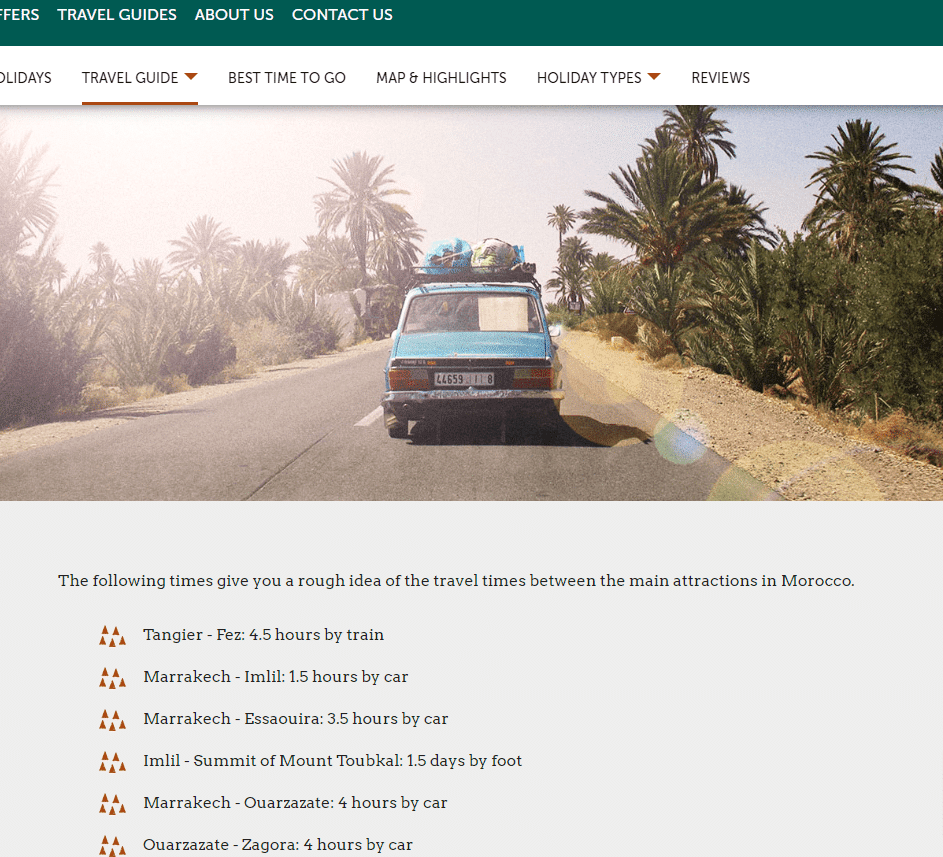
 TRAVEL TIMES IN MOROCCO
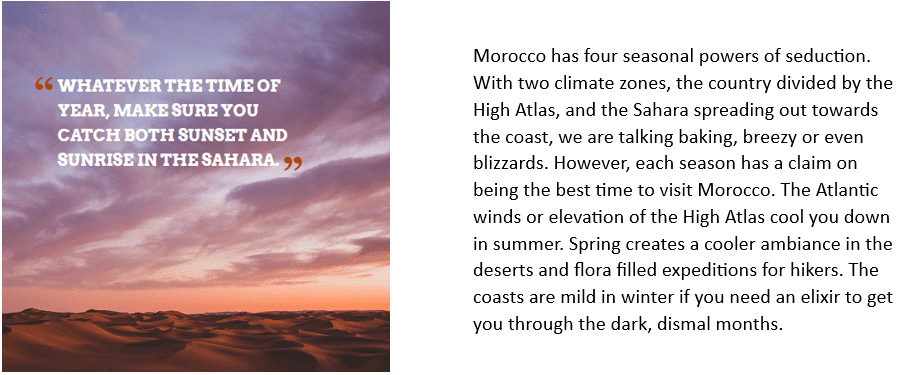
 BEST TIME TO VISIT MOROCCO
 MOROCCO, MONTH BY MONTH
- If you want to ski, the season can be brief. The best time for pretty much guaranteed snow is mid-January to mid-February. Winter walking is a better option with a longer season. As there is no snow in the Anti-Atlas, you can enjoy mountain life during December, January and February, with sunny days but cold nights.
- Desert dust storms are at their most frequent between February and April.
- The most popular time for hiking throughout the Atlas ranges is between March and November.
- April and May are good desert choices. The desert is just too hot June-September, so if you want to explore it properly, best to visit outside these months. However, temperatures can drop by 20°C in the desert between night and day, so be wary of this and check temperatures in advance. And be prepared with a good sleeping bag if you are camping.
- If you can handle hiking in the heat, July and August are hot in the Anti-Atlas, but not off the scale desert madness like the rest of Morocco.
- Temperatures in the Sahara are simply baking in August so stay clear. However, they could be 15°C lower in Essaouira on the coast in July and August, for example.
- The Atlantic coast sees plenty of rain in the winter months, especially around Casablanca. The further south you go, the safer the bet at this time of year, as the desert climate creeps in.
- Some people resist travelling during Ramadan, as a few businesses shut down. But in the main tourist spots, most stay open, the evenings come alive as people come out to eat en famille, and witnessing this important religious event feels like an honour for many non-Muslim visitors.
 Source:
 Compare the emissions of flying with other things in your life.

 Aeroplane chemtrail. Photo credit: Gralo
Initiatives such as the Carbon Offsetting and Reduction Scheme for International Aviation (CORSIA) function on a global scale, and – from 2027 – a mandatory one. At the end of each three-year phase of the scheme, airlines will need to buy credits to offset their CO2 emissions for those years.
The big debate concerns which climate initiatives to allow as offsets. Of course, creating a market for offsets incentivises countries to develop their own green initiatives, so that they can sell offsets. However, given that many of these initiatives would have gone ahead anyway, there are concerns about additionality – buying offsets from these schemes creates no additional reduction in emissions. These have been called ‘junk credits’, and many environmental campaign organisations have called for these to be excluded from the Paris Agreement and other climate targets, saying that they threaten our ability to really reduce global carbon emissions.
There are, of course, some excellent emissions reduction projects being set up. But counting these as offsets is not necessarily the best – or most honest – way of going about this. Counting an offset as an offset when it is not actually compensating for carbon emissions is only going to make the climate crisis worse.
Aeroplane chemtrail. Photo credit: Gralo
Initiatives such as the Carbon Offsetting and Reduction Scheme for International Aviation (CORSIA) function on a global scale, and – from 2027 – a mandatory one. At the end of each three-year phase of the scheme, airlines will need to buy credits to offset their CO2 emissions for those years.
The big debate concerns which climate initiatives to allow as offsets. Of course, creating a market for offsets incentivises countries to develop their own green initiatives, so that they can sell offsets. However, given that many of these initiatives would have gone ahead anyway, there are concerns about additionality – buying offsets from these schemes creates no additional reduction in emissions. These have been called ‘junk credits’, and many environmental campaign organisations have called for these to be excluded from the Paris Agreement and other climate targets, saying that they threaten our ability to really reduce global carbon emissions.
There are, of course, some excellent emissions reduction projects being set up. But counting these as offsets is not necessarily the best – or most honest – way of going about this. Counting an offset as an offset when it is not actually compensating for carbon emissions is only going to make the climate crisis worse. 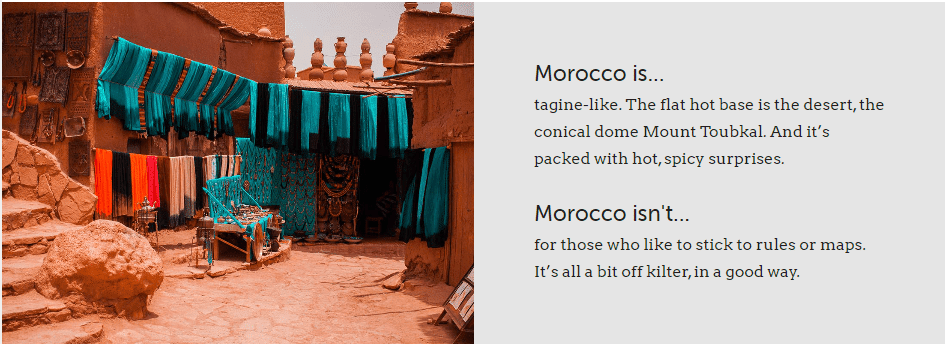 WHAT WE RATE & WHAT WE DON'T
 Family holidays
It’s hot, there are riads with gorgeous pools, kasbahs that are like something out of a fairy tale, snowmelt rivers to raft down, an ocean to surf in, and dunes to climb and clamber over on camels. Best of all, our specialists know when to swap a long walk for a mule ride or a hotel for a family-run mountain gite.
Atlas Mountains
The Atlas Mountains have been on the expert explorers’ radar for a long time, but lovers of Moroccan souks and seaside are now starting to embark on journeys up to these magnificent peaks. Hardcore hikers head for the High Atlas’ Mount Toubkal, but there is superb walking to be had in the lower Atlas range too, with welcoming Berber people at remote mountain villages along the way.
Cycling
With dirt roads, mountains and plenty of heat, Morocco has breath-taking biking. You can go mountain biking from the Atlas Mountains to the desert, with the omnipresent snowcapped mountains an exhilarating backdrop as you take on the ups and downs of Atlas ascents and desert descents. With an ever expanding network of quiet tarmac roads, road cycling is growing in the Morocco too.
Fez
If Marrakech is the lion, Fez is the tiger. The one that doesn’t need to roar about how beautiful it is, and long admired for its innate elegance. It has a superbly preserved ancient Islamic heritage, with Attarine Madrassa, Moulay Idriss mausoleum and Karaouine Mosque as highlights. Its heart is the labyrinthine, car-free Fez el-Bali medina. The Fez Festival of Sacred Music in June is a fab event too.
Family holidays
It’s hot, there are riads with gorgeous pools, kasbahs that are like something out of a fairy tale, snowmelt rivers to raft down, an ocean to surf in, and dunes to climb and clamber over on camels. Best of all, our specialists know when to swap a long walk for a mule ride or a hotel for a family-run mountain gite.
Atlas Mountains
The Atlas Mountains have been on the expert explorers’ radar for a long time, but lovers of Moroccan souks and seaside are now starting to embark on journeys up to these magnificent peaks. Hardcore hikers head for the High Atlas’ Mount Toubkal, but there is superb walking to be had in the lower Atlas range too, with welcoming Berber people at remote mountain villages along the way.
Cycling
With dirt roads, mountains and plenty of heat, Morocco has breath-taking biking. You can go mountain biking from the Atlas Mountains to the desert, with the omnipresent snowcapped mountains an exhilarating backdrop as you take on the ups and downs of Atlas ascents and desert descents. With an ever expanding network of quiet tarmac roads, road cycling is growing in the Morocco too.
Fez
If Marrakech is the lion, Fez is the tiger. The one that doesn’t need to roar about how beautiful it is, and long admired for its innate elegance. It has a superbly preserved ancient Islamic heritage, with Attarine Madrassa, Moulay Idriss mausoleum and Karaouine Mosque as highlights. Its heart is the labyrinthine, car-free Fez el-Bali medina. The Fez Festival of Sacred Music in June is a fab event too.
 Meeting the Berbers
The indigenous people of Morocco, and traditionally nomadic, most Berbers are now in settled communities around the lower and High Atlas Mountains, and Rif Mountains. Stay with a Berber family in the Sahara, trek with them into the High Atlas as they bring their livestock up to summer pastures, or take a traditional guided trek into the mountains with donkeys or camels.
Chefchaouen
This beautiful blue painted town appears in the slopes of the Rif Mountains like a sapphire glinting through a rock face. Perhaps inspired by its aesthetic, it has also become a centre for quality artists and artisan crafts people. And with the mountains and Talassemtane National Park as a backdrop, the artist’s palette is replete.
Using a guide
Not only does it make negotiating your way around the souks, Sahara, mountains or medinas much easier, but it’s also a vital source of income in a country that is very dependent on tourism. Moroccans have a great sense of humour, are beyond welcoming and very proud of their country. Responsible tour operators always engage a local guide to accompany you – meaning your trip will be made all the more memorable and fun.
Mount Toubkal
The highest peak in North Africa at 4,167m, Mount Toubkal is for hikers who have trained for the climb, the challenges increasing with each contour change. Most treks start in the village of Imlil in the heart of Toubkal National Park, where the smell of juniper, cedar and Aleppo pine abound. Then you hit the colder arid steppe, where nature turns a little more hostile to hikers. A serious trek, so only do it with an expert mountain guide. But do it.
Meeting the Berbers
The indigenous people of Morocco, and traditionally nomadic, most Berbers are now in settled communities around the lower and High Atlas Mountains, and Rif Mountains. Stay with a Berber family in the Sahara, trek with them into the High Atlas as they bring their livestock up to summer pastures, or take a traditional guided trek into the mountains with donkeys or camels.
Chefchaouen
This beautiful blue painted town appears in the slopes of the Rif Mountains like a sapphire glinting through a rock face. Perhaps inspired by its aesthetic, it has also become a centre for quality artists and artisan crafts people. And with the mountains and Talassemtane National Park as a backdrop, the artist’s palette is replete.
Using a guide
Not only does it make negotiating your way around the souks, Sahara, mountains or medinas much easier, but it’s also a vital source of income in a country that is very dependent on tourism. Moroccans have a great sense of humour, are beyond welcoming and very proud of their country. Responsible tour operators always engage a local guide to accompany you – meaning your trip will be made all the more memorable and fun.
Mount Toubkal
The highest peak in North Africa at 4,167m, Mount Toubkal is for hikers who have trained for the climb, the challenges increasing with each contour change. Most treks start in the village of Imlil in the heart of Toubkal National Park, where the smell of juniper, cedar and Aleppo pine abound. Then you hit the colder arid steppe, where nature turns a little more hostile to hikers. A serious trek, so only do it with an expert mountain guide. But do it.
 Agadir
In 1960, Agadir was hit by an earthquake which destroyed everything including the ancient Kasbah. And now tourism seems intent on destroying the new city. With all-inclusive resorts, bars and casinos standing alongside mosques, a seedy nightlife scene in some parts, and tacky tourist tat, it is an all-round beacon of irresponsible tourism.
Chez Ali
Coachloads of tourists are shipped out of Marrakech to experience the dinner spectacular at Chez Ali and eat mountainous tajines and couscous at large round tables in a huge Caidal tent. With displays of regional costumes, dance and fantasia horsemanship. Get a good local guide and seek out the real spectacles instead. Morocco is falling down with moussems, or festivals, that honour marabouts, or local saints.
Golf courses
There are over 20 golf courses in Morocco, with development of new ones – along with the accompanying water usage and infrastructure – happening as quickly as you can say, “Fore!” And with only five courses GEO certified, the international standard for eco courses, golf really is becoming the bogeyman of Moroccan tourism.
Develop or die
It has been like the Arab Spring of tourism in Morocco – a revolution of revellers as hordes of holidaymakers are dropped in by budget airlines. With the 5.5 million visitors in 2005 more than doubling to 13 million in 2019, the development of multinational golf, hotel and ski resorts has gone ballistic. Little of the money stays with local people, who have to put up with congestion, water shortages and social unrest.
FOOD, SHOPPING & PEOPLE
Agadir
In 1960, Agadir was hit by an earthquake which destroyed everything including the ancient Kasbah. And now tourism seems intent on destroying the new city. With all-inclusive resorts, bars and casinos standing alongside mosques, a seedy nightlife scene in some parts, and tacky tourist tat, it is an all-round beacon of irresponsible tourism.
Chez Ali
Coachloads of tourists are shipped out of Marrakech to experience the dinner spectacular at Chez Ali and eat mountainous tajines and couscous at large round tables in a huge Caidal tent. With displays of regional costumes, dance and fantasia horsemanship. Get a good local guide and seek out the real spectacles instead. Morocco is falling down with moussems, or festivals, that honour marabouts, or local saints.
Golf courses
There are over 20 golf courses in Morocco, with development of new ones – along with the accompanying water usage and infrastructure – happening as quickly as you can say, “Fore!” And with only five courses GEO certified, the international standard for eco courses, golf really is becoming the bogeyman of Moroccan tourism.
Develop or die
It has been like the Arab Spring of tourism in Morocco – a revolution of revellers as hordes of holidaymakers are dropped in by budget airlines. With the 5.5 million visitors in 2005 more than doubling to 13 million in 2019, the development of multinational golf, hotel and ski resorts has gone ballistic. Little of the money stays with local people, who have to put up with congestion, water shortages and social unrest.
FOOD, SHOPPING & PEOPLE
 Eating & drinking in Morocco
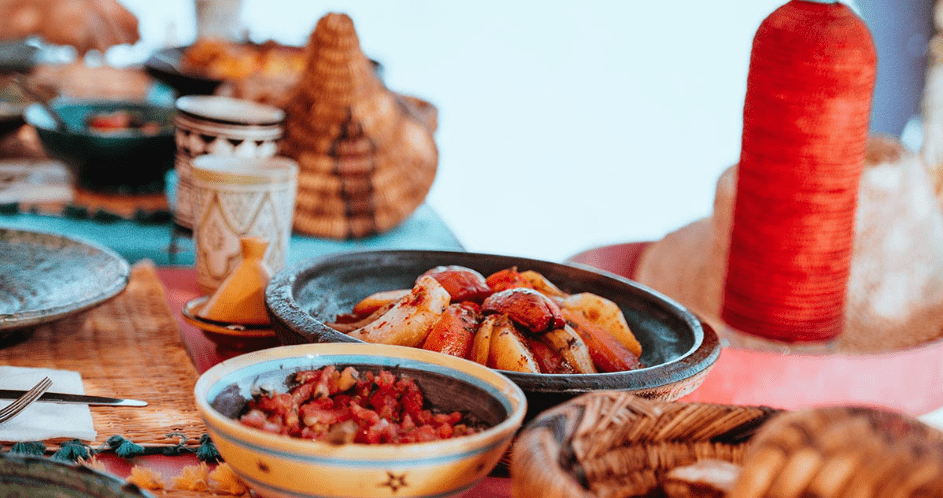
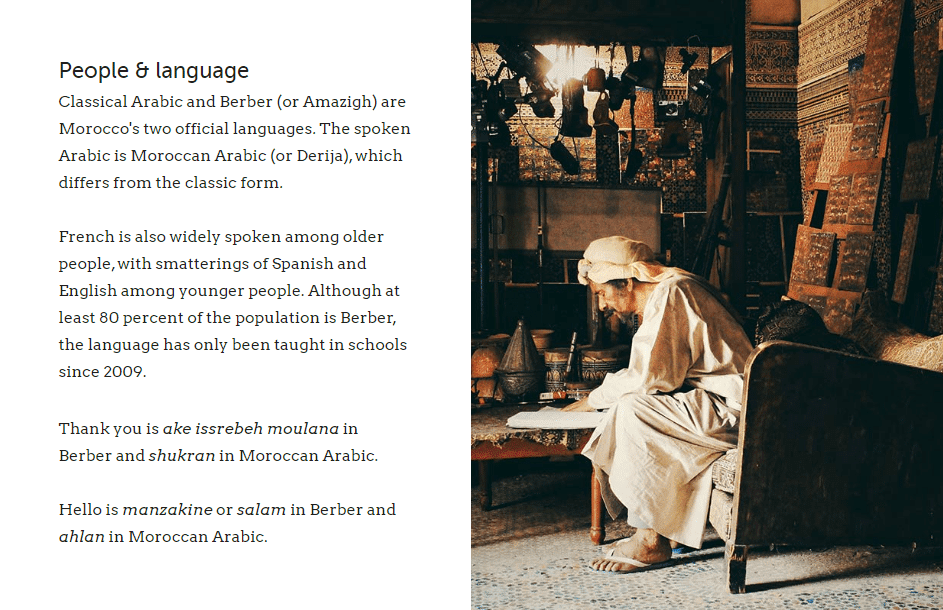
Tagines are traditional Berber fare, with chicken or lamb, couscous and vegetables all slowly cooked together in an earthenware pot.
A pastille is a traditional meat pie, usually made of pigeon, although chicken is also used. For pigeon, you often need to order it in advance. Essaouira is the place for fish and seafood, straight off the blue boats.
There are juice sellers everywhere. The fresh orange juice is delicious.The mint tea is everywhere too, ladled with sugar.
“THE NAME, BERBER, COMES FROM ROMAN TIMES AND THE LATIN FOR BARBARIAN. THE NAME THEY GIVE THEMSELVES, HOWEVER, IS AMAZIGH, MEANING ‘FREE PEOPLE’. UP YOURS, ROME.”
Eating & drinking in Morocco
Tagines are traditional Berber fare, with chicken or lamb, couscous and vegetables all slowly cooked together in an earthenware pot.
A pastille is a traditional meat pie, usually made of pigeon, although chicken is also used. For pigeon, you often need to order it in advance. Essaouira is the place for fish and seafood, straight off the blue boats.
There are juice sellers everywhere. The fresh orange juice is delicious.The mint tea is everywhere too, ladled with sugar.
“THE NAME, BERBER, COMES FROM ROMAN TIMES AND THE LATIN FOR BARBARIAN. THE NAME THEY GIVE THEMSELVES, HOWEVER, IS AMAZIGH, MEANING ‘FREE PEOPLE’. UP YOURS, ROME.”
 Gifts & shopping
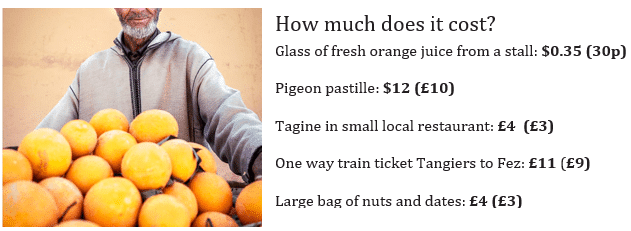
Argan oil is everywhere now in Europe. Buy the real thing in souks everywhere.
Rose products make the sweetest gifts. Check out cooperatives along the Dades valley in particular.
It’s a shame for those with nut allergies as the almonds and walnuts are amazing. You can always find them a date, though.
Genuine handmade Berber carpets can be purchased and shipped direct from the artisans’ workshops. Go into small villages, such as in the province of Ouarzazate, to see them at work. Make sure to bring your measurements on holiday with you.
Gifts & shopping
Argan oil is everywhere now in Europe. Buy the real thing in souks everywhere.
Rose products make the sweetest gifts. Check out cooperatives along the Dades valley in particular.
It’s a shame for those with nut allergies as the almonds and walnuts are amazing. You can always find them a date, though.
Genuine handmade Berber carpets can be purchased and shipped direct from the artisans’ workshops. Go into small villages, such as in the province of Ouarzazate, to see them at work. Make sure to bring your measurements on holiday with you.
 MOROCCO MAP & ITINERARIES
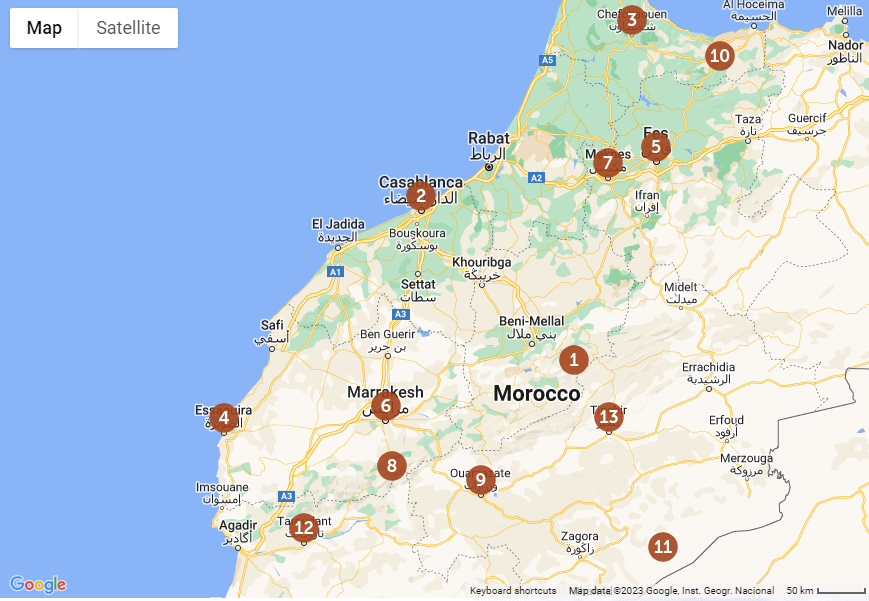
If you are trying to work out where to go in Morocco, think of it as a three tiered cake. The base is the Sahara Desert, with nomadic culture, oases and stunning dune landscapes dominating much of the landscape. The second layer is the sea, with two very different maritime systems of the Mediterranean and Atlantic wafting their salty influences over the north and west coasts respectively.
Standing tall on the top layer are the Atlas Mountains with Mount Toubkal, North Africa’s highest peak, dusted white for most of the year. Slice through the gateau of gorgeousness and you find the most delectable mélange of ingredients, with prolific Berber and Arab culture, imperial and colonial history, extraordinary trekking and cycling options, artisan crafts and gregarious people. And the icing on the cake? The superb food.
MOROCCO MAP & ITINERARIES
If you are trying to work out where to go in Morocco, think of it as a three tiered cake. The base is the Sahara Desert, with nomadic culture, oases and stunning dune landscapes dominating much of the landscape. The second layer is the sea, with two very different maritime systems of the Mediterranean and Atlantic wafting their salty influences over the north and west coasts respectively.
Standing tall on the top layer are the Atlas Mountains with Mount Toubkal, North Africa’s highest peak, dusted white for most of the year. Slice through the gateau of gorgeousness and you find the most delectable mélange of ingredients, with prolific Berber and Arab culture, imperial and colonial history, extraordinary trekking and cycling options, artisan crafts and gregarious people. And the icing on the cake? The superb food.
 TRAVEL TIMES IN MOROCCO
 BEST TIME TO VISIT MOROCCO
 MOROCCO, MONTH BY MONTH

 ADS PRO