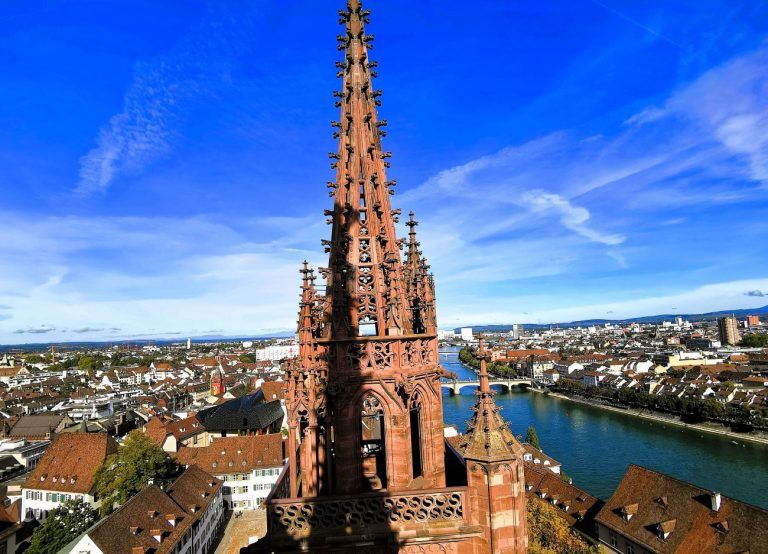
Often described as Switzerland’s capital of arts and culture, Basel continues to prove why it remains one of Europe’s most forward-thinking cultural destinations. With its world-class museums, bold curatorial choices, and reputation for avant-garde programming, the city consistently pushes the boundaries of how art is experienced.
In 2025 alone, Basel’s museums welcomed 1.68 million visitors, up 10.4% year-on-year. It confirms the city’s enduring appeal as one of Europe’s leading cultural hubs. Much of that growth was driven by major institutions such as the Fondation Beyeler, alongside strong performances from Museum Tinguely, Cartoonmuseum Basel and the Historical Museum Basel.
Last year, the Fondation Beyeler was Basel most visited cultural institution with close to 509,000 visitors; Basel Art Museum welcomed 273,000 visitors followed by the Natural History Museum (176,000 visitors) and the Museum Tinguely (166,000 visitors).
Visiting the Fondation Beyeler in a swimming suit
This spring, two standout exhibitions underline that spirit perfectly—one playful at the Fondation Beyeler, and the other historically powerful at the Kunstmuseum Basel.
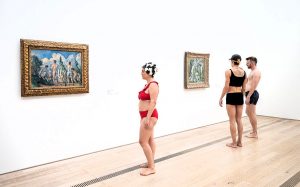
Until May 25, 2026, the Fondation Beyeler presents its major Paul Cézanne exhibition. It is the first time in its history that the Fondation is devoting a solo exhibition to the French painter, a pioneer of modern art, bringing together
around 80 works, including his celebrated “Bathers” series.
On May 1, the Foundation will add an unexpected twist with “Day of the Bathers.” Inspired by both Cézanne and contemporary provocateur Maurizio Cattelan, visitors are invited to experience the exhibition wearing swimwear. The playful intervention reimagines Cézanne’s iconic vision of the human body in nature, creating a humorous and liberating dialogue between artwork and audience. In a typically Basel-style gesture of artistic freedom, anyone arriving in swimwear on that day receives free admission.
Basel Kunstmuseum dedicates an exhibition on the vision of homosexuals
At the same time, the Kunstmuseum Basel is drawing attention with “The First Homosexuals,” a remarkable exhibition exploring how the emergence of the word “homosexual” in 1868–69 transformed both identity and visual representation. The term first appeared in the writings of Hungarian author Karl Maria Kertbeny, and according to curator Len Schaller, it marked a profound shift: same-sex desire was no longer seen merely as an activity or private preference, but increasingly as part of personal identity.
Featuring more than 80 works—paintings, sculptures, photographs, and works on paper—the exhibition traces how queer identities were expressed in 19th-century art, often through subtle visual codes. In Contre-jour (1888) by Louise-Catherine Breslau, for example, a bouquet of violets discreetly signals female homosexuality, while intimate portraits and muscular male figures reveal evolving homoerotic ideals across Europe and beyond.
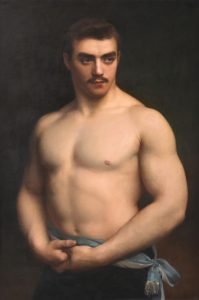
(Creditline: Commune de Baulmes)
Not every work is a masterpiece, but together they form a powerful cultural archive of a time when same-sex love was criminalized and persecuted—something that remains relevant today in many parts of the world. It is precisely this historical awareness that makes “The First Homosexuals” one of the season’s most compelling exhibitions. It is on display until August 2, 2026.
From Cézanne in swimwear to queer codes in 19th-century painting, Basel once again demonstrates why it stays ahead of the curve—where museums are not just places to look at art, but places where culture is challenged, redefined, and lived.