
Dark sky’s the limit
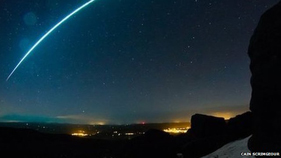
Europe’s biggest Dark Sky Park unveiled in Northumberland
Today, the International Dark-Sky Association (IDA) has granted Gold Tier Dark Sky Park status to the combined areas of Northumberland National Park and Kielder Water & Forest Park, covering nearly 1,500 square kilometres of breath-taking scenery. The new zone – which will be called the Northumberland International Dark Sky Park (NDSP) – is the first of its kind in England and one of the largest in the world. In celebration, VisitEngland pinpoints the nation’s best stargazing locations, where you can join the hunt for solar storms and catch a true glimpse of celestial glory.
Northumberland Dark Sky Park comprises the whole of Northumberland National Park and most of Kielder Water & Forest Park, totalling 572 square miles or 14,832 square kilometres. Because of the unpopulated nature of Northumberland Dark Sky Park, you will be amazed by the number of stars you will be able to see on a clear night with no street lights in sight. A major catalyst for the Northumberland Dark Sky Park initiative has been the phenomenal success of the Kielder Observatory, perched 1,200 feet above forest and moorland in Kielder Water & Forest Park. As Britain’s largest public observatory, the site has attracted more than 43,000 visitors since its opening in 2008. On average it stages 30 events a month and the observatory is one of Northumberland’s most popular visitor attractions. Their next ‘Star Camp’ runs from 25 February – 2 March 2014 and features a gathering of budding astronomers to observe, photograph and exchange ideas on the night’s sky. For more information, visit http://www.kielderobservatory.org Camping is available at the nearby Kielder Campsite http://www.kieldercampsite.co.uk/ . Pitch fees from £12 per night.
Exmoor National Park, with its dramatic countryside and rugged coastline, was named Europe’s first designated International Dark Sky Reserve in 2011. Good spots for stargazing are Holdstone Hill, County Gate, Brendon Two Gates, Webbers Post, Anstey Gate and Haddon Hill. On a clear night many astronomical sights can be seen with the naked eye and even more can be discovered through a telescope. You can even go on a ‘Dark Skies Safari’ to discover the secrets of the skies, where you’ll be provided with a star chart, compass and abundant hot drinks on the 3 hour tour (autumn – spring only). Excursion cost £40 for adults and £19.50 for children. For more information, visit http://www.exmoordarkskies.com
Explore the secret lives of stars at the Royal Observatory in Greenwich, London. Home to the UK’s largest telescope, you can explore the fascinating life history of the stars, from the smallest red dwarf to the largest blue giant. Using state-of-the art digital simulation, the lifespans of stars are charted from birth through to death and beyond. Until 23 February 2014, the Royal Observatory presents its annual display winning entries from the Astronomy Photographer of the Year competition. From all over the world entrants have captured ethereal images of the sky viewed from Earth, out to swirling nebulae in deep space. See these incredible images close-up and free, and take inspiration for your own photography and stargazing. For more information, visit http://www.rmg.co.uk/royal-observatory .
One of England’s more unique stargazing locations, Bignor car park occupies a high point on top of the South Downs. Free from light pollution, the Milky Way is clearly visible and the view is awe-inspiring during daylight too. There are also plenty of footpaths nearby and a variety of wildlife can be spotted in the area; glow worms often flit around the car park, particularly on top of the nearby burial mounds. For more information, visithttp:// www.nationaltrust.org.uk/slindon-estate
Stonehenge has long been associated with astronomy. Situated on the edge of Salisbury Plain, the prehistoric ceremonial landscape of Stonehenge occupies a large, sparsely populated area that is ideal for stargazing. At one time it was thought to be an astronomical computer, as the monuments are directly connected to the skies above, with stones aligned to moonrises and moonsets. The first part of the long-awaited environmental improvements to Stonehenge will be the unveiling of a new visitor experience later this month. Tickets cost £8 for adults and £4.80 for children. For more information, visit http://www.english-heritage.org.uk .
Valere Tjolle
GET MASSIVE DISCOUNTS ON SUSTAINABLE TOURISM INFORMATION HERE


Valere





















Vegas’s Billion-Dollar Secrets – What They Don’t Want Tourists to Know

Visit Florida’s New CEO Bryan Griffin Shares His Vision for State Tourism with Graham

Chicago’s Tourism Renaissance: Graham Interviews Kristin Reynolds of Choose Chicago

Graham Talks with Cassandra McCauley of MMGY NextFactor About the Latest Industry Research

Destination International’s Andreas Weissenborn: Research, Advocacy, and Destination Impact

Graham and Don Welsh Discuss the Success of Destinations International’s Annual Conference

Graham and CEO Andre Kiwitz on Ventura Travel’s UK Move and Recruitment for the Role

Brett Laiken and Graham Discuss Florida’s Tourism Momentum and Global Appeal

Graham and Elliot Ferguson on Positioning DC as a Cultural and Inclusive Global Destination

Graham Talks to Fraser Last About His England-to-Ireland Trek for Mental Health Awareness

Kathy Nelson Tells Graham About the Honour of Hosting the World Cup and Kansas City’s Future

Graham McKenzie on Sir Richie Richardson’s Dual Passion for Golf and His Homeland, Antigua







 ADS PRO
Higher departure tax and visa cost, e-arrival card: Japan unleashes the fiscal weapon against tourists
Singapore to forbid entry to undesirable travelers with new no-boarding directive
Euromonitor International unveils world’s top 100 city destinations for 2025
U.S.A. and Israel attacks on Iran impact air movements in the Gulf (Update 1.00pm CET)
Global tourism exceeds 1.5 billion travelers announces UN-Tourism