
Discrimination on the rails: Bangkok’s new dual pricing to start in October
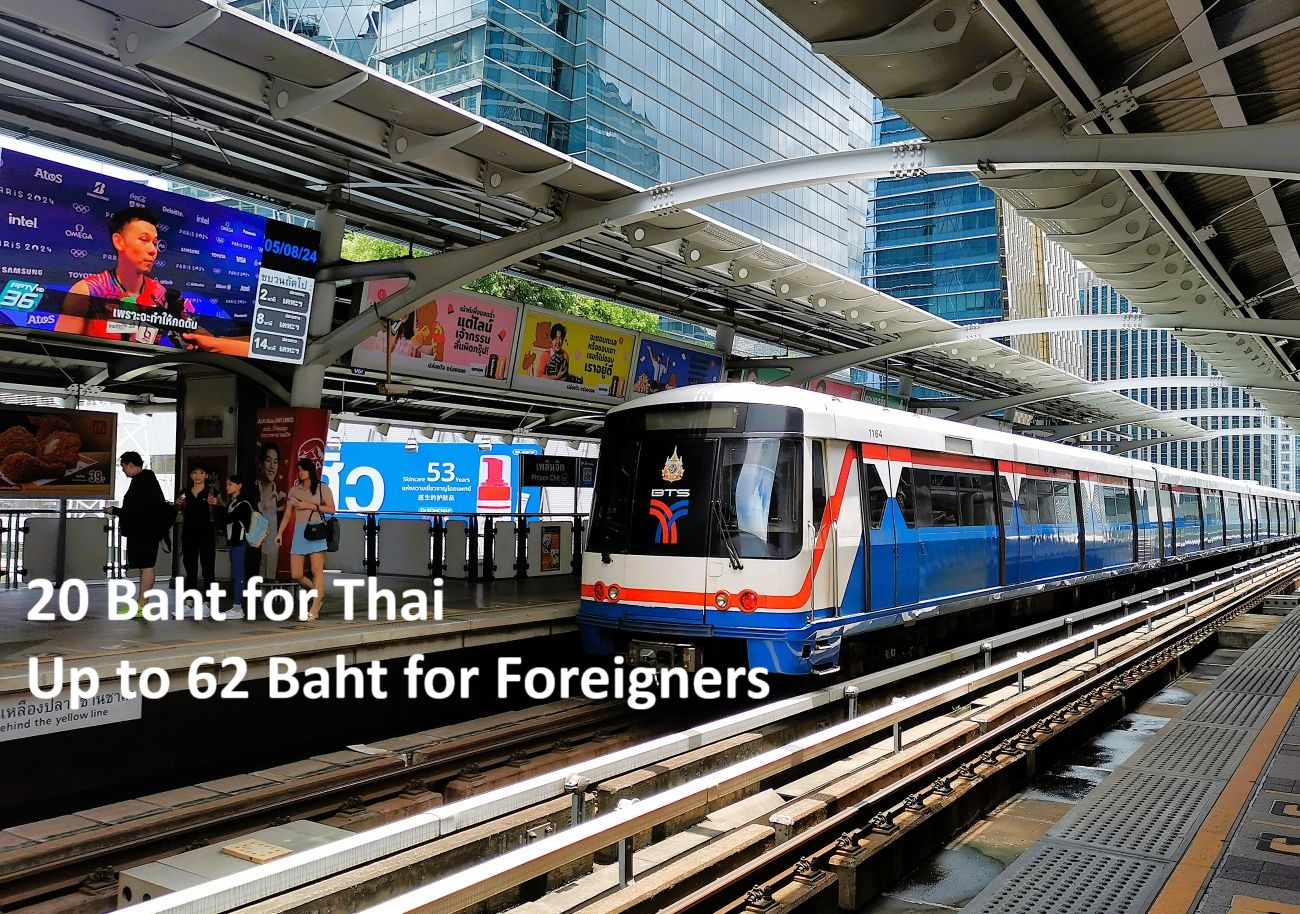
Do you know a city in the world offering two different fares based on nationality? Well, you will soon be able to name Bangkok. Thailand capital will soon become the first city in the world to charge a different fare for the users of its public transport.
The scheme is pushed by the Thai government who has realized that traveling on rail around the capital city remains extremely expensive, favoring the use of cars. As Bangkok wants to reduce more seriously traffic jam and fight pollution as well as climate warming, the idea of reducing public transport fares is a welcoming step.
A complex system of transportation with multiple prices
Bangkok public rail transport is one of the most expensive in Southeast Asia as it generally requests the use of different tickets from different operators. The BTS is the elevated train system with two lines, the MRT runs another four lines while the SRT, Thailand national rail system, runs another 3 lines -including the airport express.
All with different payment systems. In total, a commuter can currently pay up to 100 Baht for a single ride- equivalent to USD 3.10. It is rather expensive in a city where the average monthly salary reaches around USD 600.
In a bid to ease the financial burden on commuters and promote public transport over private cars, Thailand’s cabinet approved on July 8 a plan to cap train fares in Greater Bangkok at 20 baht (approximately US$0.60), effective 1 October.
According to government spokesman Jirayu Houngsub, the policy aims to encourage motorists to switch to mass transit. “We hope to see a reduction in car usage and environmental improvement,” Houngsub told the Bangkok Post.
All foreigners excluded from the new lower fare scheme
However, the scheme covering the 13 rail routes on 280 km and 194 stations in and around the capital will apply exclusively to Thai nationals.
Commuters will have register through the state-run “Tang Rat” mobile application starting in August. With a proof of their identity. The government will at the same time introduce a single ticket to Thai commuters.
This excludes de facto foreign workers and expatriates employed in Thailand. It looks like total discrimination. Many workers in sectors such as construction or food business actually come from impoverished countries such as Cambodia or Myanmar. And they would be the ones in need of affordable fares…
Foreign travelers will then continue to pay standard, distance-based fares. They currently range from 17 to 43 baht on the MRT and 15 to 62 baht on the BTS Skytrain.
Houngsub said the government expects the capped fare system to generate significant national savings for users. It would represent USD 310 million (THB 10 billion) annually. It will also request a financial compensation of USD 250 million (THB 8 billion) to operators. Authorities will assess the impact of the policy one year after its implementation.
Bangkok will meanwhile carry the regrettable title of “First City in the World with Discriminatory Pricing in Public Transport” based on nationality.
Dual Pricing, a Thailand deeply rooted ‘national sport’
However, it comes as no surprise, as Thailand has long mastered the practice of dual pricing. Foreign tourists and expatriates routinely pay higher fees at museums, cultural institutions, national parks, temples, and even some hotels. Until the 2010s, it was even discretionary practice in airfares on the national carrier, Thai Airways International.
A common giveaway for tourists is the use of Thai numerals at the entrances of attractions. It is increasingly seen as a thinly veiled attempt to obscure the lower prices offered to Thai citizens.
Thais typically justify the price differences by citing income disparities between locals and foreign visitors. Or by arguing that they pay taxes to the state. But what about foreign workers who also pay taxes in Thailand?
And what about tourists from less affluent countries such as Cambodia, Nepal, or Vietnam? Are they really in a better position to pay more than an upper-class Thai citizen? The pros and cons of this policy have fueled debate for years.
Meanwhile, the upcoming and openly discriminatory policy on public transport fares in Bangkok risks further damaging Thailand’s image as a fair and welcoming tourist destination.
In recent months, the country has struggled to maintain momentum in tourism growth. The persistent and increasingly known practice of dual pricing may be one of the reasons behind this growing disaffection.
Related News Stories: Bangkok public transport new fares expose Thailand's dual pricing ... Joyce Taylor Qantas, Airbus invest in sustainable aviation fuel VC fund Hawaii imposes first cruise tax Indian airline Vistara bids farewell Virginia Beach brings a new wave of openings for 2025 Etihad on board with TAT to promote Thailand tourism Qatar Airways expands flight frequencies to Canada, Brazil British Travel Awards winners announced Live ammo found on Air India flight


TravelMole Editorial Team





















Vegas’s Billion-Dollar Secrets – What They Don’t Want Tourists to Know

Visit Florida’s New CEO Bryan Griffin Shares His Vision for State Tourism with Graham

Chicago’s Tourism Renaissance: Graham Interviews Kristin Reynolds of Choose Chicago

Graham Talks with Cassandra McCauley of MMGY NextFactor About the Latest Industry Research

Destination International’s Andreas Weissenborn: Research, Advocacy, and Destination Impact

Graham and Don Welsh Discuss the Success of Destinations International’s Annual Conference

Graham and CEO Andre Kiwitz on Ventura Travel’s UK Move and Recruitment for the Role

Brett Laiken and Graham Discuss Florida’s Tourism Momentum and Global Appeal

Graham and Elliot Ferguson on Positioning DC as a Cultural and Inclusive Global Destination

Graham Talks to Fraser Last About His England-to-Ireland Trek for Mental Health Awareness

Kathy Nelson Tells Graham About the Honour of Hosting the World Cup and Kansas City’s Future

Graham McKenzie on Sir Richie Richardson’s Dual Passion for Golf and His Homeland, Antigua







 ADS PRO
Higher departure tax and visa cost, e-arrival card: Japan unleashes the fiscal weapon against tourists
Singapore to forbid entry to undesirable travelers with new no-boarding directive
Euromonitor International unveils world’s top 100 city destinations for 2025
U.S.A. and Israel attacks on Iran impact air movements in the Gulf (Update 1.00pm CET)
Global tourism exceeds 1.5 billion travelers announces UN-Tourism