
Elephant rides ‘unacceptable’ in ABTA’s new animal welfare guidelines
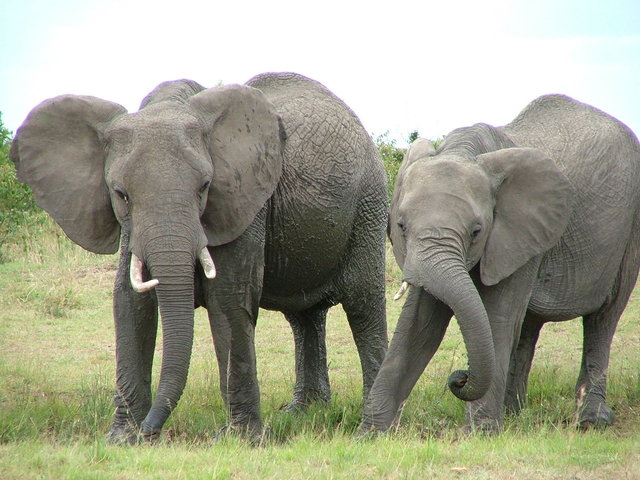
Elephant rides and bathing with elephants have both been deemed ‘unacceptable’ experiences for operators and agents to promote in ABTA’s updated Animal Welfare Guidelines.
Members who adopt the guidelines have been told they should stop offering tourists any direct contact with elephants without a barrier.
This is because elephants used for shows or unprotected close tourist contact will have undergone a traumatic training method known as ‘the crush’.
According to World Animal Protection, this process involves separating a young calf from its mother, keeping it in isolation, depriving it of food and water, and in many cases beating it repeatedly until the animal is broken down and can be controlled by fear.
ABTA also now categorises tourist contact or feeding of great apes, bears, crocodiles or alligators, orca, sloths as well as contact, feeding and walking with wild cats as ‘unacceptable’.
Julie Middelkoop, World Animal Protection global campaigns lead, said: "We are delighted that ABTA has heard the consortium of animal protection NGO’s working together on this issue. This has resulted in updated animal welfare guidelines that reflect the latest evidence with more harmful animal related tourist activities now labelled unacceptable.Although still voluntary this and the improved clarity of the guidelines will ensure greater uptake by travel companies.
"The clear advice that it is unacceptable to use elephants for shows, rides, bathing or any other form of tourist contact without a barrier is a real breakthrough. We are equally thrilled to see that other harmful tourist experiences such as selfies with sloths in the Amazon, feeding orangutans or giraffes and walking with lions in southern Africa have the same listing."
Clare Jenkinson, ABTA’s senior destinations and sustainability manager, added: "ABTA members have led the way on animal welfare by implementing ABTA’s guidelines for a number of years, and others in the industry from around the world use ABTA’s guidelines as the basis for their animal welfare policies.
"Naturally, with the emergence of new evidence, thinking evolves on what constitutes a basic requirement or an unacceptable practice. Thanks to the valued input from many expert stakeholders, the revised guidelines will mean that travel companies can implement animal welfare approaches that reflect the latest evidence, working in partnership with suppliers to raise standards."~
ABTA’s first edition of its Animal Welfare Guidelines launched in 2013 to give guidance for ABTA members and their suppliers throughout the world and helping to raise standards.
A research report published by World Animal Protection in 2018 showed some of the language used was considered ‘vague and inconsistent’ and the guidelines were not strong enough.
World Animal Protection has since worked alongside other international NGOs, including Humane Society International, Born Free Foundation, World Cetacean Alliance and Whale and Dolphin Conservation, during a consultation period, providing expert advice and strong evidence to enable ABTA to strengthen their guidelines.
But World Animal Protection said more work is needed for dolphins who are living ‘miserable lives in the name of tourism entertainment’.
"We are therefore committed to continuing to support ABTA to ensure that the guidelines around captive dolphins and other cetaceans will be updated to reflect the latest science, ethics and public attitudes," said the group.
ABTA’s latest Holiday Habits research found 66% of Brits said they have concerns about the wider impacts of tourism and how animals are treated.


Bev
Editor in chief Bev Fearis has been a travel journalist for 25 years. She started her career at Travel Weekly, where she became deputy news editor, before joining Business Traveller as deputy editor and launching the magazine’s website. She has also written travel features, news and expert comment for the Guardian, Observer, Times, Telegraph, Boundless and other consumer titles and was named one of the top 50 UK travel journalists by the Press Gazette.




















Vegas’s Billion-Dollar Secrets – What They Don’t Want Tourists to Know

Visit Florida’s New CEO Bryan Griffin Shares His Vision for State Tourism with Graham

Chicago’s Tourism Renaissance: Graham Interviews Kristin Reynolds of Choose Chicago

Graham Talks with Cassandra McCauley of MMGY NextFactor About the Latest Industry Research

Destination International’s Andreas Weissenborn: Research, Advocacy, and Destination Impact

Graham and Don Welsh Discuss the Success of Destinations International’s Annual Conference

Graham and CEO Andre Kiwitz on Ventura Travel’s UK Move and Recruitment for the Role

Brett Laiken and Graham Discuss Florida’s Tourism Momentum and Global Appeal

Graham and Elliot Ferguson on Positioning DC as a Cultural and Inclusive Global Destination

Graham Talks to Fraser Last About His England-to-Ireland Trek for Mental Health Awareness

Kathy Nelson Tells Graham About the Honour of Hosting the World Cup and Kansas City’s Future

Graham McKenzie on Sir Richie Richardson’s Dual Passion for Golf and His Homeland, Antigua







 ADS PRO
Global tourism exceeds 1.5 billion travelers announces UN-Tourism
Qatar Airways offers reduced timetable to over 60 destinations
WTTC global tourism reached record economic impact of 11 trillion in 2025
Hands In, UATP join forces for airline multi-card payments
Suspension of all regional trains in Catalonia following two new rail accidents in Spain