
Germany new European Entry/Exit System limited to a single airport on October 12, 2025
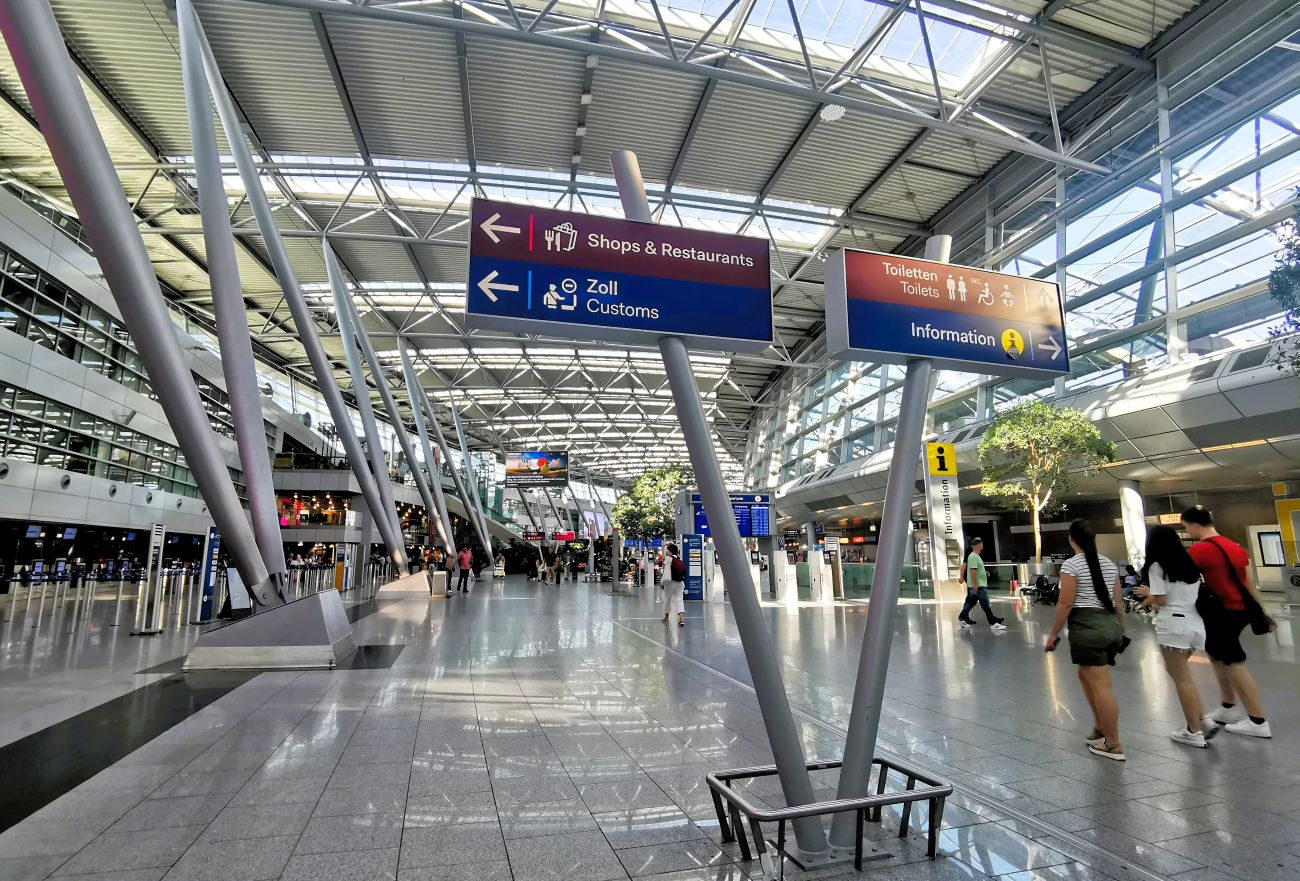
Germany will be putting the European Entry/Exit System (EES) into operation incrementally beginning on October 12, 2025. Germany’s Federal Ministry of the Interior and Federal Police, working with many other agencies and private industry, have completed planning for the rollout.
The EES will first go into operation at Düsseldorf Airport on October 12, 2025. Frankfurt and Munich airports -the Lufthansa Group main hubs- will follow in the next step, after which the EES will gradually be introduced at all of Germany’s other airports as well as its ports at maritime external borders.
The aim is to ramp up operations in a controlled way to ensure that border-control processes keep running smoothly at all times. This guarantees security while also providing the flexibility to respond to any technical issues that may arise.
The European Commission has stipulated that the EES is to be rolled out gradually between October 12, 2025, and April 9, 2026. By the end of this period, Germany will have the system in full operation at all its external air and sea borders.
The EES is a Schengen-wide system that records travelers’ entries and exits in a centralized and digital way. Its rules apply to third-country nationals who are permitted to enter the Schengen Area for a short stay—both those who do not require a visa and those who enter with a short-stay visa.
The data stored in the EES include, but are not limited to:
-
Alphanumeric data (e.g., surname, given name, date of birth, travel document details)
-
Biometric features (four fingerprints, facial image)
-
Time and place of entry and exit
Key advantages of the EES at a glance
The EES replaces the current analog stamping of travel documents with the digital recording of entry and exit data. This change
-
Boosts security at the EU’s external borders
-
Improves identity checks
-
Makes identity fraud more difficult
-
Makes it easier to see how long people have been in the Schengen Area and whether they have exceeded the permitted length of their stay
This means that the EES helps to identify and ultimately put an end to illegal extensions of people’s stays. In the longer term, it will make border controls more efficient and will provide reliable data about individuals who are in the European Union illegally.
The introduction of the EES will not have any effect on citizens of the European Union.
Delayed launch is finally arriving !
The EES was originally planned to be in full operation by November 2024. However, its launch was postponed due to significant technical challenges in providing a robust EU central system.
The incremental rollout will ensure that border-control processes remain smooth and stable at all times. At the same time, technical challenges in operations will be identified at an early stage so that compensatory measures can be taken if air or ship passengers from third countries experience unreasonable waits.
Travelers affected by the new rules can, in advance of entering Germany, obtain information about the applicable provisions and how these will affect travel to Germany’s airports and maritime borders. Such information is available from German missions abroad, from airlines, or from the Federal Police, who are responsible for border controls.
-
Tips for travelers on the Federal Police website: www.bundespolizei.de/travel and European Union information for travelers: https://travel-europe.europa.eu/ees
Related News Stories: SkyTeam ??: SkyTeam Global Airline Alliance EU delays EES border check system again TravelMole TravelTech Show 2026 | Europe's Travel Technology Event Europe's Top 10 Autumn destinations chosen by influencers US tourism hit with UK, Germany travel warnings One in 4 EU citizens couldn't afford a holiday in 2024, Eurostat reveals Moxy Hotel opens its 100th European property in Belfast Le Boat - TravelMole Easier access to Schengen multiple-entry visas for Indonesians


TravelMole Editorial Team





















Vegas’s Billion-Dollar Secrets – What They Don’t Want Tourists to Know

Visit Florida’s New CEO Bryan Griffin Shares His Vision for State Tourism with Graham

Chicago’s Tourism Renaissance: Graham Interviews Kristin Reynolds of Choose Chicago

Graham Talks with Cassandra McCauley of MMGY NextFactor About the Latest Industry Research

Destination International’s Andreas Weissenborn: Research, Advocacy, and Destination Impact

Graham and Don Welsh Discuss the Success of Destinations International’s Annual Conference

Graham and CEO Andre Kiwitz on Ventura Travel’s UK Move and Recruitment for the Role

Brett Laiken and Graham Discuss Florida’s Tourism Momentum and Global Appeal

Graham and Elliot Ferguson on Positioning DC as a Cultural and Inclusive Global Destination

Graham Talks to Fraser Last About His England-to-Ireland Trek for Mental Health Awareness

Kathy Nelson Tells Graham About the Honour of Hosting the World Cup and Kansas City’s Future

Graham McKenzie on Sir Richie Richardson’s Dual Passion for Golf and His Homeland, Antigua







 ADS PRO
Higher departure tax and visa cost, e-arrival card: Japan unleashes the fiscal weapon against tourists
Singapore to forbid entry to undesirable travelers with new no-boarding directive
Euromonitor International unveils world’s top 100 city destinations for 2025
U.S.A. and Israel attacks on Iran impact air movements in the Gulf (Update 1.00pm CET)
Global tourism exceeds 1.5 billion travelers announces UN-Tourism