
Get sustainable, says theALPS conference
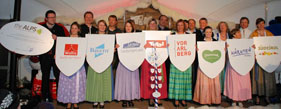
Sustainable business is both essential and it helps alpine businesses prosper -conference message
Sustainable business is not only essential to the future of Alpine mountain regions, but it helps businesses prosper, is the message from theALPS 2012 conference held earlier this month in Innsbruck, Austria.
"Tourism has entered the sustainability debate at a relatively late stage," said Dr Franz Fischler, former EU Agriculture Commissioner and now President of the European Forum Alpbach, "but Alpine tourism can be at the vanguard and lead the way,"
Futurologist Peter Wipperman, trend researcher and lecturer in Communication Design at the Folkwang University in Essen, said that from 2009-2011, in the midst of recession, consumers turned to suppliers and business that they had confidence in; in many cases being prepared to pay more for items with strong ethical and sustainable credentials. "You can’t buy people’s trust," Wipperman said, "and consumers are increasingly asking questions about the people and the values behind the brands: how things are produced, the effects of the environment, and whether employees are happy."
Petra Stolba, Managing Director of Österreich Werbung, is convinced: "Sustainability must be a core value in tourism and thus an essential component of our key business and may under no circumstances be misused just for marketing purposes."
Fischler agrees, stating: "Tourism can only be sustainable when its institutions are sustainable. It shouldn’t really be that difficult to create appropriate quality criteria and to apply the subsequent advantages in marketing as well.’
The winner of the 2012 Alps Awards for Sustainability was Natur Hautnah, a milk production farm in Egg, Austria, that has transformed itself into one of the leading tourist attractions in the Vorarlberg region.
Since opening the farm to visitors, the 25-hectare farm now receives over 15,000 guests a year. "Instead of just being producers, we show people how these products are made, from hay fork to eating fork – they really see the entire process," says founder Ingo Metzler. "We are demonstrating how everything can be put to use, recycling waste fat products into cosmetics. Businesses in the Alps have always had a tough geographical environment, and we can’t be the cheapest, but when you combine emotions with the product, guests acknowledge that through their decisions to visit a destination. If we can convey emotion – in stories, in service or in architecture – then we have a chance."
Natur Hautnah produce their own line of whey based cosmetics (Metzler Kase-Molke), cheese (including: alprahmkäse, alpzieger, bauernkäse, bergkäse, camembert, emmental and rotweinkäse plus many goats cheeses and dried goats milk).
Now in its third year, theALPS has been formed by the acknowledgement that the mountain regions need to work together as a macro region – theALPS – to increase competitiveness and overcome the challenges of an increasingly busy tourism market. Partner regions include Tirol, Sudtirol, Trentino, Vorarlberg, Valais, Salzburgland, Rhône Alps, Graubunden and the Bavarian Alps.
"We have co-competitors advertising sun and beach holidays, and an increasing range of tourism options available to people," said Günther Platter, tourism consultant to the state of the Tyrol and chairman of Arge Alp and Province Governor, "and in mountain tourism regions, we share many of the same challenges in terms of traffic and transport, so setting up a macroregion, where we can share perspectives and knowledge, makes sense." For Karl Gostner, chairman of TVB Innsbruck and its holiday villages, concepts of sustainability in tourism are the way forward: "One of the Innsbruck brand’s success criteria in the future is to be recognised for ecological excellence. It’s our aim to be able to reach the surrounding mountains from the city by public transport without any problems."
Platter highlighted the issue of what he termed "dumping prices", where discounted tourism products and low margins mean that there is no money to reinvest in product and destination development.
"These discounted offers are the death of tourism," he said. Equally crucial was the need to give young people a perspective that agriculture and tourism can work together and provide them with attractive, flexible appealing work. "Young, local people flock to the city, but they are vital for the future of the Alps. How can we create more opportunities for them to work in the agriculture and tourism sectors?
That’s a vital challenge." Ingo Metzler, award winner, added wistfully: ‘We have an immense wealth of products in this saturated market. The reaction of many providers is to cut prices. We in the Alps can’t afford to do this."
Whilst acknowledging a nascent period of renaissance for all things ethical, safe and homely, as a direct backlash against the failure of the banks and long term suspicion of all things fiscal, there was a universal acknowledgement that the internet and specifically the use of smart phones was vital to interacting with future visitors and encouraging e-tourism. To enable this old sense of Alpine hospitality to go hand in hand with burgeoning technology is a challenge most attendees at the conference seemed willing to grasp; accepting that a sense of freedom is directly linked to independence and a sense of autonomy which technology affords, being in combination, spontaneous and immediate. As Ingo Metzler delightfully stated: "The winner does not take more steps, or fall over less, but is simply the person who gets up more times in the race." And perhaps the one who tweets his success as he crosses the finish line.
The conference trading room brought together resorts, tour operators and accommodation providers in a new "business dating" format, where instead of partners having their own stands, visitors talked business across neutral tables with meetings arranged in advance online.
The 2013 Alps conference will be held in the Rhône Alps region, with the location and dates to be announced at the World Travel Market in November 2012.
By: Lucy Symons, Greentraveller; Daniel Elkan, Snowcarbon
VISION latest sustainable tourism special offer: Sustainable Tourism Report 50% OFF HERE


Valere




















Vegas’s Billion-Dollar Secrets – What They Don’t Want Tourists to Know

Visit Florida’s New CEO Bryan Griffin Shares His Vision for State Tourism with Graham

Chicago’s Tourism Renaissance: Graham Interviews Kristin Reynolds of Choose Chicago

Graham Talks with Cassandra McCauley of MMGY NextFactor About the Latest Industry Research

Destination International’s Andreas Weissenborn: Research, Advocacy, and Destination Impact

Graham and Don Welsh Discuss the Success of Destinations International’s Annual Conference

Graham and CEO Andre Kiwitz on Ventura Travel’s UK Move and Recruitment for the Role

Brett Laiken and Graham Discuss Florida’s Tourism Momentum and Global Appeal

Graham and Elliot Ferguson on Positioning DC as a Cultural and Inclusive Global Destination

Graham Talks to Fraser Last About His England-to-Ireland Trek for Mental Health Awareness

Kathy Nelson Tells Graham About the Honour of Hosting the World Cup and Kansas City’s Future

Graham McKenzie on Sir Richie Richardson’s Dual Passion for Golf and His Homeland, Antigua







 ADS PRO
Higher departure tax and visa cost, e-arrival card: Japan unleashes the fiscal weapon against tourists
Euromonitor International unveils world’s top 100 city destinations for 2025
U.S.A. and Israel attacks on Iran impact air movements in the Gulf (Update 1.00pm CET)
Global tourism exceeds 1.5 billion travelers announces UN-Tourism
WTTC global tourism reached record economic impact of 11 trillion in 2025