
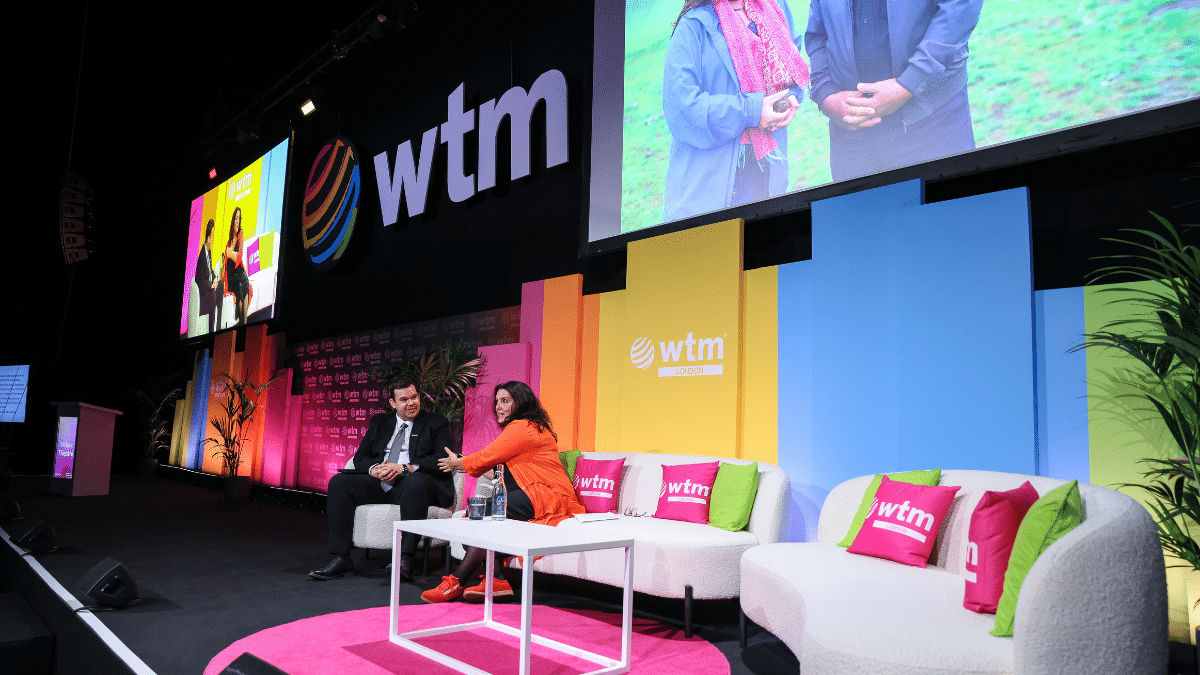
The second day of World Travel Market London 2025 welcomed the main sessions of this year’s DEAI (Diversity, Equity, Accessibility, Inclusion) Summit. With a perceptible change in mood due to recent political changes across the globe. The current U.S. administration came under fire following the ending of Federal Government DEI programs.
The session in the DEAI Summit highlighted ‘inclusion fatigue’ and political resistance to diversity initiatives. “There is definitely a rollback that is making it more challenging,” said Joanna Reeve, of tour operator Intrepid Travel. But she suggested travel could make us feel connected to other cultures so “there’s less of ‘us and them’ and more ‘us’.”
Edgar Weggelaar of Queer Destinations, which works with governments on LGBTQ+ tourism strategies, asserted the Trump administration’s anti-DEAI messaging ‘had an impact’, pointing to FBI statistics showing a rise in homophobic and racist attacks. He believed it would have a detrimental effect for US tourism because “we come to places where we feel comfortable and desired.”
As for those keen to welcome LGBTQ+ travelers, Weggelaar said he would like to see investment beyond Pride month.
Issues to better integrate travelers with disabilities
Accessibility champion Richard Thompson of Inclu Group, said the pandemic had accelerated the use of technology, including for booking travel. However, it also conducted to the exclusion of those unable to use it. “Protocols that were implemented, rightly for covid, have been kept in place and it’s another barrier for disabled people,” he said.
Inclu’s research of 600 luxury hotels around the world found pillow menus and dog-friendly facilities more commonly detailed than information on accessibility. Thompson stressed: “We’re turning disabled people into gamblers. They’re gambling tens of thousands of pounds on a holiday before they leave home because they don’t know what they’re getting.”
He called accessible travel “the last untapped market” and pointed out adaptations and marketing needed to look beyond wheelchairs, which were used by only 6% of disabled people.
In a session covering ‘The Business Case for Inclusion’, Sadia Ramzan of The Muslim Women Travel Group said small changes could have an impact, for instance not welcoming Muslim travelers with sparkling wine but with a mocktail would prompt word of mouth recommendations. She praised Japan for its halal certification and modesty options in spas.
Future-proofing strategist Sita Sahu of FUTURE& said that those destinations not showing themselves to be inclusive were “leaving money on the table”, and she told travel companies: “At the moment DEAI lives within HR and marketing, but we see by 2030 it’s going to live within governance.”
Destinations were also represented at the conference. Thailand’s recent marriage equality law has opened new opportunities for the country which believes it has the only tourism board with a dedicated LGBTQ+ platform.
Meanwhile Malta, a well-established LGBTQ+-Friendly tourism destination, is, with the help of universities, undertaking international tourism studies on further inclusion,
Iceland’s minister responsible for tourism Hanna Katrín Friðriksson referred to the country’s recent Women’s Day Off, a 50th anniversary protest about inequality, which commemorated a landmark 1975 strike. Though there was some backlash to the event she believed it had lessons for wider inclusivity.

































 ADS PRO
Higher departure tax and visa cost, e-arrival card: Japan unleashes the fiscal weapon against tourists
Singapore to forbid entry to undesirable travelers with new no-boarding directive
Euromonitor International unveils world’s top 100 city destinations for 2025
U.S.A. and Israel attacks on Iran impact air movements in the Gulf (Update 1.00pm CET)
Global tourism exceeds 1.5 billion travelers announces UN-Tourism