
Meet Florida’s most beloved mammal
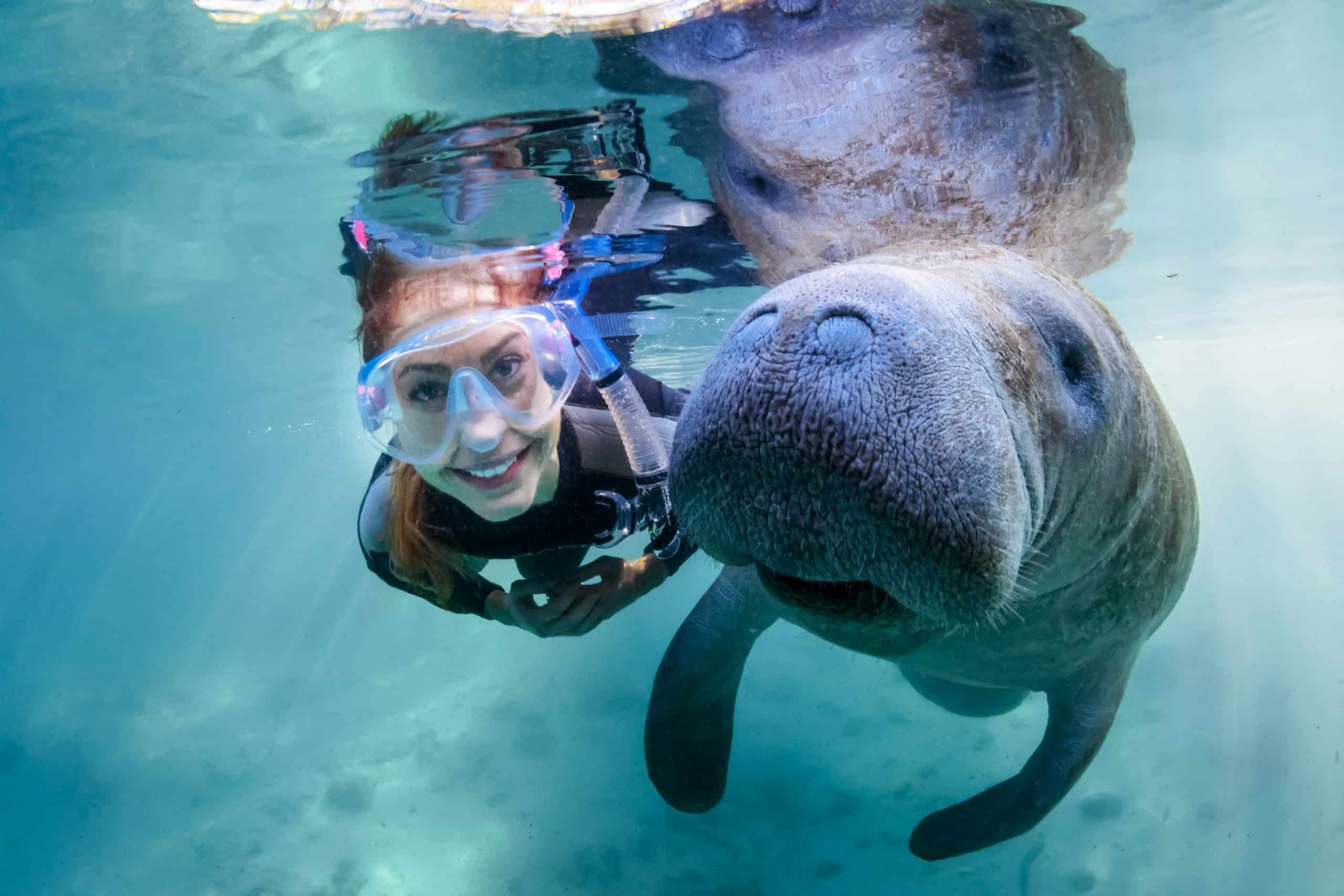
As the Gulf of Mexico cools in the winter months, thousands of manatees flock to Florida’s Gulf Coast in search of warmer waters
This makes it a great time to plan a trip to the Sunshine State – one of the only places to get up close to these docile gentle giants.
Areas such as Crystal River and Tampa offer some of the best places to encounter them.
The state has put measures in place to preserve their habitat for the future.
From banning paddle craft during manatee season and establishing protection zones, the state is committed to protecting their beloved manatees and the ecosystem that they so heavily rely upon.
So, if you’re planning a visit to see these animals in the wild, here are a few things to know.
Baby on board
A female manatee is pregnant for a whole year. When born, the calf can weigh up to 66 pounds. The calf will remain with its mother for as long as two years, learning the travel routes to find warmer waters and where to source food.
Just keep swimming
King’s Bay and Three Sisters Springs in Crystal River are some of the best places in the world to encounter manatees and the only place you can legally swim with these animals in North America.
Watch your manners
Under Florida’s Manatee Sanctuary Act 1978, it is unlawful for any person, at any time, to intentionally or negligently annoy, harass or disturb any manatee. That means, when swimming, observe from the surface and at a distance, practicing passive observation at all times.
Family Tree
Manatees closest living relative is the elephant. Manatees have small flippers that are used for navigating the waters and help them touch, scratch, steer and even embrace!
Feeling the cold
Contrary to popular belief, manatees don’t have much blubber to keep warm. Most of their body mass is due to their large organs – their lungs can measure up to one meter in size. They’re sensitive to the cold and that’s why, each year, they migrate to the warmer springs of Florida’s Gulf Coast.
Gentle giants
Manatees are the ocean’s largest herbivore. They are calm and peaceful marine mammals which pose no threat to humans. Despite their size they spend most of their day eating seagrass and other plant life.


Ray Monty





















Vegas’s Billion-Dollar Secrets – What They Don’t Want Tourists to Know

Visit Florida’s New CEO Bryan Griffin Shares His Vision for State Tourism with Graham

Chicago’s Tourism Renaissance: Graham Interviews Kristin Reynolds of Choose Chicago

Graham Talks with Cassandra McCauley of MMGY NextFactor About the Latest Industry Research

Destination International’s Andreas Weissenborn: Research, Advocacy, and Destination Impact

Graham and Don Welsh Discuss the Success of Destinations International’s Annual Conference

Graham and CEO Andre Kiwitz on Ventura Travel’s UK Move and Recruitment for the Role

Brett Laiken and Graham Discuss Florida’s Tourism Momentum and Global Appeal

Graham and Elliot Ferguson on Positioning DC as a Cultural and Inclusive Global Destination

Graham Talks to Fraser Last About His England-to-Ireland Trek for Mental Health Awareness

Kathy Nelson Tells Graham About the Honour of Hosting the World Cup and Kansas City’s Future

Graham McKenzie on Sir Richie Richardson’s Dual Passion for Golf and His Homeland, Antigua







 ADS PRO
Global tourism exceeds 1.5 billion travelers announces UN-Tourism
Qatar Airways offers reduced timetable to over 60 destinations
WTTC global tourism reached record economic impact of 11 trillion in 2025
Marginal increase for New York City tourism in 2025
Hands In, UATP join forces for airline multi-card payments