
Roadmap to recovery: One year on from the Lombok earthquakes
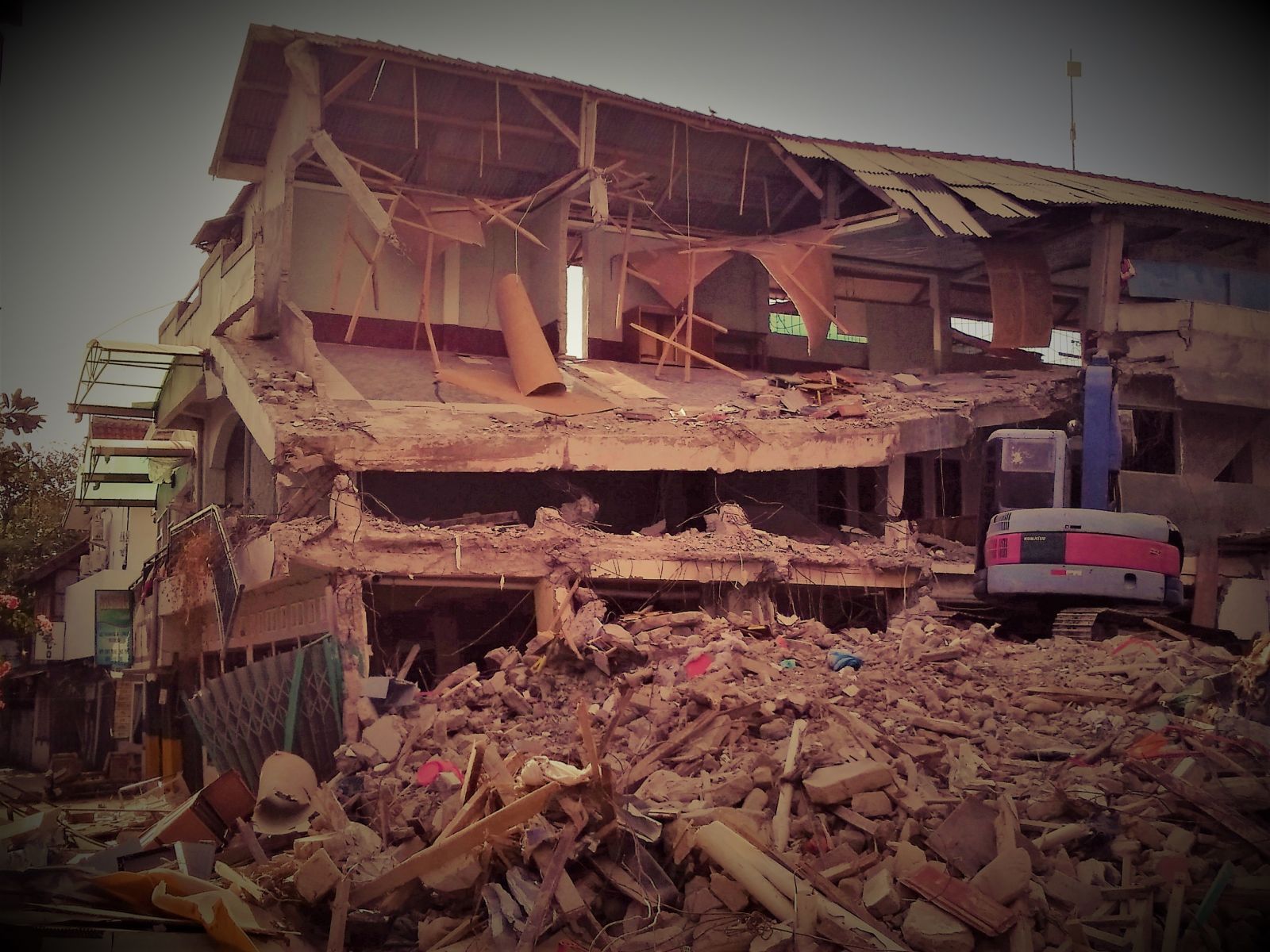
The station wagon right beside me lifted into the air and began frenetically bouncing up and down, half a metre off the ground. Roof tiles rained down and in the distance, panicked shrieks could be heard beneath the deafening noise of corrugated iron splintering. And then, there was silence.
After nearly 15 years in Lombok, I had become pretty much accustomed to the occasional rumbling beneath my feet. Mild tremors and the occasional spewing volcano were just an occupational hazard, right? I thought we were pretty well prepared for whatever Mother Nature had in store, but one year ago everything changed.
After the 7.0 magnitude and several other earthquakes rattled North Lombok a year ago, it took me several weeks to try to make sense of it all. The statistics were sobering: more than 500 dead and 1,000 injured, 400,000 displaced and 80% of structures in North Lombok regency damaged or destroyed. I saw entire small villages where not a single home was left standing. The past year has been a long, winding road back to a semblance or normality but for most people, myself included, things will never quite be the same again.
The past 12 months began with trauma and disbelief but also many selfless acts and inspirational deeds. The tourism industry – hotels, dive resorts and tour companies – all got stuck in straight away once the sheer magnitude began to dawn. While these intentions were well meaning, ad hoc, fragmented supplies of aid are not necessarily the most efficient use of time or resources.
Step forward the Endri Foundation. One of Lombok’s very few permanent charitable organisations, the Endri Foundation had been operating for the past four years, giving a voice to and assisting the island’s sick, dying and disabled children, who are often abandoned, shunned by their community and barred from schools. From modest beginnings it has developed into a lean, effective organisation that gets work done unburdened by the usual red tape runaround that is often an unavoidable part of life. Endri Foundation – Lombok Forgotten Children now works well beyond Lombok itself with teams also present on neighbouring Sumbawa.
Founder and figurehead Endri Susanto explained the organisation’s role in the quake’s aftermath and how EF became the de facto on-the-ground platform for companies and individuals to connect with and contribute funds quickly. This is in part due to its operating model which since its earliest days has been driven by savvy thinking and smart technology. Local government and even large aid organisations are not the most approachable entities for individuals eager to contribute via donations or organise their own fund-raising efforts.

This is where EF has been able to make a tangible difference – by connecting the gaps with its army of keyboard warriors with a social conscience. Like no other organisation before, EF harnesses the energy and immediacy of social media to highlight urgent needs, and importantly, show donors where every dollar is going and how it’s making a profound difference. EF has sparked a movement of dozens of volunteers, be it on the ground doing the heavy lifting, or getting the word out to the masses via social channels.
I see a distinct parallel with the early days of the Generasi Pesona Indonesia (GenPI) social media movement which I reported on some years back. This too was born in Lombok, and has since morphed into one of Indonesia’s most effective tourism promotion platforms, manned by dedicated volunteers.
So what has changed in the past 12 months and what if any are the lessons to be learned? According to Endri, the foundation had the advantage of being unburdened by multiple layers of officialdom and red tape.
"For government agencies, regulations come first before relief. Every single item needs to be accounted for, which takes up valuable time. We are fortunate in that we were able to provide a fast response without these barriers."
"It has taken time, but now coordination between government agencies and NGOs is much better. There is now much closer cooperation including data sharing," Endri said, adding that Palang Merah Indonesia (PMI – the Indonesian Red Cross) has helped smooth communication channels between government and on the ground local aid providers like Endri Foundation.
The big issue now, Endri says, is how to be more proactive in disaster preparedness ahead of the next ‘big one.’ "We need to train young people now to be more prepared and be in a position where efficient disaster management can kick in straight away. The government needs to roll out disaster management best practices that everyone can understand, including the general public."
"More defined roles and responsibilities for government agencies, the emergency services and NGOs will help speed up the delivery of aid, and stop overlapping."
There is some progress on this front as Endri has recently rolled out disaster management training sessions with senior high school students in collaboration with the Red Cross. In addition he has started orientation for budding Red Cross volunteers based in North Lombok. One key positive to come out of the past year’s trauma has been the establishment of a North Lombok regional base for the Red Cross. Endri himself was appointed as the leader of PMI North Lombok, a role he says makes him the youngest ever Red Cross chief.

Endri’s mellow disposition conceals a hard-nosed temperament required to cut through red tape and get results. Tenacious, hard talking is sometimes required to get the message across with policymakers. There are times when ‘I need to speak my mind’ to impress on people just how urgent the need is.
Earthquake ground zero in the heart of North Lombok is where Endri’s family ties are and where the foundation’s early projects were focused on. The foundation’s links to the community remain strong here and will continue to do so as it still remains one of the most deprived areas. (He says the local community has been pushing him to run for mayor). Endri tells me the next big dream is to build a new hospital in the area. Looking at the huge strides made since EF was established, it’s certainly not an impossible dream.

The North Lombok region has a disproportionate large number of workers employed in the tourism industry due to its proximity to the popular Gili Islands. The Gilis have been the engine driving Lombok’s burgeoning tourism sector for several years but remains highly dependent on North Lombok for a steady flow of willing and qualified workers.
As the sole notable industry sector, Lombok’s economic success is tied to tourism, Endri says, and it needs to continue to play a key role in disaster preparedness. Speaking to Heri Hermawan, deputy director of tourism promotion earlier this year at a travel trade show, it was interesting to hear that tourism leaders have finally acknowledged publicly that Indonesia will undoubtedly be hit by more disasters in the future. This is quite a departure from the usual denials and mixed messages it often conveys durinng major incidents.
Since Lombok, there is now a comprehensive roadmap to recovery; a Tourism Crisis Management plan of action to help restore trust quickly, engage more meaningfully with the media post-disaster, and lure travellers back with pro-active promotional campaigns. This augers well for when the next ‘big one’ strikes. Instead of simply complaining about ‘inaccurate’ travel advisories issued by various countries, they are now being a bit more savvy by taking charge of the narrative themselves.
Lombok’s recovery has not been without its missteps and frustrating delays, and one year on there is still some way to go before all local communities and the tourism industry fully recover. Small steps are still being taken. New direct flights from Perth and a Moto GP race track being built in the south will help in the long term. Meanwhile, Endri and his growing team of volunteers continue to serve communities in most need across the island. To learn more and get involved in fund raising efforts, visit LFC Endri Foundation.


TravelMole Editorial Team
Editor for TravelMole North America and Asia pacific regions. Ray is a highly experienced (15+ years) skilled journalist and editor predominantly in travel, hospitality and lifestyle working with a huge number of major market-leading brands. He has also cover in-depth news, interviews and features in general business, finance, tech and geopolitical issues for a select few major news outlets and publishers.



















Vegas’s Billion-Dollar Secrets – What They Don’t Want Tourists to Know

Visit Florida’s New CEO Bryan Griffin Shares His Vision for State Tourism with Graham

Chicago’s Tourism Renaissance: Graham Interviews Kristin Reynolds of Choose Chicago

Graham Talks with Cassandra McCauley of MMGY NextFactor About the Latest Industry Research

Destination International’s Andreas Weissenborn: Research, Advocacy, and Destination Impact

Graham and Don Welsh Discuss the Success of Destinations International’s Annual Conference

Graham and CEO Andre Kiwitz on Ventura Travel’s UK Move and Recruitment for the Role

Brett Laiken and Graham Discuss Florida’s Tourism Momentum and Global Appeal

Graham and Elliot Ferguson on Positioning DC as a Cultural and Inclusive Global Destination

Graham Talks to Fraser Last About His England-to-Ireland Trek for Mental Health Awareness

Kathy Nelson Tells Graham About the Honour of Hosting the World Cup and Kansas City’s Future

Graham McKenzie on Sir Richie Richardson’s Dual Passion for Golf and His Homeland, Antigua







 ADS PRO
Global tourism exceeds 1.5 billion travelers announces UN-Tourism
Qatar Airways offers reduced timetable to over 60 destinations
WTTC global tourism reached record economic impact of 11 trillion in 2025
Hands In, UATP join forces for airline multi-card payments
Overseas travelers to the United States declined by 2.5% in 2025