
Two-minute guide to responsible tourism in Borneo
One of the last great wildernesses on earth is under threat. Over the last three decades more than half of the forest cover on this enormous island has been lost to loggers and farmers. And it is not just Borneo’s well-documented orang-utans which are struggling for survival.
The traditional communities which have called these forests home for generations are also slowly disappearing as the modern world encroaches into the trees. For tourists visiting Borneo with idealistic visions of pristine jungle, the swathes of destruction wrought by logging enterprises and palm oil plantations may come as a shock. But it is important that visitors understand the issues facing the island as they become inexorably linked to the survival of its forests, people and wildlife.
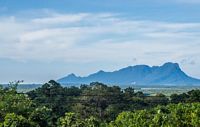
Mount Santubong – photo Dustin Iskandar
Palm oil is a booming business. Seen as a one-size-fits-all miracle oil the world over it is also the cheapest of the vegetable oils, used in everything from food to toiletries. Ironically it is also touted now as a ‘bio-fuel’, the answer to polluting petroleum. However, given the need for mass clearance of fragile rainforest habitat this appears to be a very un-eco answer to eco-fuel.
There is, however, big money in Palm Oil. For the Malaysian and Indonesian Governments and for the farmers involved, clearing the forest for this commercial giant makes more economic sense than preserving it intact for wildlife and communities. Unfortunately the story is the same for the logging industry – whether legal or illegal, the trade in valuable timber often means the forests are perceived as much more valuable felled, than they are left standing.
For the Dayak, the umbrella term for all of Borneo’s inland tribes, this has had disastrous consequences. Compromising over 200 subgroups of people, each with their own dialects, traditions and beliefs, yet united by the threat of displacement and loss of culture. Deforestation and the introduction of industries such as mining have eroded traditional ways of life and with it specialist, intimate knowledge of the inner workings of the forests’ flora and fauna. The Penan, for example, are as threatened by palm oil plantations as the orang-utans. And although 10,000 Penan still live in Borneo, the encroachment onto, eviction from and destruction of their traditional lands mean that barely 200 are able to maintain their traditional nomadic life.
Responsible tourism in Borneo could, however, hold at least some of the answers. One of responsible tourism’s most important achievements lies in creating value around unspoilt forest habitats, and there are few places in the world with more pressing need for this than Borneo. Community tourism offers visitors a way to not only experience the traditions of people like the Penan, the Iban of Sarawak or the Rungus of Sabah, but to help them continue practising their culture, pass it down to younger generations and bolster their fight to stay and live in the forest. 
River Communities – photo by Stephen Kennedy
In educating tourists about the positive impact responsible tourism can have on conservation and communities in Borneo, we give them the opportunity to support the communities becoming more and more dependent on their help. We give them the option to choose a type of tourism which could have long-lasting benefits for the survival of some of the world’s most fragile cultures and wildlife. And as the region opens up more fully to responsible tourism we give Borneo’s unique culture and nature the value it so desperately deserves.
To further understand the issues in responsible tourism facing Borneo please visit responsibletravel.com‘s 2 minute guide to Borneo http://www.responsibletravel.com/holidays/borneo


Bev
Editor in chief Bev Fearis has been a travel journalist for 25 years. She started her career at Travel Weekly, where she became deputy news editor, before joining Business Traveller as deputy editor and launching the magazine’s website. She has also written travel features, news and expert comment for the Guardian, Observer, Times, Telegraph, Boundless and other consumer titles and was named one of the top 50 UK travel journalists by the Press Gazette.


















Vegas’s Billion-Dollar Secrets – What They Don’t Want Tourists to Know

Visit Florida’s New CEO Bryan Griffin Shares His Vision for State Tourism with Graham

Chicago’s Tourism Renaissance: Graham Interviews Kristin Reynolds of Choose Chicago

Graham Talks with Cassandra McCauley of MMGY NextFactor About the Latest Industry Research

Destination International’s Andreas Weissenborn: Research, Advocacy, and Destination Impact

Graham and Don Welsh Discuss the Success of Destinations International’s Annual Conference

Graham and CEO Andre Kiwitz on Ventura Travel’s UK Move and Recruitment for the Role

Brett Laiken and Graham Discuss Florida’s Tourism Momentum and Global Appeal

Graham and Elliot Ferguson on Positioning DC as a Cultural and Inclusive Global Destination

Graham Talks to Fraser Last About His England-to-Ireland Trek for Mental Health Awareness

Kathy Nelson Tells Graham About the Honour of Hosting the World Cup and Kansas City’s Future

Graham McKenzie on Sir Richie Richardson’s Dual Passion for Golf and His Homeland, Antigua







 ADS PRO
Global tourism exceeds 1.5 billion travelers announces UN-Tourism
Qatar Airways offers reduced timetable to over 60 destinations
WTTC global tourism reached record economic impact of 11 trillion in 2025
Hands In, UATP join forces for airline multi-card payments
Suspension of all regional trains in Catalonia following two new rail accidents in Spain