
Two-minute guide to responsible tourism in South Africa
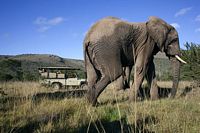
With easy access to its National Parks, fantastic roads, stylish cities, enticing cuisine and vibrant culture, South Africa is accessible Africa; a destination for families, first-timers and the less fearless.
Best known for the wildlife which wanders its vast parks and conservancies, it can be easy to consider a holiday to South Africa as simply a chance to tick off the ‘Big Five’ from a safari bucketlist. However we shouldn’t ignore the people, history and heritage which make this the real Rainbow Nation. Responsibletravel.com’s 2-minute guide to South Africa argues that for a truly authentic South African experience its culture shouldn’t just be a safari afterthought.
While South Africa may not have the ‘cliched’ tribal experiences found in other countries in Africa – for example encounters with the Himba in Namibia, or walks with the Maasai in Kenya – what it does have are far more real and accessible opportunities for tourists to really connect with culture, through music, delicious street food, festivals and art fairs, without the need for contrived tours.
South Africa’s townships are home to many millions of its residents, of all cultural backgrounds, and provide a real insight into modern South African life. Although these tours can be controversial, especially when tourists drive through, shooting pictures and giving nothing in return; when locally run, using local guides and with regular stops to visit markets, craftsmen and local shebeens these tours give some of South Africa’s poorest communities the chance to promote their heritage, generate income for their families and develop much-needed community initiatives.
Uthando, in Cape Town is a great example of people-led tourism products leading to genuine, grassroots development projects, and Durban’s Langa Township is now part of the city’s Hop-on Hop-off Red Bus Tours; a result of ongoing social enterprise developments around local jazz, heritage, arts culture and food.
South Africa’s very troubled recent history shapes the lives of everyone tourists will meet in the country, and to really understand the present day South Africa, tourists have to make the effort to learn more about its complex past. The Apartheid Museum in Johannesburg is a must-visit, yet moving place to put this history into the context of everyday South Africans.
Not solely a tourist museum, it also serves as a powerful place of peace and reconciliation. In its own words: "The museum is a beacon of hope showing the world how South Africa is coming to terms with its oppressive past and working towards a future that all South Africans can call their own."
With such an array of cultures to explore it is possible to have the holiday of a lifetime in South Africa without seeing one wild animal. Which, of course, would be a real shame. So rather than trying to touch every colour of the Rainbow Nation, try instead to become immersed in just one or two places which will give you a balance of heritage and natural history, culture and wildlife.
KwaZulu-Natal, for example, tucked away in the east of the country is an ideal destination for authentic adventures and yet often overlooked for the more famous Garden Route or Kruger National Park. The customs and beliefs of Zulu culture underpin daily life here. Learning how the past has shaped the present, tourists can take informative tours of the 1879 Anglo-Zulu battlefields at Isandlwana and Rorke’s Drift with a local guide, before staying in a traditional Zulu homestead or ‘Umuzi’, offering homestay experiences for visitors. This is a unique, immersive way to understand the importance traditional tribal cultures have in modern South Africa away from more contrived tourist cultural shows.
KwaZulu-Natal also has world-class wildlife, and the sought-after ‘Big Five’ in abundance. Many reserves are doing key conservation work, including Hluhluwe-Imfolozi Park, where anti-poaching initiatives were successful in bringing back the white rhino from the brink of extinction in the 1950s. And with rhino (and other species) numbers continuing to be threatened, ensuring that a South Africa holiday supports key conservation efforts is vitally important.
For more tips on underrated experience and authentic travel in South Africa visit http://www.responsibletravel.com/holidays/south-africa


Bev
Editor in chief Bev Fearis has been a travel journalist for 25 years. She started her career at Travel Weekly, where she became deputy news editor, before joining Business Traveller as deputy editor and launching the magazine’s website. She has also written travel features, news and expert comment for the Guardian, Observer, Times, Telegraph, Boundless and other consumer titles and was named one of the top 50 UK travel journalists by the Press Gazette.





















Vegas’s Billion-Dollar Secrets – What They Don’t Want Tourists to Know

Visit Florida’s New CEO Bryan Griffin Shares His Vision for State Tourism with Graham

Chicago’s Tourism Renaissance: Graham Interviews Kristin Reynolds of Choose Chicago

Graham Talks with Cassandra McCauley of MMGY NextFactor About the Latest Industry Research

Destination International’s Andreas Weissenborn: Research, Advocacy, and Destination Impact

Graham and Don Welsh Discuss the Success of Destinations International’s Annual Conference

Graham and CEO Andre Kiwitz on Ventura Travel’s UK Move and Recruitment for the Role

Brett Laiken and Graham Discuss Florida’s Tourism Momentum and Global Appeal

Graham and Elliot Ferguson on Positioning DC as a Cultural and Inclusive Global Destination

Graham Talks to Fraser Last About His England-to-Ireland Trek for Mental Health Awareness

Kathy Nelson Tells Graham About the Honour of Hosting the World Cup and Kansas City’s Future

Graham McKenzie on Sir Richie Richardson’s Dual Passion for Golf and His Homeland, Antigua







 ADS PRO
Higher departure tax and visa cost, e-arrival card: Japan unleashes the fiscal weapon against tourists
Singapore to forbid entry to undesirable travelers with new no-boarding directive
Euromonitor International unveils world’s top 100 city destinations for 2025
U.S.A. and Israel attacks on Iran impact air movements in the Gulf (Update 1.00pm CET)
Global tourism exceeds 1.5 billion travelers announces UN-Tourism