
DESTINATIONS: A SUSTAINABLE APPROACH
Wednesday, 20 Aug, 2009
0
A global perspective on moves to harmonize sustainable tourism criteria
This session outlines how tourism destinations are managing climate change, offering a global perspective on moves to harmonize sustainable tourism criteria, a national level approach to implementing a Sustainable Consumption & Production (SCP) policy for the tourism sector, and what the accommodation sector can do to move towards climate neutral activity. The panel provides an insight into how the tourism sector fits into the wider moves towards sustainable consumption and production and the development of the Global Sustainable Tourism Criteria (GSTC). It will demonstrate the important link between conservation and the development of tourism, taking a territorial approach to show how best to create regional green economies in coastal, mountain urban and protected areas.
This framework for discussion here shifts from a focus on the global tourism supply chain activities to the way destination stakeholders are developing their local and regional tourism supply chains. In terms of policy implementation, the EU has a critical view of the overall moves towards sustainable consumption and production:
´Overall, voluntary and regulatory instruments are not sufficiently connected and potential synergies between the different instruments are not exploited. Implementation is not sufficiently dynamic and forward-looking to drive the performance of products upwards. Divergent national and regional approaches send conflicting signals to producers, and as a result the full potential of the Internal Market is not realized.` See COM(2008) 397 final eur-lex.europa.eu/LexUriServ/LexUriServ.do
Many stakeholders in the tourism sector see this as an opportunity for the sector to gain a green reputation, and the sector’s global moves to implement a coherent common ground in sustainable tourism has resulted in the development of the Global Sustainable Tourism Criteria. The GSTC allows for local, regional and national certification schemes to be independently verified to reduce any green washing going on in the moves to a global green economy. www.sustainabletourismcriteria.org/
In the rush to the Green Economy and Copenhagen, stakeholders should not forget the UNWTOs Sustainable Tourism Destination Indicators programme, which provides a solid technical support process for destinations wishing to go green. pub.world-tourism.org:81/epages/Store.sf/
Neither should the UNs internationally orchestrated Local Agenda 21 process be abandoned, as it produces the multi-stakeholder activity and local focus that underlies sustainable development. www.iclei-europe.org/
This link to the other side of the global scale – the local/regional approach – is also necessary. The case of UK`s South-West Tourism should be seen as a leading example of how regional sustainable tourism can be fostered to go greener.
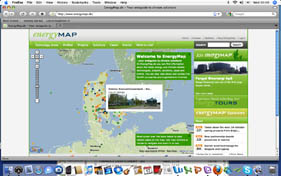
Denmark, in the build up to Copenhagen, has made serious efforts to place itself as a leading innovator in the development of the global green economy. It hosted this years Climate Change conference in Aarhus, where more than 1.000 prominent representatives from science, industry, policy and NGO’s met to discuss Climate Change and Sustainable Consumption and Production. Seven statements on climate change were produced, and the conference outcomes can be used in an innovative site called EnergyMap LINK: www.energymap.dk/.
Contributors to this session will show other sustainable destination development examples, promoting conservation and the development of tourism, and taking a territorial approach, including the worlds largest investment in sustainable tourism destination development taking place in Playa de Palma -to show how best to create regional green economies in coastal, mountain urban and protected areas.
SEVEN AARHUS STATEMENTS ON CLIMATE CHANGE DOWNLOAD
Regional Level Implementation – the Key to Reaching Stakeholders in the Green Economy South-West Tourism:
´Between 2005 and 2008 it recruited specialist staff in sustainability and implemented a programme in partnership with other bodies in the South West and beyond which aimed to engage tourism businesses, destination managers, visitors, decision makers and their own staff. Key actions and achievements during this time included:
- Promotion of a ‘bite-sized’ awareness campaign for businesses – Action of the Year. Focusing on one theme per year (e.g. saving energy), over 100 presentations to 2,000 businesses in 2 years with popular resources to help get businesses started.
- Roll out and promotion of a national green certification scheme – South West now has more green certified tourism businesses than any region in Europe (around 500).
- Influence on integrating a sustainable approach to national quality standards and training courses
- Production of case study and introductory publications for tourism businesses.
- Workshops and assistance for sub-regional destination managers on how to integrate sustainability in their work and organisations.
- Partnership with Sustainability South West in delivering a visitor communication campaign – Future Footprints – and production of popular room cards with sustainable messages (40,000 requested to date).
- Training, audits and action within South West Tourism’s office to become the 1st regional tourist board to achieve ‘Gold’ level green certification.
- Integration of environmental and social issues within SWT research.
In the last year SWT has become a smaller, strategic organisation with the focus of work on sustainability switching towards advising, supporting and influencing partners and internal staff to adopt an approach where sustainability is embedded:
- Monitoring and developing research and intelligence relating to sustainability and transferring that knowledge to partners/ businesses.
- Reviewing the regional tourism strategy through use of scenario planning to ensure it is equipped to deal with current and future conditions.
- Influencing key policy-making and funding decisions within and beyond tourism.
- Development / dissemination of tools that help others to take more sustainable decisions – e.g. REAP Tourism (an eco / carbon footprint tool for destinations), VICE Evaluation Tool (a self-appraisal tool for tourism projects).
- Advice and support to key partners (sub regional destination bodies, Regional Development Agency, regional tourism skills body).
- Increased focus on raising awareness of adaptation to the effects of climate change.`
Symposium presenters:
- Moderator: Zoritsa Uresowic UNWTO
- Margarita Nájera, Director, Fúndacion COINT
Converting Existing Tourism infrastructure to create a Green Economy Resort – The case of Playa de Palma
- Jurgen Ringbeck, Senior Partner Booz & Co. Management Consultant
Strategic Information to Create a Green Tourism Economy – Implications for Tourism & Environment Organisations
- Erika Harms, Executive Director for Sustainable Development, UN Foundation
Credibility in the Green Market-Place-Applying the Global Sustainable Tourism Criteria at the Destination Level
- Karmen Mentil, Chief Executive Officer, Alpine Pearls
Vacations with Soft Mobility in Alpine Destinations


Valere















Vegas’s Billion-Dollar Secrets – What They Don’t Want Tourists to Know

Visit Florida’s New CEO Bryan Griffin Shares His Vision for State Tourism with Graham

Chicago’s Tourism Renaissance: Graham Interviews Kristin Reynolds of Choose Chicago

Graham Talks with Cassandra McCauley of MMGY NextFactor About the Latest Industry Research

Destination International’s Andreas Weissenborn: Research, Advocacy, and Destination Impact

Graham and Don Welsh Discuss the Success of Destinations International’s Annual Conference

Graham and CEO Andre Kiwitz on Ventura Travel’s UK Move and Recruitment for the Role

Brett Laiken and Graham Discuss Florida’s Tourism Momentum and Global Appeal

Graham and Elliot Ferguson on Positioning DC as a Cultural and Inclusive Global Destination

Graham Talks to Fraser Last About His England-to-Ireland Trek for Mental Health Awareness

Kathy Nelson Tells Graham About the Honour of Hosting the World Cup and Kansas City’s Future

Graham McKenzie on Sir Richie Richardson’s Dual Passion for Golf and His Homeland, Antigua







 ADS PRO
Clearing CSS/JS assets' cache... Please wait until this notice disappears...
Updating... Please wait...
Airlines suspend Madagascar services following unrest and army revolt
Airbnb eyes a loyalty program but details remain under wraps
Qatar Airways offers flexible payment options for European travellers
Air Mauritius reduces frequencies to Europe and Asia for the holiday season
Major rail disruptions around and in Berlin until early 2026