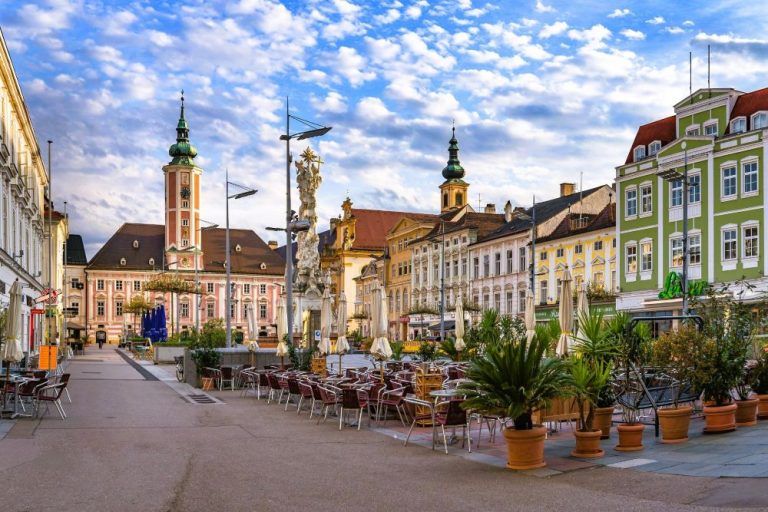
St. Pölten, a city of 60,000 inhabitants, half-way between Vienna and Linz celebrates this year an unusual anniversary: 40 years as the capital city of the Province of Lower Austria (Land Niederösterreich). A perfect opportunity to explore a destination still little known to the general public, which is also the oldest town on record in Austria. A Town Charter was given to St. Pölten back to 1159…
Until 1918, Vienna indeed served as the capital of Lower Austria. Although Vienna became a Province on its own in 1922, Lower Austria delayed establishing its own capital for financial reasons, with the government remaining in Vienna. It was only in the 1980s that Lower Austria Governor Siegfried Ludwig revived the issue, arguing that a dedicated capital would be necessary.
Following a public referendum in March 1986, 56% backed the proposal, with St. Pölten receiving the most votes against other cities. On July 10, 1986, the state parliament officially named St. Pölten the capital. A new government district was developed on the banks of the Traisen River, with both the regional parliament and the Lower Austrian government relocating there in 1997.
As Austria’s youngest provincial capital, St. Pölten celebrates this milestone in its history with a packed calendar of cultural events, festivals, sporting competitions and culinary experiences. They are all designed to showcase the city’s transformation into one of the country’s most dynamic urban destinations.
Discovering Austria’s best secret regional capital
It is for travelers a wonderful opportunity to discover a charming baroque town but also how the city underwent a remarkable transformation in the last four decades.
Major investments led to the development of a striking contemporary government district and cultural quarter with the renowned Festspielhaus. It helped positioning St. Pölten as the political and cultural heart of Lower Austria.
Today, St. Pölten is home to more than 60,000 residents and welcomes over 40,000 commuters each day. Around 17,000 students attend universities and educational institutions in the city, reflecting its evolution from an industrial center into a thriving hub for education, business and culture.
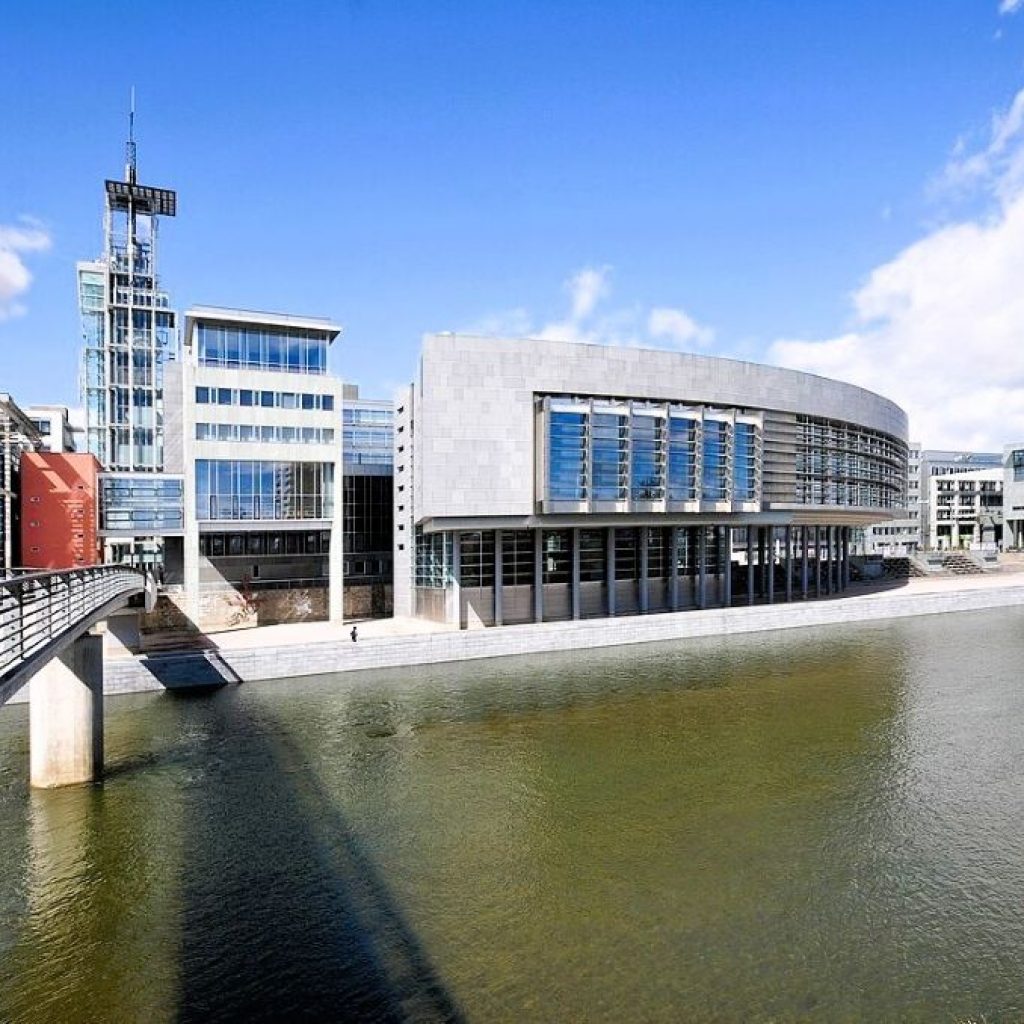 St. Pölten parliament building and government district (Photo:Von Ralf Roletschek – Eigenes Werk, CC BY 3.0, https://commons.wikimedia.org/w/index.php?curid=25594784)
Culture takes center stage throughout the anniversary year. Five museums present special exhibitions exploring the city’s history, contemporary issues and future ambitions.
Visitors can also enjoy performances across seven venues, ranging from large concert halls to intimate studio theaters.
The city’s cultural highlights include the Festspielhaus St. Pölten, the State Theater and Bühne im Hof, the former city’s synagogue all offering year-round programs of theater, music, dance and live entertainment.
For travelers interested in exploring the city’s past and present, a series of themed guided tours provides fresh perspectives on St. Pölten. Walking tours through the historic old town and architecture-focused visits to the government district will reveal how the city has evolved over the past four decades.
A major anniversary attraction will be at the City museum St. Pölten, which is celebrating its own 50th anniversary in 2026. The museum will unveil a newly redesigned permanent exhibition, Stadtgeschichte St. Pölten neu (The New History of St. Pölten), tracing the city’s development through interactive and multimedia displays. Visitors can also explore Stadt + Land = 40, a special exhibition marking four decades since St. Pölten became Lower Austria’s capital.
Festivals and events across the summer
The celebrations also include a strong lineup of major events expected to attract visitors from across Austria and abroad. At the end of May, Challenge St. Pölten took place and is considered one of Europe’s leading triathlon competitions.
Summer is bringing a series of music and festival highlights. The Baroque Festival was recently concluded and gives way to the Bravissimo Street Arts Festival during the anniversary weekend on July 10-11, and the Blues Festival at Ratzersdorfer See on July 25.
The internationally renowned Frequency Festival returns from August 20-22 with a major lineup of international artists, while the Domplatz Concerts on September 10 and 12 will provide a spectacular musical backdrop in the city’s historic center.
Additional celebrations include the Höfefest on September 19, when hidden courtyards open to the public, and the Kellergassenfest on November 7, showcasing regional cuisine and local wine traditions.
St. Pölten’s 40th anniversary is a celebration of a city that continues to evolve. Easily accessible by train or car, 2026 offers the perfect opportunity for visitors to (re)discover Lower Austria’s capital.