
Cancun COP16: Ecocide: Suicide or breakthrough: tourism challenges
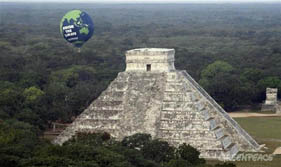
Success or failure: Cancun poses many questions for the tourism industry.
The biggest breakthrough is that the Kyoto process is still on the road, just! Another year of intensive negotiation, though has little to show in tangible agreements.
In practical terms COP16 in Cancun produced the following adaptation and mitigation measures:
- An agreement about the structure of the Green Climate Fund but no concrete proposal as to where the promised $100bn a year (from 2020) will come from.
- An understanding that developing countries, particularly those vulnerable to climate change would be assisted from the fund.
- An agreement about the importance of market and non-market based mechanisms to value emissions with the practicalities delayed until COP17 in 2011
- An agreement to establish a Climate Technology Centre to identify and monitor the challenges of climate change.
- An understanding that all national emission reduction targets would be reassessed.
- An agreement that emissions would be both domestically and internationally verified.
OK there was a lot more, but that was even more flimsy than the above.
The question is: “What does this mean for global travel and tourism?”
The fact is that all the current national emission reduction targets that have been put on the table, if achieved, would probably produce an increase in global temperatures double that thought acceptable (4% instead of 2%).
So, barring a miracle or some amazing technological breakthrough, the world will be experiencing the effect of a 4% increase in temperatures by, say, 2050 or earlier.
Politically, this is possibly a good thing, as, given the current global response to the problem, it is unlikely that the majority opinion will be swayed until major disasters, that are clearly attributable to climate change, are happening. Even then the argument that that human activity is not the cause and it is a natural phenomenon may well bar the way to cohesive global action.
In any case, by the time that the problem is apparent and the solution clear, it may well be too late for effective action.
So, from a travel and tourism point of view, it is probably sensible to plan with the probability of a 2%+ increase in global temperatures in mind by 2050 and a 4%+ increase by 2100.
What will this mean? The following are major effects that will impact tourism:
Geographic:
Melting glaciers and sea water rise will effect small islands, deltas, coastal areas.
Warmer weather will adversely affect winter sports and summer sun destinations.
Energy
As a move is made towards renewable energy, the cost of fossil fuel will increase and it may well be that tax is applied to jet fuel.
Resources
Higher temperatures and lack of fresh water will restrict the availability of food and water, particularly in developing country destinations
Political, Social, Economic, Security
Food and water wars and major human migrations have already been forecast
Result: Tourism lessons from 2-4 degree increase in temperature:
- No long term infrastructure investment in dodgy destinations (islands, coastal, delta,ski)
- Fewer destinations but with a much higher level of protection from weather and human violence
- Much, much more expensive air travel therefore less medium-long haul holidays
- Much more domestic and regional tourism
- More carbon-neutral destinations
Valere Tjolle
Valere Tjolle is editor of the Sustainable Tourism Report Suite 2011 – latest news on the suite at www.travelmole.com/stories/1145615.php


Valere




















Vegas’s Billion-Dollar Secrets – What They Don’t Want Tourists to Know

Visit Florida’s New CEO Bryan Griffin Shares His Vision for State Tourism with Graham

Chicago’s Tourism Renaissance: Graham Interviews Kristin Reynolds of Choose Chicago

Graham Talks with Cassandra McCauley of MMGY NextFactor About the Latest Industry Research

Destination International’s Andreas Weissenborn: Research, Advocacy, and Destination Impact

Graham and Don Welsh Discuss the Success of Destinations International’s Annual Conference

Graham and CEO Andre Kiwitz on Ventura Travel’s UK Move and Recruitment for the Role

Brett Laiken and Graham Discuss Florida’s Tourism Momentum and Global Appeal

Graham and Elliot Ferguson on Positioning DC as a Cultural and Inclusive Global Destination

Graham Talks to Fraser Last About His England-to-Ireland Trek for Mental Health Awareness

Kathy Nelson Tells Graham About the Honour of Hosting the World Cup and Kansas City’s Future

Graham McKenzie on Sir Richie Richardson’s Dual Passion for Golf and His Homeland, Antigua







 ADS PRO
Global tourism exceeds 1.5 billion travelers announces UN-Tourism
Qatar Airways offers reduced timetable to over 60 destinations
WTTC global tourism reached record economic impact of 11 trillion in 2025
Hands In, UATP join forces for airline multi-card payments
Suspension of all regional trains in Catalonia following two new rail accidents in Spain