
Caribbean politicians urged to pull together to protect tourism
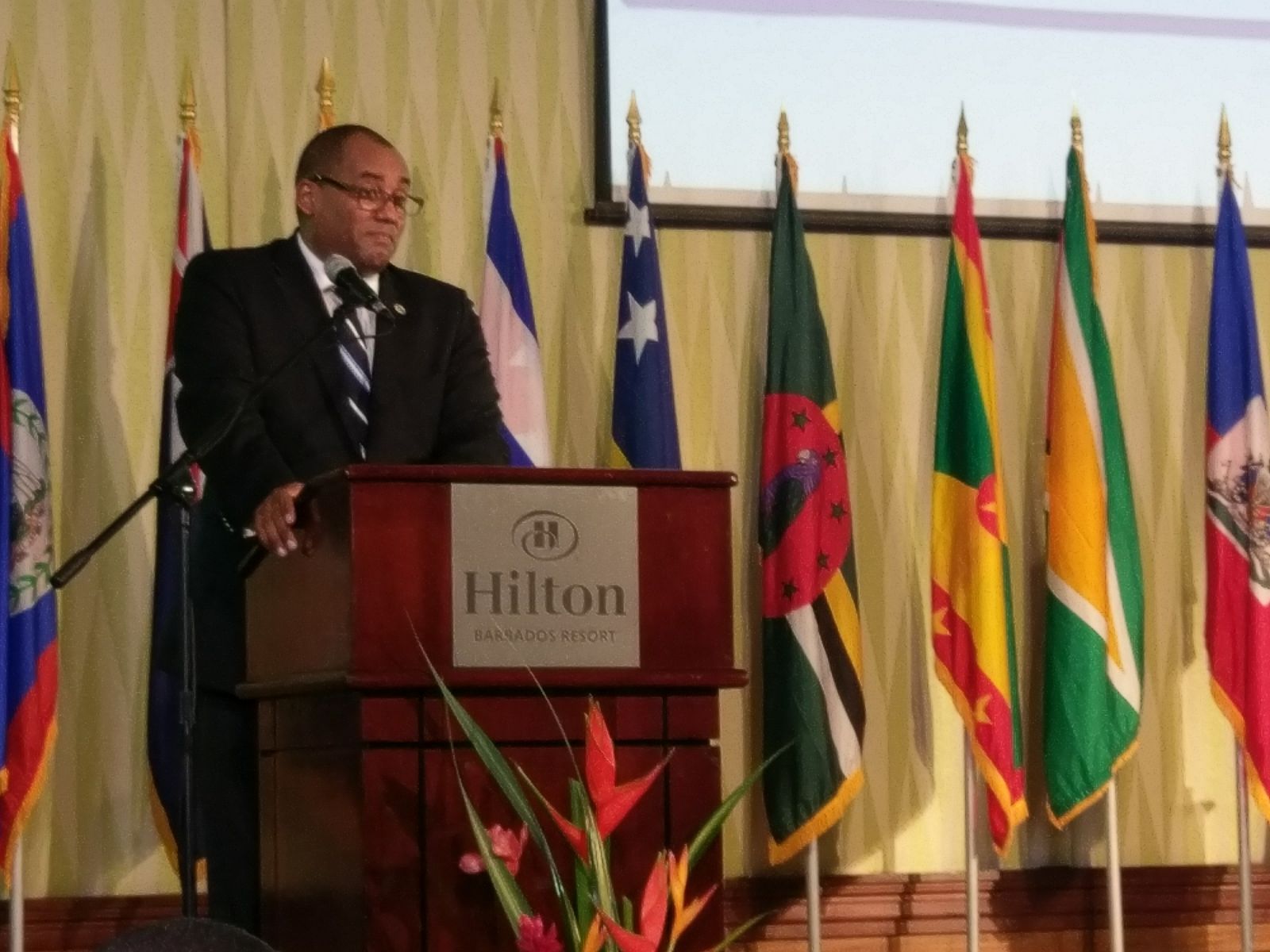
Minister of Tourism Richard Sealey opens SOTIC 2016
Caribbean politicians have been criticised for lack of cooperation and decisiveness over the region’s tourism strategy.
Taleb Rifai, Secretary General of the UNWTO, warned the region will be poorer and less competitive against more unified regions if it’s unable to work together and improve its inter-island transport links.
The issue was raised at the at this year’s 2016 State of the Industry Conference in Barbados. Graham McKenzie reports.
"Over the years the presentations have got slicker, the arrangements smoother and the evening functions funkier, but despite everything the two main issues appear to remain depressingly the same. Firstly, how do the disparate nations that make up the region market themselves effectively as one – One Caribbean? Secondly, how can an effective inter-island transport air network be set up that surpasses all that the current incumbent LIAT achieves?

Speakers at SOTIC 2016
Many of the 2016 conference speakers posed the questions as aggressively and as eloquently as in the past, but once again no future actions or concrete plans were forthcoming. As an outsider to the region and somebody who has heard these issues for over 10 years, one has to ask: "Is it about time it was accepted that this will never happen and look at alternative strategies?"
With the majority of the island economies heavily dependent, if not totally, upon tourism for their wellbeing, the words of Taleb Rifai must have stung. What remains to be seen is if the irritation of a sting will cause any remedial action and that by the time SOTIC2017 begins in Grenada the conference can discuss concrete solutions and strategies.
That aside, the region’s tourism remains healthy. There has been, and continues to be, more international airlift and with 7% growth in 2015, the Caribbean has outpaced international tourism arrivals, which grew by a more conservative 4.4%. Forecasts are that over 30 million visitors will arrive in the region in the calendar year 2016. Longer term trends depend on whether or not the UNWTO warnings fall on deaf ears."


Bev
Editor in chief Bev Fearis has been a travel journalist for 25 years. She started her career at Travel Weekly, where she became deputy news editor, before joining Business Traveller as deputy editor and launching the magazine’s website. She has also written travel features, news and expert comment for the Guardian, Observer, Times, Telegraph, Boundless and other consumer titles and was named one of the top 50 UK travel journalists by the Press Gazette.





















Vegas’s Billion-Dollar Secrets – What They Don’t Want Tourists to Know

Visit Florida’s New CEO Bryan Griffin Shares His Vision for State Tourism with Graham

Chicago’s Tourism Renaissance: Graham Interviews Kristin Reynolds of Choose Chicago

Graham Talks with Cassandra McCauley of MMGY NextFactor About the Latest Industry Research

Destination International’s Andreas Weissenborn: Research, Advocacy, and Destination Impact

Graham and Don Welsh Discuss the Success of Destinations International’s Annual Conference

Graham and CEO Andre Kiwitz on Ventura Travel’s UK Move and Recruitment for the Role

Brett Laiken and Graham Discuss Florida’s Tourism Momentum and Global Appeal

Graham and Elliot Ferguson on Positioning DC as a Cultural and Inclusive Global Destination

Graham Talks to Fraser Last About His England-to-Ireland Trek for Mental Health Awareness

Kathy Nelson Tells Graham About the Honour of Hosting the World Cup and Kansas City’s Future

Graham McKenzie on Sir Richie Richardson’s Dual Passion for Golf and His Homeland, Antigua







 ADS PRO
Global tourism exceeds 1.5 billion travelers announces UN-Tourism
Qatar Airways offers reduced timetable to over 60 destinations
WTTC global tourism reached record economic impact of 11 trillion in 2025
Marginal increase for New York City tourism in 2025
Hands In, UATP join forces for airline multi-card payments