
Copenhagen Q&A – How COP15 Will Change Tourism for Ever
Sunday, 29 Nov, 2009
0
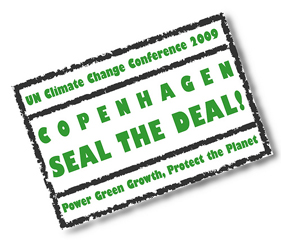
The Copenhagen Summit on Climate Change is set to take place in a week’s time and it’s ready to set the clock for global tourism to change forever.
Even though tourism isn’t represented as an industry at the summit, targets that will be set are bound to change the way the tourism industry operates in the future.
The world’s two mega economies from both ends of the development scale – USA and China have now put their opening bids on the table and the world is already taking notice that they are prepared, for once, to negotiate.
What is the Copenhagen climate change summit?
From 7 December environment ministers and officials from 192 nations will meet in Copenhagen for the United Nations climate conference en.cop15.dk/ to thrash out a successor to the Kyoto protocol. The conference will run for two weeks. The talks are the latest in an annual series of UN meetings that trace their origins to the 1992 Earth Summit www.un.org/esa/earthsummit/in Rio which aimed at coordinating international action against climate change.
What does COP15 stand for?
COP15 is the official name of the Copenhagen climate change summit — the 15th Conference of the Parties (COP) under the United Nations Framework Convention on Climate Change (UNFCCC) unfccc.int/2860.php. The COP is the highest body of the UNFCCC and consists of environment ministers who meet once a year to discuss developments in the convention.
Which countries are taking part in the climate change summit, and how many people will be there?
One hundred and ninety-two countries have signed the climate change convention. More than 15,000 officials, advisers, diplomats, campaigners and journalists are expected to attend COP15, joined by heads of state and government.
Who are the main players?
Developing countries, including China and India, believe it is the responsibility of wealthy industrialised nations such as the UK and US to set a clear example on cutting carbon emissions. Significantly, the US rejected the 1997 Kyoto protocol, with George Bush arguing that the 5% reductions required by Kyoto would "wreck [the American] economy" while making no demands on emerging economies. COP15’s chances of success have been improved by President Barack Obama’s stated intention to achieve an 80% reduction of greenhouse gas emissions by 2050.
In April, the secretary of state, Hillary Clinton, acknowledged the role the US had played in past climate emissions at a gathering of officials from the world’s 17 largest economies. She said the US was "determined to make up for lost time both at home and abroad". "The US is no longer absent without leave," she said. However, Denmark’s minister for climate and energy, Connie Hedegaard, has warned that American leadership on climate change will be undermined if the Obama administration does not pass laws swiftly to reduce carbon pollution.
What does the summit hope to achieve?
Officials will try to agree a new climate treaty as a successor to the Kyoto protocol, the first phase of which expires in 2012. According to Yvo de Boer, executive secretary of the UNFCCC, the four essentials needing an international agreement in Copenhagen are:
- How much are industrialised countries willing to reduce their emissions of greenhouse gases?
- How much are major developing countries such as China and India willing to do to limit the growth of their emissions?
- How is the help needed by developing countries to engage in reducing their emissions and adapting to the impacts of climate change going to be financed?
- How is that money going to be managed?
What are the sticking points?
The main issue is that of "burden-sharing". Climate scientists say that the world must stop the growth in greenhouse gas emissions and start making them fall from around 2015 to 2020. By 2050 they estimate the world must cut its emissions by 80% compared with 1990 levels to limit global warming to a 2C average rise.
Money is also a major issue. The developing countries know they must hand over hundreds of billions of pounds to poorer nations, to help them adapt to the likely consequences. Earlier this year, Gordon Brown said this climate funding needed to reach $100bn a year by 2020. If the recent recession has made rich countries less willing to part with their cash, this could raise tensions in Copenhagen
Problems such as these have cast doubts on whether COP15 can succeed. There are also concerns about whether any action we take now to prevent climate change may be too little too late. A UK Guardian poll revealed almost nine out of 10 climate scientists do not believe political efforts to restrict global warming to an additional 2C — the level the EU defines as "dangerous" — will succeed. www.guardian.co.uk/environment/2009/apr/14/global-warming-target-2c
How Will Tourism be affected?
On the black side, if there is no agreement AND global warming takes place as it is forecast, at the very least, winter sports holidays, island holidays and beach & sun holidays will be under massive pressure. Certainly it will mean that the geography of the holiday industry will change dramatically. www.travelmole.com/stories/1129949.php
On the other hand, depending on individual governmental actions, the cure may be more painful than the disease – to the tourism industry at least. Cutting emissions from 1990 levels by 80% in the next 40 years will entail dramatic governmental action. Of course the biggest tourism target is air travel. The EU is currently demanding that all world airlines join a carbon trading scheme to limit and offset emissions and it is just as likely that other segments of the travel industry, hotels and other transportation companies will have to reduce emissions too.
There are, however, bright spots and real opportunities. Prescient destinations are now clamouring to become ‘Carbon Neutral’ and airlines will have no option other than to join ‘Cap and Trade’ systems. It is possible that tourism entities may use the opportunity to become far more efficient and cost and carbon conscious.
Who’s waving the tourism flag? The UNWTO has been tirelessly promoting the global industry to the summit and the summit to the industry from Davos to Gothenburg to Astana to London, the UNWTO ‘Seal the Deal’ campaign has been evident at each and every UNWTO meeting.
Beware the mermaid! Countries that don’t co-operate will be pilloried by global activists
Valere Tjolle
Sources: travelmole.com
guardian.co.uk
conservationinternational.com


Valere





















Vegas’s Billion-Dollar Secrets – What They Don’t Want Tourists to Know

Visit Florida’s New CEO Bryan Griffin Shares His Vision for State Tourism with Graham

Chicago’s Tourism Renaissance: Graham Interviews Kristin Reynolds of Choose Chicago

Graham Talks with Cassandra McCauley of MMGY NextFactor About the Latest Industry Research

Destination International’s Andreas Weissenborn: Research, Advocacy, and Destination Impact

Graham and Don Welsh Discuss the Success of Destinations International’s Annual Conference

Graham and CEO Andre Kiwitz on Ventura Travel’s UK Move and Recruitment for the Role

Brett Laiken and Graham Discuss Florida’s Tourism Momentum and Global Appeal

Graham and Elliot Ferguson on Positioning DC as a Cultural and Inclusive Global Destination

Graham Talks to Fraser Last About His England-to-Ireland Trek for Mental Health Awareness

Kathy Nelson Tells Graham About the Honour of Hosting the World Cup and Kansas City’s Future

Graham McKenzie on Sir Richie Richardson’s Dual Passion for Golf and His Homeland, Antigua







 ADS PRO
Clearing CSS/JS assets' cache... Please wait until this notice disappears...
Updating... Please wait...
Higher departure tax and visa cost, e-arrival card: Japan unleashes the fiscal weapon against tourists
Singapore to forbid entry to undesirable travelers with new no-boarding directive
Euromonitor International unveils world’s top 100 city destinations for 2025
U.S.A. and Israel attacks on Iran impact air movements in the Gulf (Update 1.00pm CET)
Global tourism exceeds 1.5 billion travelers announces UN-Tourism