
Coronavirus fears spark anti-Chinese xenophobia
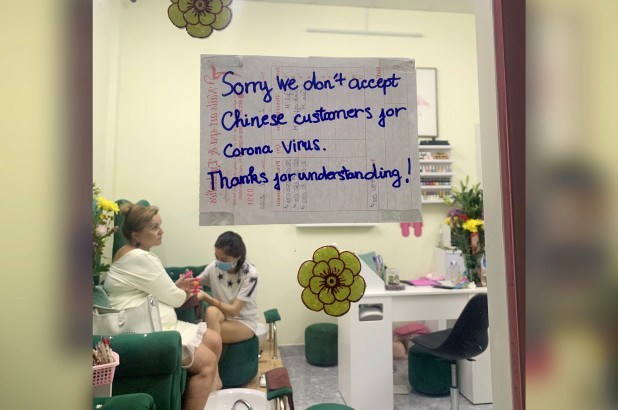
Health issues are not the only symptoms of the fast-spreading coronavirus across Asia and beyond. Almost as widespread are fear, mistrust – and increasingly, xenophobia. Anti-Chinese sentiment has grown.
Not only has it taken root by anonymous keyboard warriors on social media with thinly-veiled racist comments, but also in the real world.
In Singapore, tens of thousands of residents signed a petition calling for the government to ban Chinese nationals from entering the country, and this has now come into force.
This is a major decision for Singapore considering its population is overwhelmingly ethnic Chinese. The city state has 16 confirmed coronavirus cases.
‘Sorry, no Chinese allowed’ signs have been posted on restaurants and stores across the region, from Japan to Vietnam, while Thais are shunning shopping malls popular with Chinese tourists.
A week ago a group of more than 150 Chinese tourists were effectively holed up in a hotel in Bukittingi, West Sumatra in Indonesia due to protests from worried residents. Although it remained peaceful, they eventually left the tourist town by police escort. That led to a call from Indonesia’s transport minister to ‘treat them politely.’
The mistrust is spreading well beyond targeting visiting tourists. The Toronto Public Health agency cites ‘unnecessary stigma against members of our community’ due to misinformation, while in the UK an Anglo-Chinese family recently returned from a trip to China saying they are being shunned by their neighbours.

"Orientalist assumptions plus political distrust plus health concerns are a pretty powerful combination," says Charlotte Setijadi, an anthropologist who teaches at Singapore Management University.
The anti-Chinese feeling is being whipped up by emotive headlines with racist overtones such as ‘Yellow Peril’ and ‘Chinese Virus Panda-monium.’
The non-Chinese East Asian diaspora in many countries are feeling the heat too. Asians have been verbally abused and booted off trains in France and Italy and even South Korean super group BTS have been the butt of online trolling.


TravelMole Editorial Team
Editor for TravelMole North America and Asia pacific regions. Ray is a highly experienced (15+ years) skilled journalist and editor predominantly in travel, hospitality and lifestyle working with a huge number of major market-leading brands. He has also cover in-depth news, interviews and features in general business, finance, tech and geopolitical issues for a select few major news outlets and publishers.




















Vegas’s Billion-Dollar Secrets – What They Don’t Want Tourists to Know

Visit Florida’s New CEO Bryan Griffin Shares His Vision for State Tourism with Graham

Chicago’s Tourism Renaissance: Graham Interviews Kristin Reynolds of Choose Chicago

Graham Talks with Cassandra McCauley of MMGY NextFactor About the Latest Industry Research

Destination International’s Andreas Weissenborn: Research, Advocacy, and Destination Impact

Graham and Don Welsh Discuss the Success of Destinations International’s Annual Conference

Graham and CEO Andre Kiwitz on Ventura Travel’s UK Move and Recruitment for the Role

Brett Laiken and Graham Discuss Florida’s Tourism Momentum and Global Appeal

Graham and Elliot Ferguson on Positioning DC as a Cultural and Inclusive Global Destination

Graham Talks to Fraser Last About His England-to-Ireland Trek for Mental Health Awareness

Kathy Nelson Tells Graham About the Honour of Hosting the World Cup and Kansas City’s Future

Graham McKenzie on Sir Richie Richardson’s Dual Passion for Golf and His Homeland, Antigua







 ADS PRO
Global tourism exceeds 1.5 billion travelers announces UN-Tourism
Qatar Airways offers reduced timetable to over 60 destinations
WTTC global tourism reached record economic impact of 11 trillion in 2025
Hands In, UATP join forces for airline multi-card payments
Overseas travelers to the United States declined by 2.5% in 2025