
EcoVentura Set to Eliminate Fossil Fuels by 2015 in Galapagos
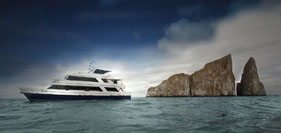
The small ship travel company, Ecoventura, reports that its own innovative initiatives to combat global warming have offset a total of 4031 tons of CO2 this year.
“While the 4,031 tons offset this year is actually a 10 percent decrease over the same period last year, that‚s a good thing.” says Santiago Dunn, president and owner of Ecoventura “It shows that we have been successful in reducing our overall energy use”
In 2006, Ecoventura became the first Carbon Neutral operation in Galapagos (and Ecuador). Carbon emissions from the company’s four yachts (and offices including business travel) are reduced and then offset by a portfolio of projects through US-based company NativeEnergy.
Guests on Ecoventura tours are also encouraged to offset their air travel to Ecuador through NativeEnergy as well.
Recognized by the UN as a World Heritage Site for its rare and unique marine and terrestrial fauna and flora, booming tourism in the Galapagos, ironically, has added to the challenges and problems faced by those looking to restore and protect the island’s native species and ecological balance.
“The Galapagos Islands rank right up there with the Amazon and the Serengeti as one of the richest and best known, yet fragile and threatened, ecosystems in the world. Now, the Ecuadoran government is looking to a range of alternative energy resources to make sure it stays that way” reports Triple Pundit, one of the world’s most well-read responsible business websites.
“The Ecuadoran government has turned to wind and solar power as a means of realizing its goals. Along with a range of international aid organizations and private sector businesses, it’s working to eliminate the use of fossil fuels on the Galapagos Islands by 2015”
Ecoventura’s M/Y ERIC became the first hybrid energy tour boat in the Galapagos following a $100,000 installation of 40 solar panels and two wind turbines on the upper deck. The hope is for the solar panels and wind powered generators to provide enough power to replace up to 20% of the energy formerly produced by diesel generators. The target goal is to have full fleet implementation by 2011.
Valere Tjolle
.


Valere





















Vegas’s Billion-Dollar Secrets – What They Don’t Want Tourists to Know

Visit Florida’s New CEO Bryan Griffin Shares His Vision for State Tourism with Graham

Chicago’s Tourism Renaissance: Graham Interviews Kristin Reynolds of Choose Chicago

Graham Talks with Cassandra McCauley of MMGY NextFactor About the Latest Industry Research

Destination International’s Andreas Weissenborn: Research, Advocacy, and Destination Impact

Graham and Don Welsh Discuss the Success of Destinations International’s Annual Conference

Graham and CEO Andre Kiwitz on Ventura Travel’s UK Move and Recruitment for the Role

Brett Laiken and Graham Discuss Florida’s Tourism Momentum and Global Appeal

Graham and Elliot Ferguson on Positioning DC as a Cultural and Inclusive Global Destination

Graham Talks to Fraser Last About His England-to-Ireland Trek for Mental Health Awareness

Kathy Nelson Tells Graham About the Honour of Hosting the World Cup and Kansas City’s Future

Graham McKenzie on Sir Richie Richardson’s Dual Passion for Golf and His Homeland, Antigua







 ADS PRO
Higher departure tax and visa cost, e-arrival card: Japan unleashes the fiscal weapon against tourists
Singapore to forbid entry to undesirable travelers with new no-boarding directive
Euromonitor International unveils world’s top 100 city destinations for 2025
U.S.A. and Israel attacks on Iran impact air movements in the Gulf (Update 1.00pm CET)
Global tourism exceeds 1.5 billion travelers announces UN-Tourism