France’s most spectacular congress center to open in Rouen, Normandy
The metropolis of Rouen, the capital city of French region Normandy, is best known for its outstanding cathedral, its Gros-Horloge, an astronomical gothic clock from the 14th century, and the numerous half-timbered houses in the old town.
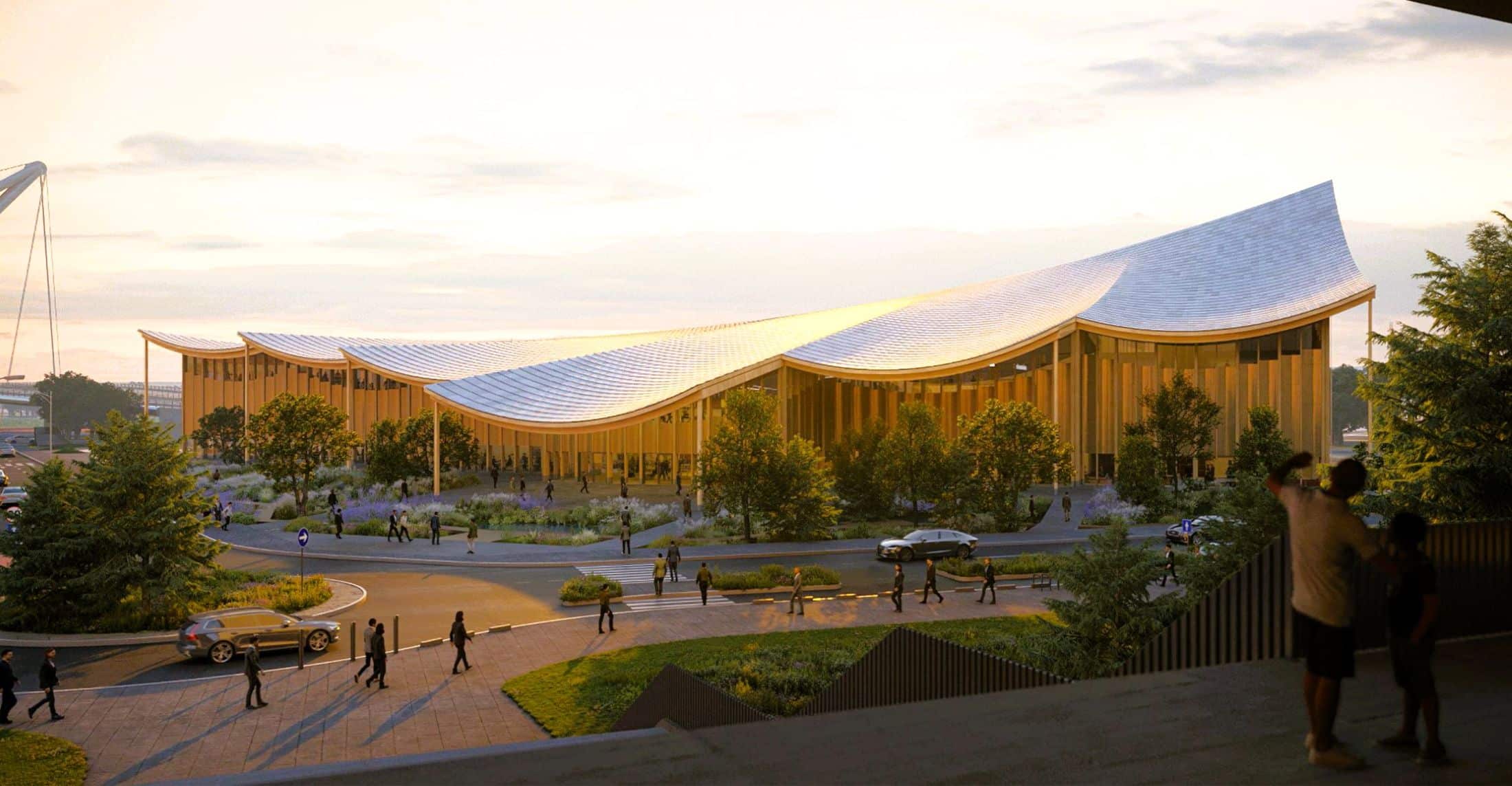
It will soon get a new architectural icon. Following is the call for projects launched by the Rouen Normandy Metropolis, the Danish architectural firm Bjarke Ingels Group (BIG) has unveiled “The Sail,” a striking new convention center.
Presented last October, the project will rise on a former store site, near the Flaubert Bridge, a spectacular vertical-lift bridge over the river Seine. It marks the latest architectural landmark for the Normandy metropolis.
The project embodies Rouen’s historic connection to the Seine and maritime heritage while embracing forward-looking sustainability goals. Entirely constructed from timber, The Sail will feature a sweeping roof shaped like ship sails — a tribute to Rouen’s naval history, its celebrated Armada tall ship gatherings, and the impressionist visions of French painters Monet and Corot. The roof will be fitted with photovoltaic panels, allowing the building to generate its own energy.
The building’s timber-and-glass facades will also echo the textures of Rouen’s traditional half-timbered houses. Toward the river, tall wooden columns support an undulating roofline, creating a strong visual link between the city and the waterfront. On the urban side, the roof flows downward into six waves that form shaded canopies.
Sustainability at the heart of the project

The conference center will house a modular exhibition hall with movable partitions. It will also feature a 1,400-seat auditorium for conferences and cultural events, alongside a dining area of equal capacity that can be subdivided into three independent rooms, each with its own kitchen. The top floor will host several multipurpose rooms to accommodate smaller meetings and workshops.
Sustainability is central to the concept. The architects plan to use bio-sourced materials and natural ventilation systems, with the goal of achieving energy self-sufficiency. To mitigate flood risks from the Seine, the entire structure will be slightly elevated, protecting its foundations from rising water.
The project’s landscape design will also include rain gardens with planted areas to collect and filter rainwater from the roof, naturally irrigating the soil while enhancing the site’s biodiversity.
Construction is expected to be completed by 2032, giving Rouen time to relocate existing tenants and prepare the site for one of Normandy’s most ambitious architecture projects to date. And to offer Rouen the image of a cutting-edge international conference city.
newadmin
Have your say Cancel reply
Subscribe/Login to Travel Mole Newsletter
Travel Mole Newsletter is a subscriber only travel trade news publication. If you are receiving this message, simply enter your email address to sign in or register if you are not. In order to display the B2B travel content that meets your business needs, we need to know who are and what are your business needs. ITR is free to our subscribers.


France prepares for a massive strike across all transports on September 18
Turkish tourism stalls due to soaring prices for accommodation and food
CCS Insight: eSIMs ready to take the travel world by storm
Germany new European Entry/Exit System limited to a single airport on October 12, 2025
Airlines suspend Madagascar services following unrest and army revolt