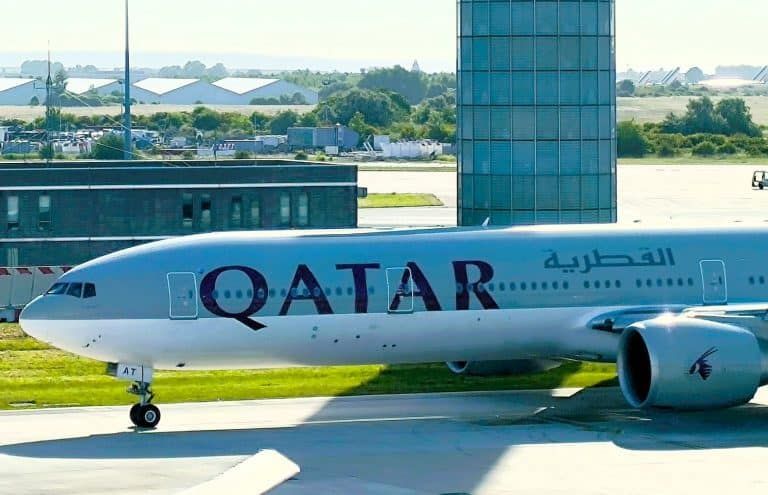

The International Air Transport Association (IATA) released March 2026 global passenger demand data, showing modest overall growth but significant regional variation driven largely by disruptions in the Middle East
Key Highlights
- Total demand, measured in revenue passenger kilometers (RPK), rose 2.1% year-over-year.
- Total capacity, measured in available seat kilometers (ASK), fell 1.7%.
- Load factor reached 83.6%, up 3.1 percentage points.
- International demand declined 0.6%, with capacity down 6.2% and load factor at 84.1% (+4.7 ppt). The drop was driven by a 60.8% collapse in Middle East carrier traffic.
- Domestic demand increased 6.5%, with capacity up 5.6% and load factor at 83.0% (+0.7 ppt).
“Air travel demand continued to grow in March despite disruptions in the Middle East,” said Willie Walsh, IATA Director General. “However, the nearly 61% drop in international traffic from Middle Eastern carriers limited global growth to 2.1%. Outside the region, demand grew by 8%.”
Walsh also highlighted concerns around jet fuel supply and pricing, warning that shortages could impact regions reliant on Gulf supplies, particularly Asia and Europe.
While demand has not yet been affected, rising ticket prices could eventually influence traveler behavior. He added that regulators may need to allow greater flexibility on airport slots amid airspace constraints and potential fuel rationing.
Air Passenger Market in Detail – March 2026
| Region | Share (%) | RPK (%) | ASK (%) | PLF (%-pt) | PLF (Level) |
|---|---|---|---|---|---|
| Total Market | 100.0 | 2.1 | -1.7 | 3.1 | 83.6 |
| Africa | 2.2 | 20.6 | 10.3 | 6.5 | 76.2 |
| Asia Pacific | 34.5 | 11.5 | 6.0 | 4.3 | 87.2 |
| Europe | 26.6 | 7.5 | 3.3 | 3.2 | 82.1 |
| Latin America & Caribbean | 5.4 | 8.4 | 5.5 | 2.3 | 83.1 |
| Middle East | 9.5 | -58.6 | -54.7 | -6.3 | 68.3 |
| North America | 21.8 | 2.3 | 0.4 | 1.6 | 83.7 |
Share based on 2025 industry RPK
International Passenger Markets
International RPK fell 0.6%, marking the first decline since March 2021, largely due to the Middle East downturn. Excluding that region, international traffic grew 9%, with load factors rising everywhere except the Middle East.
- Asia-Pacific: Demand rose 11.5%, boosted by Lunar New Year travel and strong international route expansion. Load factor hit 91.2% (+8.1 ppt).
- Europe: Demand increased 7.7%, with a notable 29.3% surge in Europe–Asia traffic as airlines rerouted away from Middle Eastern hubs.
- North America: Demand grew 3.7%, with steady transatlantic growth and accelerating Asia routes.
- Middle East: Demand plunged 60.8%, reflecting airspace closures linked to the US–Israel–Iran conflict.
- Latin America: Demand climbed 12.1%, supported by solid capacity growth.
- Africa: Demand jumped 19.2%, with strong gains in load factor.
Meanwhile, domestic travel remained a key growth driver, with RPK up 6.5% and capacity rising 5.6%. China and Brazil led with double-digit growth while Australia and Japan posted solid gains. By contrary, India saw a slight decline, possibly due to reduced connectivity with Middle Eastern hubs.
Overall, March 2026 showed resilient global demand, but the sharp downturn in the Middle East significantly skewed the global picture. IATA highlights that airlines now face growing uncertainty tied to fuel supply, pricing pressures, and ongoing geopolitical risks.