
International tourism partnership takes stand against human trafficking
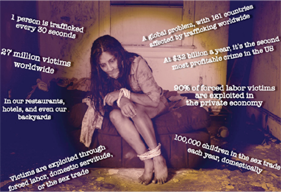
This modern form of slavery is the fastest growing international crime
In 2005 the International Labour Organization estimated that human trafficking is the third-largest illicit moneymaking venture in the world, after drug dealing and the arms trade, generating about $32 billion annually. According to UNICEF, 1.2 million children are trafficked every year, exposing them to violence and sexual exploitation.
"As an industry" says ITP "we recognize that we have a responsibility around the world to help play a critical role in increasing awareness and prevention, both directly and through the supply chain."
These crimes, in particular the exploitation of children, are known to occur on occasion at hotel properties, which are publicly accessible. It is important to note that cases of child exploitation or ‘sex trafficking’ in hotels are rare and that perceived suspicious activity can have an innocent explanation.
Says ITP on behalf of its hoteliers "We strongly support efforts designed to deter abuse and exploitation of children at our properties. We also recognise the importance of maintaining our guests’ legal right to privacy."
"As leaders in the industry, we support the Guiding Principles outlined in the UN’s ‘Protect, Respect and Remedy’ Framework for Business and Human Rights by taking a zero tolerance approach to human trafficking within our spheres of influence. Eliminating human trafficking and the exploitation of children is a long, complex process that can only be fully realized by constructive partnering with law enforcement at all levels, governments, NGOs, communities and business across industries including their employees and customers."
To demonstrate its absolute commitment ITP will
- Develop a corporate strategy for an anti-trafficking policy, which will permeate all activities, including supplier codes of conduct, and clear procedures for reporting any suspected incidences.
- Contribute to the prevention of human trafficking, through awareness training and engagement of our employees and guests, where practical.
- Develope and share best practice.
As many branded hotels in the industry are operated under a franchising arrangement, it should be recognised that they are independently owned and operated establishments. "However" says ITP "It is imperative that all ITP member hotels obey the law and ensure that their operations comply with relevant standards of ethics and business conduct. It is our obligation to reinforce throughout our networks that illicit activity like human trafficking not only puts brand reputation at risk, but also has the potential to endanger employees and guests."
"Human trafficking has to stop and we as an industry have to use every power we have to end this scourge. The International Tourism Partnership (ITP) and its members have been active on the issue for some years now. We are proud to launch our Know How Guide to addressing human trafficking to inform, encourage and support others in the industry to join the fight."
To read online or download the guide, click here http://www.greenhotelier.org/category/know-how/
Valere Tjolle
SUSTAINABLE/REAL TOURISM INFORMATION & OFFERS HERE


Valere












Vegas’s Billion-Dollar Secrets – What They Don’t Want Tourists to Know

Visit Florida’s New CEO Bryan Griffin Shares His Vision for State Tourism with Graham

Chicago’s Tourism Renaissance: Graham Interviews Kristin Reynolds of Choose Chicago

Graham Talks with Cassandra McCauley of MMGY NextFactor About the Latest Industry Research

Destination International’s Andreas Weissenborn: Research, Advocacy, and Destination Impact

Graham and Don Welsh Discuss the Success of Destinations International’s Annual Conference

Graham and CEO Andre Kiwitz on Ventura Travel’s UK Move and Recruitment for the Role

Brett Laiken and Graham Discuss Florida’s Tourism Momentum and Global Appeal

Graham and Elliot Ferguson on Positioning DC as a Cultural and Inclusive Global Destination

Graham Talks to Fraser Last About His England-to-Ireland Trek for Mental Health Awareness

Kathy Nelson Tells Graham About the Honour of Hosting the World Cup and Kansas City’s Future

Graham McKenzie on Sir Richie Richardson’s Dual Passion for Golf and His Homeland, Antigua







 ADS PRO
Global tourism exceeds 1.5 billion travelers announces UN-Tourism
Qatar Airways offers reduced timetable to over 60 destinations
WTTC global tourism reached record economic impact of 11 trillion in 2025
Hands In, UATP join forces for airline multi-card payments
Overseas travelers to the United States declined by 2.5% in 2025