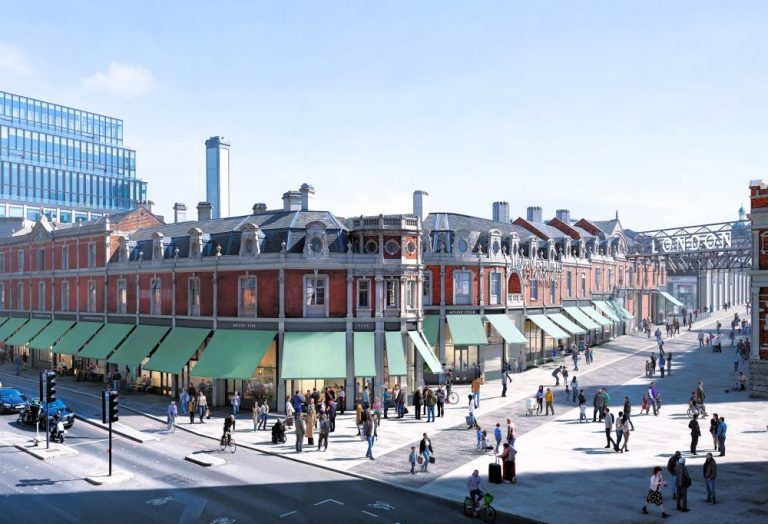
London Museum confirmed ten days ago to open the doors to its new permanent galleries in Smithfield’s General Market on November 28, 2026, marking a new chapter for the world’s largest city museum.
At its heart, London Museum has been envisioned as a social space for the city, drawing on the distinctive architecture of the market to unite the museum’s collection and London’s communities, to honor the past and present of this major global capital.
Fully redesigned, the museum is located in one of the oldest parts of the capital, the City of London. The opening completes a decade-long restoration of the Victorian General Market, returning the disused historic building to public use for the first time in more than three decades. The £437 million (US$577 million) project has been developed through a unique partnership between the City of London Corporation and Mayor of London Sadiq Khan, alongside support from a range of philanthropic supporters.
In the General Market, the museum unfolds across three interconnected spaces. Visitors will enter via Real Time (on Heritage Fund Street) – a covered former street that acts as the museum’s main entrance – enriched by data capturing London in the moment.
From there, they move into Our Time (in the Linbury Hall), a vibrant central hub for events and activities, anchored by 13 large installations – eclectic objects from London in living memory. Below ground, in the museum’s cavernous subterranean galleries, the permanent displays of Past Time offer a compelling overview of London’s history through chronological and thematic displays.
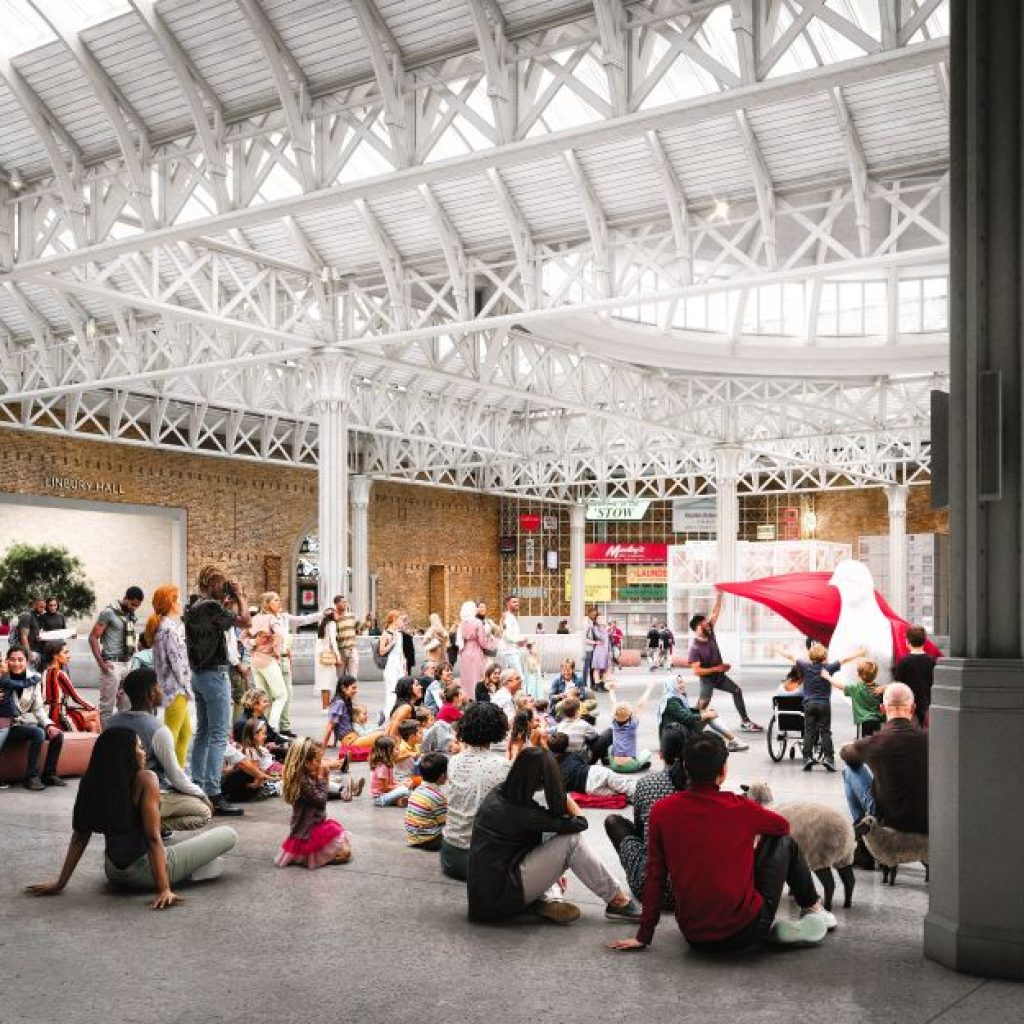 Our Time space in the General Market (Image : Secchi Smith/Asif Khan)
A wealth of treasures to discover about London
Highlights confirmed for display across the museum include the Whitechapel Fatberg, The Lord Mayor’s Coach, Banksy’s Piranhas artwork, Charles I’s execution vest, Emmeline Pankhurst’s hunger strike medal, and Anna Pavlova’s “Dying Swan” dress.
There will be objects from the museum’s eminent archaeological archive, including Roman writing tablets from The Bloomberg Collection capturing the city’s earliest surviving voices. The tablets form part of The Bloomberg Collection, a world-renowned trove of more than 14,000 Roman artifacts, the largest archaeological deposition ever gifted to the museum. In The Goldsmiths’ Gallery, the glittering Cheapside Hoard, one of the most significant collections of Elizabethan and Jacobean jewelry, will be shown in the fullest display of the hoard ever assembled.
Sharon Ament, Director, London Museum, said: “This has been a long undertaking – not without its challenges but mostly filled with immense joy and hyper-creativity – and now we are counting down the days to welcome our first visitors. At the beginning we asked ourselves how to be the best museum for London, the answer is, to be London itself, in all its grit and glitter. We’ve done it with the very best; designers, historians, curators, builders, architects, artists, poets, writers, creators to name a few, all are shapers of London. And the very best includes over one hundred thousand people who have contributed along the way. I hope our museum is a place where people can come together, feel at home, and find themselves grounded in the lives, treasures, challenges, and innovations of this city.”
The Mayor of London, Sadiq Khan, said: “The opening of the new London Museum will be a hugely significant moment both for London and internationally. Backed by one of the largest ever cultural investments in our capital, London Museum will attract millions of visitors and Londoners and reinforce our status as the cultural capital of the world. London Museum celebrates the past, creates opportunities in the present, and will inspire future generations, as we continue to build a better London for everyone.”