
Mallorca to change visitors and locals’ perspective over tourism
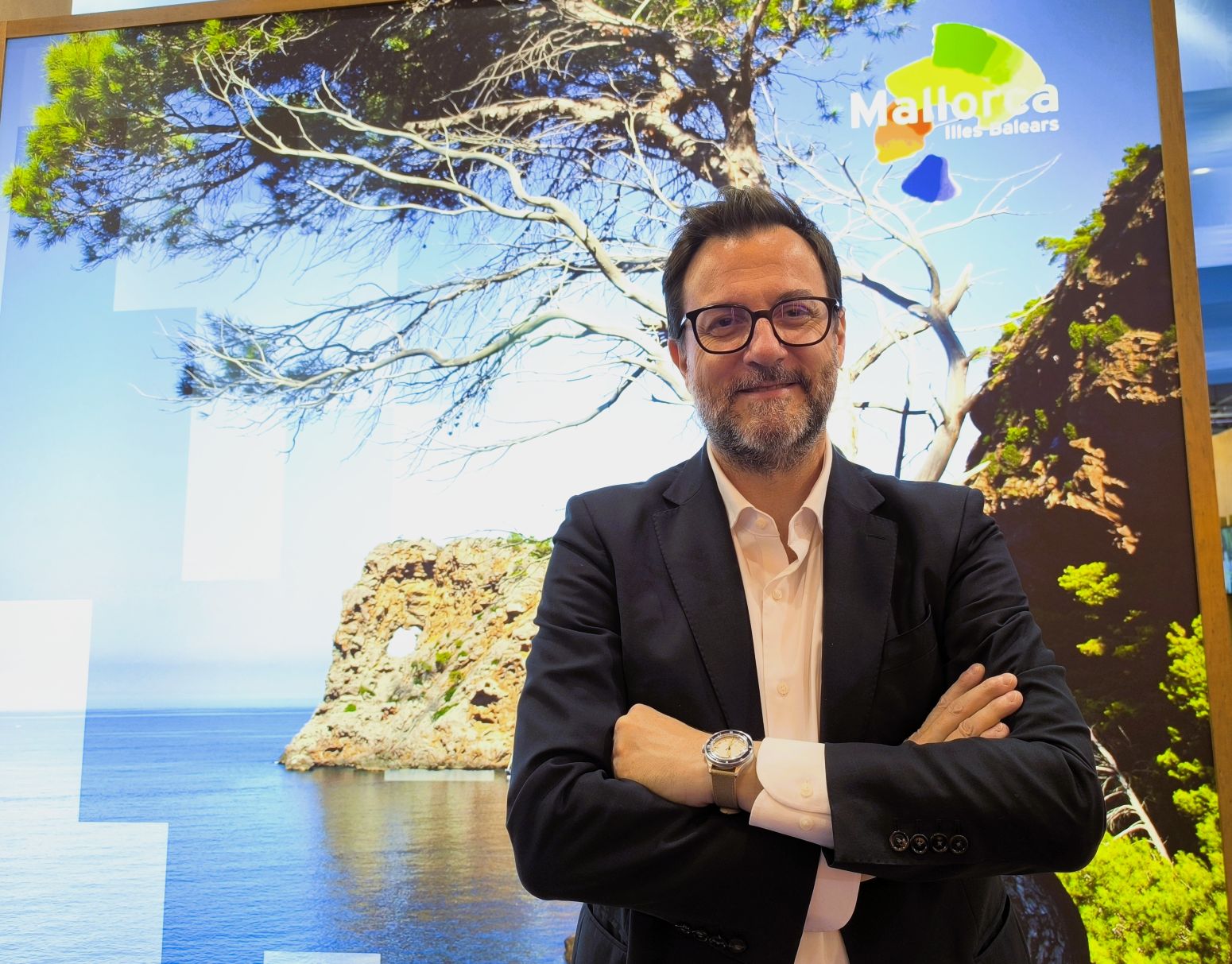
Marco Taboas, Director of Tourism and Head of the Responsible Tourism Foundation of Mallorca, speaking about the necessity to Mallorca to redefine what kind of tourism the island wants in the years to come and how to involve more actively both visitors and locals. With an eye at ways to reduce tourism pressure in locals’ daily life.
How was the season for Mallorca? What’s your overall assessment?
Marco Taboas – It’s been a strong season, as expected. But we also need to be honest: over-tourism is real. In the peak season, there was a lot of people on the island. And it is a fact that we cannot deny. What we’re working on now is communication—two different messages, really. One for locals, and one for visitors.
And I say “visitors” because the term “tourist” is changing. We don’t travel the way we used to. Travel has become consumption. People move because they want to be out of their homes, not necessarily to discover a culture or meet people. So part of our job is helping both locals and visitors understand what an authentic Mallorca can be, beyond this idea of a “cliché-style” holiday.
You mentioned over-tourism affecting both locals and visitors. How do you frame that issue?
Marco Taboas – Over-tourism has two sides: for residents, who feel pressure on daily life; and for visitors, because the experience is diminished when everything is crowded. However, I think that blaming tourism alone is too easy. Much of what people perceive as “tourism pressure” is actually demographic.
Ten years ago, Mallorca had around 600,000 residents. Today we’re at about 1.1 million, and projections say we could reach 1.5 million by 2030. When I’m stuck in traffic at 8 a.m., that’s not tourism—it’s parents taking kids to school and people commuting to work. Tourism becomes the scapegoat because it’s convenient. But we also cannot deny the reality: tourism is part of the issue, and we must manage it responsibly.
How do you communicate this balance to visitors and to the local population ?
Marco Taboas – We emphasize one key idea: Mallorca is not a theme park. It’s a living island with traditions, with people, with rituals that are not designed for an Instagram moment. have a traditional “Demonis” fire celebration—people dressed as demons, dancing with fire. It’s something deeply rooted in our culture, not an 11 p.m. “Disney parade”. We want visitors to understand and respect that.
Meanwhile, we also need to remind our own people what tourism brought to us in terms of employment or even air connectivity. Thirty years ago, we took one domestic vacation a year. Now, anyone under 50 is flying two or three times a year, often abroad. And we can do that thanks to air connectivity created by tourism. So we also benefit from the model we criticize.
Are you considering incentives to attract visitors during the low season—free public transport, museum discounts among others ?
Marco Taboas – We’re looking at it. Some measures will be implemented. But I’ll be honest: it won’t change much. Visitors come to Mallorca when they want to come to Mallorca. Not because we offer free buses in February. And the government can’t dictate what kind of hotels private companies should build, or how they operate. That’s outside our control.
What about adjusting the tourism tax seasonally—higher in high season, lower in winter?
Marco Taboas – This decision goes under central government authority. We can propose ideas, but we cannot enforce them.
And I repeat: the core issue is demographic. Look at the numbers. More visitors arrive each year, yes, but they stay for fewer days. Ten years ago the average stay was around seven days. Today it’s 3.5 to 4 days. So the “pressure” at any given moment is lower than people think. This year we expect about 19 million visitor arrivals. It’s a big number. But the island is not “full” 365 days a year.
Are you working to change Mallorca’s image—from quick beach escapes to deeper cultural experiences?
Marco Taboas – Absolutely. This is where we have real leverage. We’re working intensively with tour operators and major agencies to show a different Mallorca. Not just great restaurants, but the origin of our gastronomy—our local producers, our traditions, our identity. We want visitors to understand: people live here. Respect that. And experience the island in a more mindful way.
Can you give some examples of the experiences you’re promoting?
Marco Taboas – For instance, we’re working with a major cruise line to diversify shore excursions. The typical pattern is: ship docks, everyone goes to the cathedral, and everything becomes overcrowded. Instead, we suggest different itineraries as Mallorca has incredible alternatives. I could name Raixa, a stunning estate with gardens; Castillo de Bellver, a beautiful hilltop fortress; glass-blowing workshops in villages 15 minutes away from Palma; olive oil farms, wineries, and agro-tourism experiences across the island. The latter is part the balance we’re trying to create.
These are authentic, crowd-free experiences that improve satisfaction. In fact, cruise lines tell us their Net Promoter Scores for Palma excursions are very low—3.5 or 4 out of 10—because visitors only see crowds, long lines, and overpriced water. So diversifying is better for everyone.
What about the luxury segment? Would moving Mallorca further upmarket reduce visitor numbers?
Marco Taboas – No. Raising prices would increase income, but it wouldn’t solve the pressure. Because, once again, the main driver of the pressure is the resident population—not tourism alone.
Housing is the best example. Renting or buying a home in Mallorca has become almost impossible. But Airbnb represents only around 4% of the housing stock. That’s not the root cause. It’s happening everywhere—look at Galicia, where I’m from. Even small towns have skyrocketing rents. It’s a global phenomenon.
Finally, what is your approach to the cruise industry? Encourage it? Limit it?
Marco Taboas – What we’re doing is coordination. We work with cruise companies to stagger schedules, avoid sending thousands of people to the same spot at the same time, and promote alternative excursions.
That’s the path: not prohibition, but intelligent management. If cruise passengers spread out across the island, satisfaction rises, crowds shrink, and the visit becomes more pleasant.
Related News Stories: Challenge Tour selects HotelPlanner as Title Partner We love to fly you. - Corendon Airlines EasyJet opening new base at Newcastle Airport Set Sail For A Spook-Tacular Halloween Voyage With MSC Cruises ... Partner News - TravelMole


newadmin

















Vegas’s Billion-Dollar Secrets – What They Don’t Want Tourists to Know

Visit Florida’s New CEO Bryan Griffin Shares His Vision for State Tourism with Graham

Chicago’s Tourism Renaissance: Graham Interviews Kristin Reynolds of Choose Chicago

Graham Talks with Cassandra McCauley of MMGY NextFactor About the Latest Industry Research

Destination International’s Andreas Weissenborn: Research, Advocacy, and Destination Impact

Graham and Don Welsh Discuss the Success of Destinations International’s Annual Conference

Graham and CEO Andre Kiwitz on Ventura Travel’s UK Move and Recruitment for the Role

Brett Laiken and Graham Discuss Florida’s Tourism Momentum and Global Appeal

Graham and Elliot Ferguson on Positioning DC as a Cultural and Inclusive Global Destination

Graham Talks to Fraser Last About His England-to-Ireland Trek for Mental Health Awareness

Kathy Nelson Tells Graham About the Honour of Hosting the World Cup and Kansas City’s Future

Graham McKenzie on Sir Richie Richardson’s Dual Passion for Golf and His Homeland, Antigua







 ADS PRO
Phocuswright reveals the world's largest travel markets in volume in 2025
Higher departure tax and visa cost, e-arrival card: Japan unleashes the fiscal weapon against tourists
Singapore to forbid entry to undesirable travelers with new no-boarding directive
Euromonitor International unveils world’s top 100 city destinations for 2025
Cyclone in Sri Lanka had limited effect on tourism in contrary to media reports