
Russia’s wild east: vodka and old believers
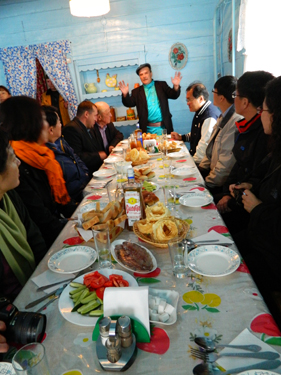
Tarbagatai will likely be your only experience of what Russians call khozyaistvenny tourism writes Brian Kilgour
Russia is such a vast country that, throughout my travels, I am often hard-pressed to find a uniting theme for the country, beyond the Russian language and shared history. In fact, one of the most common points of agreement for those who study Russia is the difficulty of understanding what Russia’s identity truly is. However, one facet of Russian life that has always impressed me, no matter what part of the country I’m in, is how visible the influence of history is. Moscow contains the contrast of monarchy, communism, and capitalism, St. Petersburg was formed by the aristocracy and neglected by the Soviets, and the remnants of World War II are still visible throughout European Russia. Nowhere is this characteristic of Russia better exemplified than in the small Old Believer (staroobryatsy) villages that dot Buryaria.
Prior to 1666, Father Nikon, the head of the Russian Orthodox Church, sent a group of emissaries to various Greek Orthodox Churches to observe their practices. They returned with disturbing news: the Russian Orthodox Church had strayed widely from the original Orthodox traditions. In 1666, Father Nikon declared the reform of the Russian Orthodox Church. These reforms included the Sign of the Cross, which shoulder to cross first, and several prayers. Several of those who had, according to the reforms, been crossing themselves incorrectly their entire lives were intractable and refused to change. They were anathematized and many were executed, tortured, or exiled. This period of time became know as The Schism (raskol).
During the colonization of Siberia, the first settlers were missionaries and Cossacks, neither of which were known for their agricultural or architectural abilities. On the other side of the country, Old Believers came to be known as skilled farmers and home-builders. In the early 1700s, Catherine the Great sent of a group of Old Believers from the Russian border with Poland to Buryatia to accelerate agricultural development. While the Old Believers were forced to emigrate to Siberia, Catherine the Great allowed them to choose whichever plots of land they desired. In doing so, the Old Believers created a series of isolated communities that allowed them to preserve their culture and beliefs. Old Believers were active along the Tea Road and often came into contact with Buryat culture.
Even throughout the Soviet Era, Old Believer communities successfully preserved their songs, dances, and traditions. Today, Old Believer song and dance is listed as a UNESCO World Heritage object and troupes have traveled across the world to perform.
The center of Old Believer tourism in Buryatia is in Tarbagatai, a town that is located about 30 km east of Ulan-Ude. Tarbagatai is often included in day trips to the Ivolginsky Datsan due to their relative proximity to each other and Ulan-Ude. I have traveled to Tarbagatai several times with various groups of tourists and the museums, churches, homemade food, and traditional performances have never disappointed me.
For short-term travelers to Ulan-Ude, Tarbagatai will likely be your only experience of what Russians call khozyaistvenny tourism, which roughly translates to home tourism or farm tourism. Home tourism describes when tourists are placed in the daily life of a cultural representative and receive hospitality generally reserved for honored guests. This varies greatly from standard tourist experiences of restaurants, hotels, and museums. In Tarbagatai, tourists are fed traditional food that is all made from scratch from products cultivated in the large gardens that are found on each piece of property. The families that host tourists are extremely outgoing, friendly, and create an extremely memorable experience. Meals are ended with a traditional Old Believer wedding ceremony. Guests are dressed in Old Believer clothing and treated to a performance of song and dance. Rather than being awkward, the ceremony is filled with humor. Of course, the homemade vodka (samogon) that is often served with dinner fuels the laughter.
Tarbagatai is also home to the Old Believer museum and an Old Believer church. The museum is home to a large collection of old tools that have been employed in agriculture for hundreds of years. Of note are the butter churn that still smells of butter and a large scale that will list if even a feather is place on it. The church is home to several new Old Believer icons. Father Sergey often meets with guests to tell Old Believer history and answer questions.
Travel to Tarbagatai is almost impossible without a tour guide. While buses run to Tarbagatai several times a day, the museum is only unlocked when tourists plan ahead with a guide. And travel to Tarbagatai without a meal with an Old Believer family could hardly be called a true experience in Tarbagatai. Fortunately, tourism to Tarbagatai is one of the best-developed tourism infrastructures in Buryatia and several hostels, hotels, and tourism agencies have contacts with the tourism bureau in Tarbagatai.
The history of the Old Believers is still visible in every facet of life, from food production to traditional song and dance. The struggles throughout history to preserve heritage has led to a strong, flowering cultural tradition that has made the Old Believers one of the most unique and beautiful cultures of Buryatia and a must-visit for every tourist looking for a truly authentic cultural experience.
Brian Kilgour
Brian is a Fulbright scholar on a tourism assignment writing from Siberia for Vision on Sustainable Tourism
VISION latest sustainable tourism special offer: Sustainable Tourism Marketing Guide HERE


Valere





















Vegas’s Billion-Dollar Secrets – What They Don’t Want Tourists to Know

Visit Florida’s New CEO Bryan Griffin Shares His Vision for State Tourism with Graham

Chicago’s Tourism Renaissance: Graham Interviews Kristin Reynolds of Choose Chicago

Graham Talks with Cassandra McCauley of MMGY NextFactor About the Latest Industry Research

Destination International’s Andreas Weissenborn: Research, Advocacy, and Destination Impact

Graham and Don Welsh Discuss the Success of Destinations International’s Annual Conference

Graham and CEO Andre Kiwitz on Ventura Travel’s UK Move and Recruitment for the Role

Brett Laiken and Graham Discuss Florida’s Tourism Momentum and Global Appeal

Graham and Elliot Ferguson on Positioning DC as a Cultural and Inclusive Global Destination

Graham Talks to Fraser Last About His England-to-Ireland Trek for Mental Health Awareness

Kathy Nelson Tells Graham About the Honour of Hosting the World Cup and Kansas City’s Future

Graham McKenzie on Sir Richie Richardson’s Dual Passion for Golf and His Homeland, Antigua







 ADS PRO
Global tourism exceeds 1.5 billion travelers announces UN-Tourism
Qatar Airways offers reduced timetable to over 60 destinations
WTTC global tourism reached record economic impact of 11 trillion in 2025
Hands In, UATP join forces for airline multi-card payments
Suspension of all regional trains in Catalonia following two new rail accidents in Spain