
High air taxes jeopardize growth at French airports
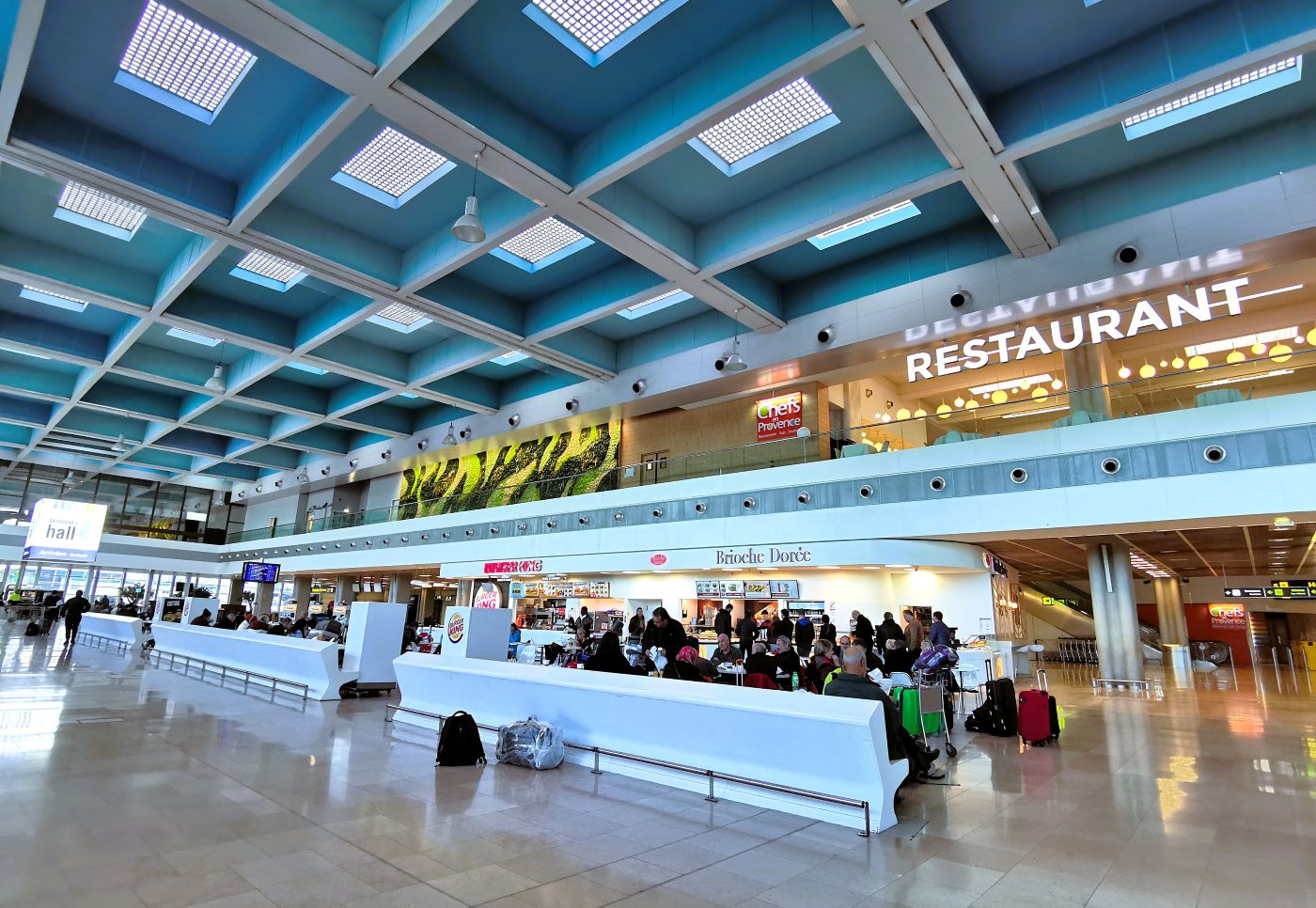
Although France’s airports continued their gradual recovery in 2025, their performance still lags behind pre-Covid benchmarks by -1.8% and trails much of Europe.
Passenger traffic across French airports rose by 2.3% year-over-year in 2025, representing an additional 4.7 million commercial passengers. Despite this growth, total volumes reached 210.5 million passengers when overseas territories are included. This number remains 1.8% below 2019 levels. If only metropolitan airports are considered, France welcomed last year 198 million travelers last year, still 1.7% below 2019 levels.
Aircraft movements followed a similar pattern. A total of 1.8 million commercial movements were recorded, up 2.2% compared to 2024. However, this still marks a significant 8.3% decline versus 2019.
This persistent gap in movements is largely explained by higher load factors. Average passengers per flight increased from 109 in 2019 to 117 in 2025. The continued expansion of the low-cost segment—characterized by higher seat occupancy, averaging 158 passengers per flight—has further concentrated traffic.
Traffic trends throughout 2025 were uneven. Pre-pandemic levels were reached or exceeded in only five months of the year with December performed best at over 103%.
France under-performs in Europe
Within the European Union, air traffic in 2025 exceeded 2019 levels by 6.6%. Most European countries have not only recovered but significantly surpassed pre-pandemic volumes, with double-digit growth in several markets, such as Poland (+39.9%), Croatia (+23.9%) and Greece (+28.3%).
By contrast, a handful of countries remain well below pre-crisis levels, notably Sweden (-22.2%), Finland (-21.2%) and Germany (-14.1%).
France ranks among the weakest performers compared to its peers. It trails behind Italy (+18.7%), Spain (+17.0%), and Portugal (+22.6%), as well as the UK (+1.6%) and Ireland (+12.3%). Aside from Germany, France is the only major European tourism market which did not fully recover to 2019 levels.
Increases in aviation taxes last year, namely the Solidarity Tax on Airline Tickets (TSBA) and security charges (T2S), have contributed to this relative under-performance. By raising operating costs, these measures are discouraging airlines, particularly low-cost carriers, from expanding in France, especially at smaller regional airports.
International traffic drives growth
International traffic is now the primary growth engine for French aviation. In 2025, it accounted for 127% of total traffic growth, rising 3.5% year-over-year and 7.3% above 2019 levels.
In contrast, domestic traffic (excluding overseas territories) continues its structural decline, falling 2.5% compared to 2024 and plunging 26.6% below 2019 levels.
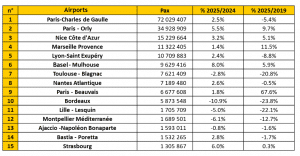
This ongoing weakness in domestic demand heavily impacts certain regions and airports. Toulouse, for example, remains 20.8% below its pre-pandemic traffic, while Brittany has seen total traffic drop by 38.7%, with domestic routes accounting for nearly three-quarters of its activity.
The same disparity applies across airport categories. Domestic traffic accounts for just 10.6% of traffic at both Paris-Orly and Paris-CDG airports, nearly a quarter at major regional airports, over half (52.1%) at smaller local airports, and as much as 66.9% at regional platforms.
With domestic traffic in decline, France’s aviation growth now depends almost entirely on international demand. This creates vulnerability: any negative impact on international traffic—whether from geopolitical tensions, travel restrictions, or a sharp increase in fuel prices—could quickly weaken the current recovery. Rising jet fuel costs would affect both airline capacity and passenger demand.
A downturn in international traffic would likely stall or reverse overall growth, putting the sector’s recovery at risk.
Low-cost carriers continue to gain ground
The low-cost segment continues to expand rapidly across France. In 2025, low-cost airlines accounted for 44.7% of total traffic in mainland France, and 63.3% outside Paris Charles de Gaulle. Both figures were up from 2024 and nearly 10 percentage points higher than in 2019.
Low-cost carriers handled more than 88 million passengers in 2025, exceeding pre-pandemic levels by 25.1%. Meanwhile, traditional carriers remain in decline, with traffic still down 16.2% compared to 2019.
At Paris Orly, the shift has been particularly striking. Following Air France’s strategic refocus on Charles de Gaulle, low-cost carriers increased their share of traffic at Orly from 40.4% in 2019 to 66.1% in 2025.
More broadly, low-cost traffic now represents 62.2% of passengers at major regional airports and 59.7% at regional airports overall. Across France’s 15 largest metropolitan airports, the low-cost share has risen from 34.8% in 2019 to 43.7% in 2025.
Low-cost airlines dominate smaller local airports even more strongly, accounting for 66% of total traffic and creating significant dependence on this segment.
However, recent tax increases have already prompted several low-cost carriers to cut routes and reduce frequencies, resulting in a loss of potential passengers for French airports. With structurally thin margins and ongoing aircraft shortages, these airlines are highly sensitive to cost increases and are increasingly redeploying capacity to neighboring countries offering more favorable economic conditions.
In 2025, low-cost traffic accounted for more than 70% of total passengers at 19 French airports, up from 11 in 2019. At five airports—Rodez, Paris Beauvais, Carcassonne, Béziers, and Nîmes—the low-cost share exceeds 99%, underscoring the growing reliance of regional France on this business model.
Related News Stories: No tax relief for German air travel in 2026 despite government promise Japan: "The Empire of Rising Travel Costs" - TravelMole After Wizz Air, Ryanair trims its network from Vienna - TravelMole Lufthansa considers trimming domestic timetable by 100 weekly flights Japan government ready to increase departure tax for air travelers Airports of Thailand confirms 50% hike in departure tax - TravelMole Latin America air traffic grows steadily as regional demand dominates Air France "Train + Air" integrates low-cost OUIGO high-speed trains Airports warn of higher airfares in 2026 - TravelMole German airports forecast 2026 passenger growth as tax policy shifts


newadmin





















Vegas’s Billion-Dollar Secrets – What They Don’t Want Tourists to Know

Visit Florida’s New CEO Bryan Griffin Shares His Vision for State Tourism with Graham

Chicago’s Tourism Renaissance: Graham Interviews Kristin Reynolds of Choose Chicago

Graham Talks with Cassandra McCauley of MMGY NextFactor About the Latest Industry Research

Destination International’s Andreas Weissenborn: Research, Advocacy, and Destination Impact

Graham and Don Welsh Discuss the Success of Destinations International’s Annual Conference

Graham and CEO Andre Kiwitz on Ventura Travel’s UK Move and Recruitment for the Role

Brett Laiken and Graham Discuss Florida’s Tourism Momentum and Global Appeal

Graham and Elliot Ferguson on Positioning DC as a Cultural and Inclusive Global Destination

Graham Talks to Fraser Last About His England-to-Ireland Trek for Mental Health Awareness

Kathy Nelson Tells Graham About the Honour of Hosting the World Cup and Kansas City’s Future

Graham McKenzie on Sir Richie Richardson’s Dual Passion for Golf and His Homeland, Antigua







 ADS PRO
Higher departure tax and visa cost, e-arrival card: Japan unleashes the fiscal weapon against tourists
U.S.A. and Israel attacks on Iran impact air movements in the Gulf (Update 1.00pm CET)
Global tourism exceeds 1.5 billion travelers announces UN-Tourism
WTTC global tourism reached record economic impact of 11 trillion in 2025
Marginal increase for New York City tourism in 2025