
The edge of the world
Rachel Roberts follows in the footsteps of Hans Christian Anderson and experiences Danish ‘hygge’ in Skagen…
It was the kind of wind that pins you to the spot while simultaneously threatening to knock out your feet from under you. The kind that whips the sea into a foaming frenzy and makes the hardiest seabirds squawk in protest (the ones that can be heard above the deafening sound).
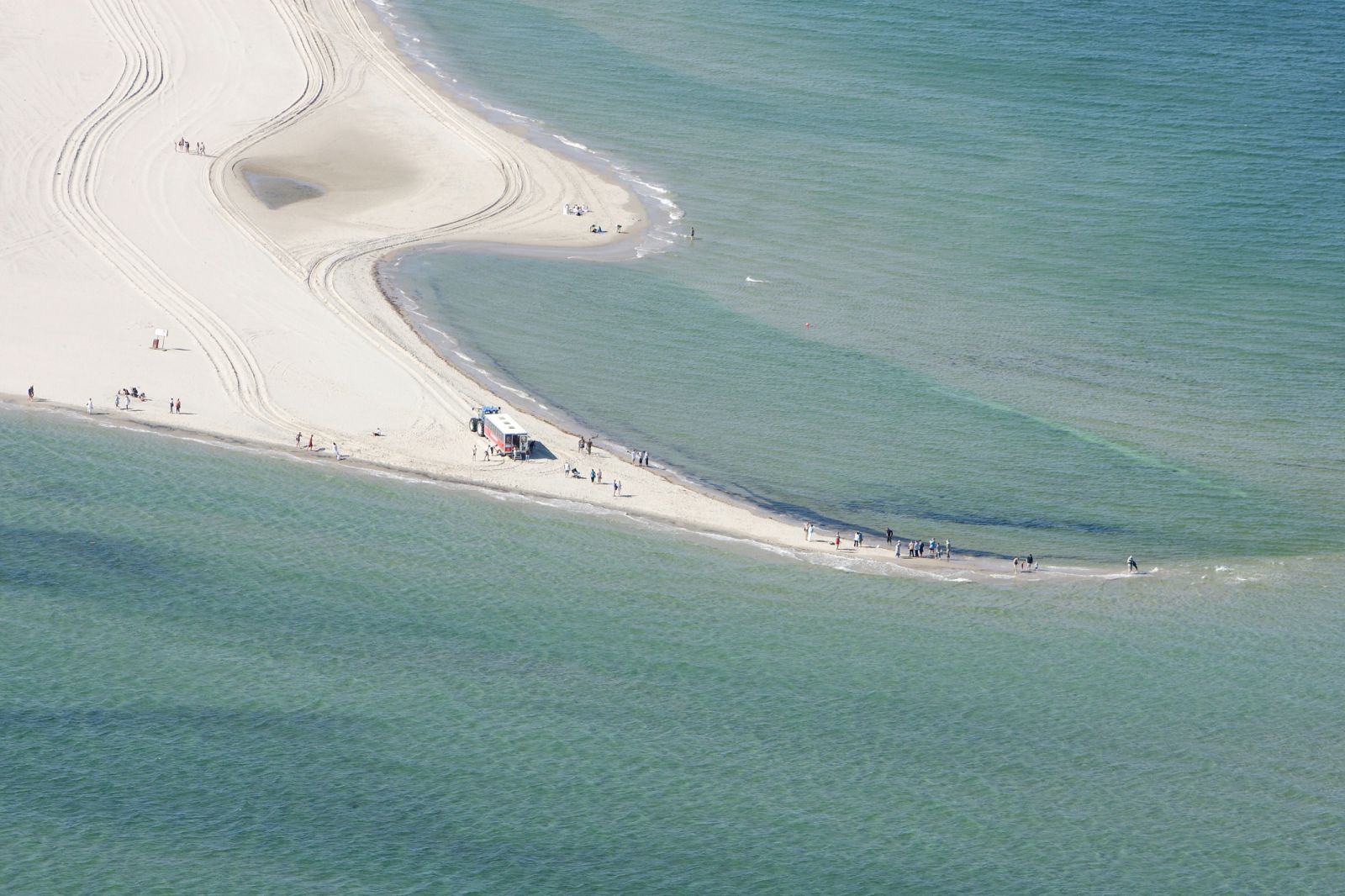
The Scottish expression ‘blowing a hoolie’ sprung to mind. Though we were in Grenen, Denmark, the narrow sandbar that is continental Europe’s most northerly point, the two countries share the same ocean. Grenen marks the spot where the North and Baltic seas merge and the reason we were taking the battering, following in the footsteps of around 1.8 million people who make the same pilgrimage to the natural wonder every year.
When we visited in late November, the pale grey skies and lack of people lent the place a real edge-of-the-world atmosphere. It was also perfect timing to experience ‘hygge’. Pronounced ‘hue-gah’, it’s the buzzword of the moment, but this Danish concept has been around for centuries. It speaks of a certain mood: battening down the hatches, getting cosy and sharing candlelight, warmth and companionship.
Of course, the sea has always shaped the lives of the Danes who have settled here. We discovered just how much in Skagen (pronounced ‘skain’), the nearest town, a couple of miles south. Located on the thin peninsula that has the look of a pixie hat about it, Skagen is home to Denmark’s biggest fishing port. Fishing is the town’s most lucrative industry, with the bounty caught in these waters – including cod, lobster and deep-water prawns – netting around half of Skagen’s income.
 Today, the town is a hugely popular summer destination, thanks to idyllic beaches to both its east and west, including the renowned Sonderstrand. And a recently completed quay project means 31 cruise ships will drop anchor here every year, bringing with them that all-important tourist currency.
If you fall in love with the place and want to stay, you could be in trouble, however. As with most desirable seaside towns, house prices are at a premium. Holiday homes painted in classic Skagen yellow (a bright ‘n’ breezy buttercup hue), topped with rust-red brick roofs and encircled with white picket fences, cost a cool 9000000 DKK (around £1 million).
The seeds of Skagen’s tourism industry were sown by the successful artists’ colony that sprung up here in the late 19th century. While the elemental beauty of the area, along with the precious ‘blue hour’ (the Danish version of the golden hour; the magical 60 minutes of suffused light after the sun goes down) would have been a huge magnet for artists, the real reason is slightly less romantic. The life models here were going for a song, compared to those in the more expensive capital city of Copenhagen.
Spearheaded by husband and wife painters Michael and Anna Ancher, the Skagen Painters specialized in ‘plein air’ painting, and their artistic musings can be seen in Skagens Museum. Around 1,800 works of art are packed into the building, offering a fascinating pictorial history of the town and illustrating the realities of maritime life. These include Michael Ancher’s The Drowned Fisherman (1896), a moving depiction of the price humans often paid when faced with the sea’s unpredictable nature. The anguished expressions worn by the faces of those surrounding the lifeless fisherman are truly haunting.
There’s also an insight into the tangled love lives of the artists, too, in the picture Midsummer Eve Bonfire on Skagen Beach. Fourteen years in the making, the oil painting is considered to be artist Peter Kroyer’s masterpiece. It depicts a gathering of Skagen’s villagers, along with his wife Marie (also a brilliant painter) and her lover, the Swedish composer Hugo Alfven.
We had a helping of hygge – together with a huge slice of traditional Lad Kage (a light-as-air layer cake, sandwiched together with fresh cream and berries) – at the renowned Brondums Hotel. While a fire flickered in the magnificent fireplace and candles threw golden halos onto cold window panes, we spoke to sommelier Kresten Langvold. He’s worked here for 30 years and happily shared his wealth of knowledge about the place.
Originally opened as a B&B for the visiting artists in the 1840s, word spread about the hotel following a celebrity endorsement by writer Hans Christian Anderson. After staying in 1859, he praised the place ‘with the sound of seagulls in the air’.
 Another famous writer, Danish socialite Karen Blixen, penned part of her epic love story, Out of Africa – later made into an Oscar-winning film with Meryl Streep as Blixen – in room 116.
We were lucky enough to stay in the simple yet elegant room, which along with the other 19, remains little unchanged. Gazing out from the small window as Blixen would have done, the view might not turn everyone into a famous author but it certainly soothes the soul.
For more information, go to visitdenmark.com


Bev
Editor in chief Bev Fearis has been a travel journalist for 25 years. She started her career at Travel Weekly, where she became deputy news editor, before joining Business Traveller as deputy editor and launching the magazine’s website. She has also written travel features, news and expert comment for the Guardian, Observer, Times, Telegraph, Boundless and other consumer titles and was named one of the top 50 UK travel journalists by the Press Gazette.





















Vegas’s Billion-Dollar Secrets – What They Don’t Want Tourists to Know

Visit Florida’s New CEO Bryan Griffin Shares His Vision for State Tourism with Graham

Chicago’s Tourism Renaissance: Graham Interviews Kristin Reynolds of Choose Chicago

Graham Talks with Cassandra McCauley of MMGY NextFactor About the Latest Industry Research

Destination International’s Andreas Weissenborn: Research, Advocacy, and Destination Impact

Graham and Don Welsh Discuss the Success of Destinations International’s Annual Conference

Graham and CEO Andre Kiwitz on Ventura Travel’s UK Move and Recruitment for the Role

Brett Laiken and Graham Discuss Florida’s Tourism Momentum and Global Appeal

Graham and Elliot Ferguson on Positioning DC as a Cultural and Inclusive Global Destination

Graham Talks to Fraser Last About His England-to-Ireland Trek for Mental Health Awareness

Kathy Nelson Tells Graham About the Honour of Hosting the World Cup and Kansas City’s Future

Graham McKenzie on Sir Richie Richardson’s Dual Passion for Golf and His Homeland, Antigua







 ADS PRO
Higher departure tax and visa cost, e-arrival card: Japan unleashes the fiscal weapon against tourists
Singapore to forbid entry to undesirable travelers with new no-boarding directive
Euromonitor International unveils world’s top 100 city destinations for 2025
U.S.A. and Israel attacks on Iran impact air movements in the Gulf (Update 1.00pm CET)
Global tourism exceeds 1.5 billion travelers announces UN-Tourism